
It is 6:40 on a Tuesday morning in February. A furnace in a Winnipeg bungalow has quit overnight, the house is down to 11 degrees, and a young family is standing in the kitchen in their coats. The homeowner pulls up "furnace repair near me," taps the first number, and listens to it ring. Four rings, five, then voicemail. He hangs up and calls the next shop on the list. That one answers on the second ring, books a technician for 9 a.m., and just earned a customer for the next fifteen years.
The first company never knew the call happened. Their tech was already under someone else's furnace, the office manager did not start until eight, and the phone did exactly what it does every winter morning: it rang into nothing. For home service businesses, that is not a rare bad day. It is the quiet, structural way money leaks out of the trades.
Why the phone is still where trades win and lose
Home services run on the phone in a way most industries have left behind. Nobody fills out a web form when their basement is filling with water or the power is out in half the house. They call. And they do not call once. They work down the search results, company by company, until a human voice picks up. The shop that answers first usually wins the job, and everyone who called back an hour later is talking to a customer who is already booked. Marketers have a tidy phrase for this, speed-to-lead, but on a job site it is simpler than that: whoever picks up, wins.
And there is plenty to win. Demand for home services has stayed resilient right across Canada, from the condo towers of downtown Toronto and Vancouver to the suburban sprawl around Calgary, Ottawa, and Halifax, as Jobber's Home Service Trends Report tracks quarter after quarter. The problem is rarely a shortage of people calling. It is that too many of those calls land while the owner is up a ladder, the one person in the office is on the other line, or it is simply after five.
What a missed call actually costs — run your own number
Owners tend to wave this away. "We catch most of them." The honest way to find out is to do the arithmetic for your own shop, in your own dollars, instead of trusting a gut feeling. Here is the back-of-the-napkin version:
Calls per day you can't get to × working days per month × the share that are real jobs × your average ticket × the rate you'd actually close.
Say three calls a day slip past you. Over roughly 22 working days that is 66 calls a month. Suppose half are genuine job requests and you would normally close two-thirds of those once you are talking to them. That is about 22 booked jobs. At a modest $450 average ticket, you are looking at close to $10,000 a month walking to the shop that answered. Run it with a plumbing emergency's ticket, or an HVAC install, and the number climbs fast. Independent call data suggests a meaningful slice of inbound business calls in Canada go unanswered or get bounced to voicemail, and Hiya's research on Canadian businesses losing revenue puts real figures on how much that quietly costs. The point is not the exact dollar amount. The point is that it is almost never zero, and it is usually larger than owners expect.
What an AI voice agent does for a trade — and what it should never do
An AI voice agent is not a phone tree, and it is not the robotic "press one for service" menu everyone hates. It is a voice that answers every call on the first or second ring, any hour, holds a normal back-and-forth conversation, figures out what the caller needs, and does something useful with it. For a home service business, "useful" usually means a short, specific list:
- Answers 24/7, including nights, weekends, holidays, and the overlapping minutes when every line is already busy.
- Asks the caller what is going on, gets the address and a callback number, and recognizes the difference between "my furnace is making a noise" and "I smell gas."
- Books routine work straight into your calendar against real availability.
- Flags true emergencies and routes them to whoever is on call, immediately.
- Texts you and the customer a clean summary so nothing lives only in someone's memory.
Just as important is the list of things it should never do. A good agent does not diagnose the problem, does not quote a firm price over the phone, does not promise an exact arrival time it cannot guarantee, and never makes a safety call it is not qualified to make. Those belong to your technicians. The agent's job is to catch the call, sort it, and hand it off cleanly, not to pretend it is a journeyman.

An AI voice agent answering a call while a tradesperson is busy on a job
The triage table: HVAC, plumbing, electrical
This is where generic "AI receptionist" advice falls apart and where a trade actually needs its own playbook. An agent is only as good as the routing rules behind it, and those rules differ by trade. Here is a starting framework you can adapt:
- HVAC — route to on-call now: no heat in winter, no cooling during a heat warning, a gas smell, or a carbon-monoxide alarm. Same-day booking: short-cycling, weak airflow, warm air from the AC. Book for later: tune-ups, filter changes, replacement quotes, maintenance plans. Words the agent should listen for: "no heat," "freezing," "gas," "CO alarm," "elderly," "baby in the house."
- Plumbing — route to on-call now: a burst pipe, active flooding, a sewage backup, or no water to the house. Same-day booking: a blocked drain, a leaking tank, no hot water. Book for later: faucet swaps, fixture installs, estimates, renovations. Words to listen for: "flooding," "burst," "water everywhere," "backing up," "shut-off valve."
- Electrical — route to on-call now: a burning smell, sparks, exposed wiring, a full power loss, or a panel issue. Same-day booking: a partial outage, a tripping breaker, dead outlets on a circuit. Book for later: new fixtures, EV charger installs, panel upgrades, inspections. Words to listen for: "burning," "sparks," "smoke," "no power," "breaker won't reset."
Notice that the emergencies are not just about the problem, they are about context. A no-heat call at noon in October is a same-day booking. The same call at 6 a.m. in January, with a toddler in the house, is an on-call dispatch. A well-built agent weighs both, and you set the thresholds, not the vendor.
Built for Canadian seasons and six time zones
A home service shop's phone does not ring evenly. It spikes with the weather, and in Canada the weather is a national event. The first hard frost sets off a week of furnace calls from Edmonton to Moncton. The first July heat dome buries HVAC lines across southern Ontario. Spring thaw floods basements. An agent that answers around the clock turns those spikes from a staffing nightmare into just another Tuesday, because it has no cap on how many calls it can take at once.
Geography matters too, and it is a detail most tools built for a single U.S. market get wrong. If you operate across provinces, your after-hours window is not one window. A call that comes in at 9 p.m. in Halifax arrives at 5:30 p.m. in Vancouver, and Newfoundland sits on its own half-hour offset that breaks naive scheduling logic. Six time zones is not a trivia fact here; it is a configuration requirement. The same goes for service-area checks: a Canadian agent should be screening callers by postal code and forward sortation area, not asking for a ZIP code that does not exist.
English, French, and the multilingual call
Canada does not speak one language, and your callers know it. A customer in Ottawa may start in English and switch to French mid-sentence. A newcomer family in Surrey or Brampton may be more comfortable in a third language entirely. A human front desk juggles this awkwardly, if at all. A capable voice agent can greet callers, understand them, and respond in the language they are actually speaking, then hand your technician a summary in the language your office works in.
For any shop taking calls in Quebec, this is not a nice-to-have. French-first service is a legal and cultural expectation there, and an agent that cannot hold a natural conversation in Quebec French will cost you those customers outright. If that is part of your market, it is worth reading up on how a voice agent compares to plain voicemail before you decide a recorded "leave a message" is good enough.
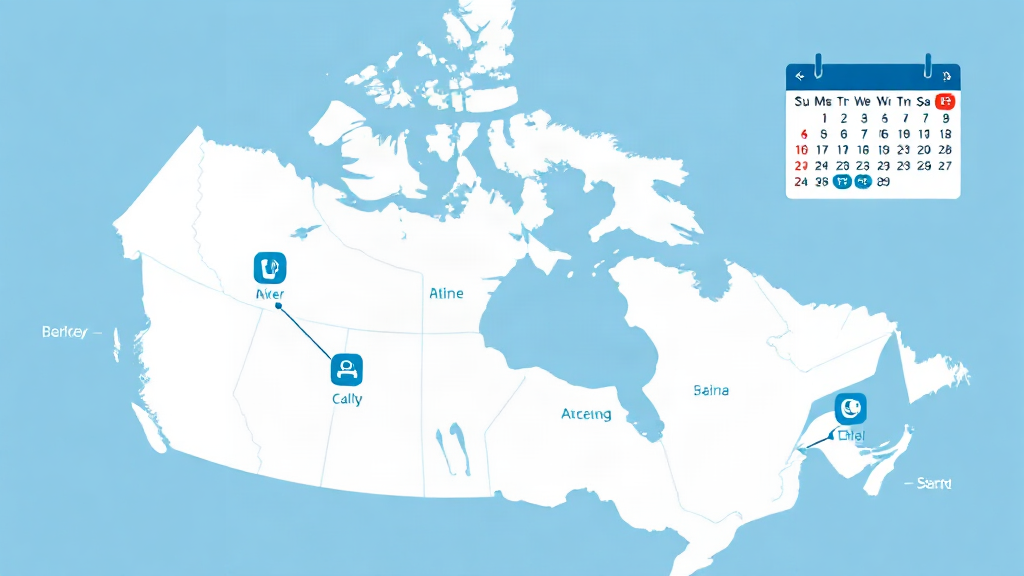
AI voice agent routing and booking home service calls across Canada
The Canadian compliance checklist — get legal eyes on it
This is the part the U.S.-built guides skip, and it is the part that can bite you. None of what follows is legal advice; treat it as a list of questions to put in front of your own counsel before you turn anything on.
- Call recording and consent. If the agent records calls, Canada's privacy rules under PIPEDA, and Quebec's Law 25 for businesses operating there, govern how you collect, store, and disclose that audio. Know where the recordings live.
- Data residency. Ask any vendor where call data is stored. "On a server somewhere in the U.S." is an answer that matters for a Canadian business, especially a regulated one.
- Follow-up texts. The moment your agent sends an SMS to follow up on a lead, you are in CASL territory, Canada's anti-spam law. Consent and clear opt-out are not optional.
- Outbound calls. If you ever use the agent to call people back or chase quotes, CRTC rules on unsolicited telecommunications apply.
- AI disclosure. Telling callers up front that they are speaking with an automated assistant is both the honest move and an increasingly expected one. Build it into the greeting.
How it plugs into your phones and your software
The most common reason owners stall is a fear that this means tearing out the phone system. It does not. In almost every case the agent sits behind your existing business number: calls forward to it after hours, or overflow to it when your lines are busy, and your number never changes. If you want the full picture of how that wiring works without losing your number, that is worth understanding before you switch anything on.
On the back end, a serious agent connects to the tools trades already run, ServiceTitan, Jobber, Housecall Pro, and the like, so a booked call lands on your dispatch board instead of a sticky note. Where a native integration does not exist, a webhook can still push the job into your system. And the overflow case deserves its own plan: if you are regularly losing calls simply because every line is tied up, our step-by-step overflow playbook walks through exactly how to stop that leak.
Questions to ask any vendor before you sign
Every vendor will tell you their agent sounds human and books jobs. The useful questions are the ones they would rather you not ask:
- Can it hold a real conversation in French, not just read a translated script?
- Where is call data stored, and is Canadian data residency available?
- Does my existing business number stay exactly as it is?
- How does emergency routing work, and can I set the thresholds myself?
- What happens when the agent is unsure, and how does it hand off to a human?
- What is the all-in monthly cost, including per-minute and overage fees?
That last one hides more surprises than any other. Before you compare quotes, it helps to know what an AI voice agent really costs a Canadian business, fees included, so you are comparing like with like.
When things go wrong: the human handoff
No automated system is perfect, and a good vendor will tell you so plainly. What separates a trustworthy agent from a risky one is what it does at the edge of its competence. If the calendar times out, if the on-call line does not answer, if a caller is upset or clearly needs a person, the agent should fail toward a human, not into a dead end. Ask to see exactly what the caller hears in each of those cases. If the honest answer is "it just hangs up," keep looking.
How to start without ripping out your phone system
You do not flip a switch and hand your whole phone operation to software on day one. The shops that get this right ease into it. Start with after-hours only: let the agent cover nights and weekends, the calls that today go straight to voicemail and vanish. Listen to a week of those recordings. Then add overflow, so the agent only picks up when your team genuinely cannot. By the time you widen it further, you already trust what it does, because you have heard it work.
Frequently asked questions
Will callers know they are talking to AI? They should, and a good agent discloses it up front. In practice, callers care far more about reaching someone who can actually help at 2 a.m. than about whether that someone is human.
What does an AI receptionist for plumbers or HVAC shops cost? It varies with call volume and features, and the sticker price is rarely the whole story. Judge it against what a single missed emergency job is worth to you, and read the full cost breakdown before you decide.
Can it really handle bilingual calls? A capable agent can greet, understand, and respond in both English and French, and switch mid-call. If you serve Quebec or a multilingual city, test this hard during a trial.
Do I have to change my phone number? No. In the standard setup your number stays put and calls simply forward to the agent after hours or on overflow.
What about genuine emergencies? That is the whole point of a triage design. True emergencies get routed to your on-call line immediately, on thresholds you set, while routine work gets booked for later.
The phone is still the front door of a home service business. For most shops, the question is no longer whether to cover the calls they are missing, but how quickly, because the shop down the road is already answering the ones you let ring out. A well-built, Canadian-ready AI voice agent is the most direct way to stop being the first company in that February story and start being the second.