
Introduction
It is 7:10 on a Tuesday evening in Calgary. A homeowner with a burst pipe finds your number, calls, and hears eight rings followed by a familiar click: "You've reached... please leave your name, number, and a brief message after the tone." She doesn't. She hangs up and dials the next plumber on the list. By the time you check your voicemail the next morning, that job -- and the five-star review that came with it -- belongs to someone else.
Across Canada, from Vancouver to Halifax, this scene plays out thousands of times a day. It raises a question most owners never stop to ask: when you can't pick up, what should answer the phone? For decades the default answer was voicemail. In 2026, a growing number of Canadian businesses are replacing it with an AI voice agent -- software that actually talks to the caller, answers questions, and books the job instead of recording a message no one may ever hear.
This is an honest comparison of the two -- AI voice agent vs voicemail. Where voicemail still earns its place, where it quietly costs you customers, and how to tell which one your phone line actually needs.
What actually happens when a call goes to voicemail
Voicemail feels harmless. The call was going to be missed anyway, so at least the caller can leave a message -- right? The data says otherwise. When a business call goes unanswered, roughly 80% of callers who reach voicemail hang up without leaving a message, and about 85% of people whose call goes unanswered never call back. They don't wait. Studies of first-response behaviour show 78% of customers buy from the first company that responds, and a large share of callers who can't reach you will contact a competitor within minutes.
There's a speed problem underneath all of this. Research popularised by the Harvard Business Review found that businesses which respond to a new lead within five minutes are dramatically more likely to reach and qualify that lead than those that wait even 30 minutes. Voicemail is the opposite of a five-minute response: the message sits untouched while the caller has already moved on.
So the real cost of voicemail isn't the recording. It's the silence between the beep and the callback -- and everything the customer does during it.
AI voice agent vs voicemail: a head-to-head
Put the two side by side and the difference stops being about technology and starts being about outcomes.
Answering the call. Voicemail "answers" in the narrowest sense -- it records. An AI voice agent holds a real conversation: it greets the caller by your business name, understands why they're calling, and responds. Far fewer people hang up on a helpful voice that says "I can book that for you right now" than hang up on a greeting.
Capturing the lead. Voicemail captures a lead only if the caller chooses to leave one, and most don't. An AI voice agent captures every caller -- name, number, reason for calling, and often a booked appointment -- and logs it instantly. When all your lines ring at once, that difference compounds; it's the same problem we covered in how to stop losing calls when every line is busy.
After hours and overflow. Both work at 2 a.m. Only one does something useful with the call. This is also where an AI agent differs from simply paying humans to answer -- a comparison we broke down in AI voice agent vs. an outsourced call centre.
Follow-through. Voicemail ends at the beep. A modern voice agent can text the caller a confirmation, add the appointment to your calendar, and flag an urgent call for a human -- all before you've finished your current job.
Why the Canadian phone line is a harder problem than voicemail admits
Canada makes the voicemail gap wider than it is elsewhere. A business serving customers from St. John's to Victoria spans six time zones: a 5 p.m. cutoff in Toronto is still mid-afternoon in Vancouver and lunchtime for someone calling from Calgary. Voicemail treats all of those callers the same way -- with a beep. An AI voice agent answers each one live, in the local moment, whether your team is asleep or slammed.
Then there's language. In bilingual markets -- Ottawa, Moncton, Montreal, and increasingly Toronto and Vancouver -- a caller may open in French or in English, and voicemail can't switch. A properly configured agent can greet and serve callers in either language on the same line, which is why so many operators start by setting up a bilingual French-and-English voice agent. Voicemail offers one scripted greeting; the caller adapts to it, or leaves.
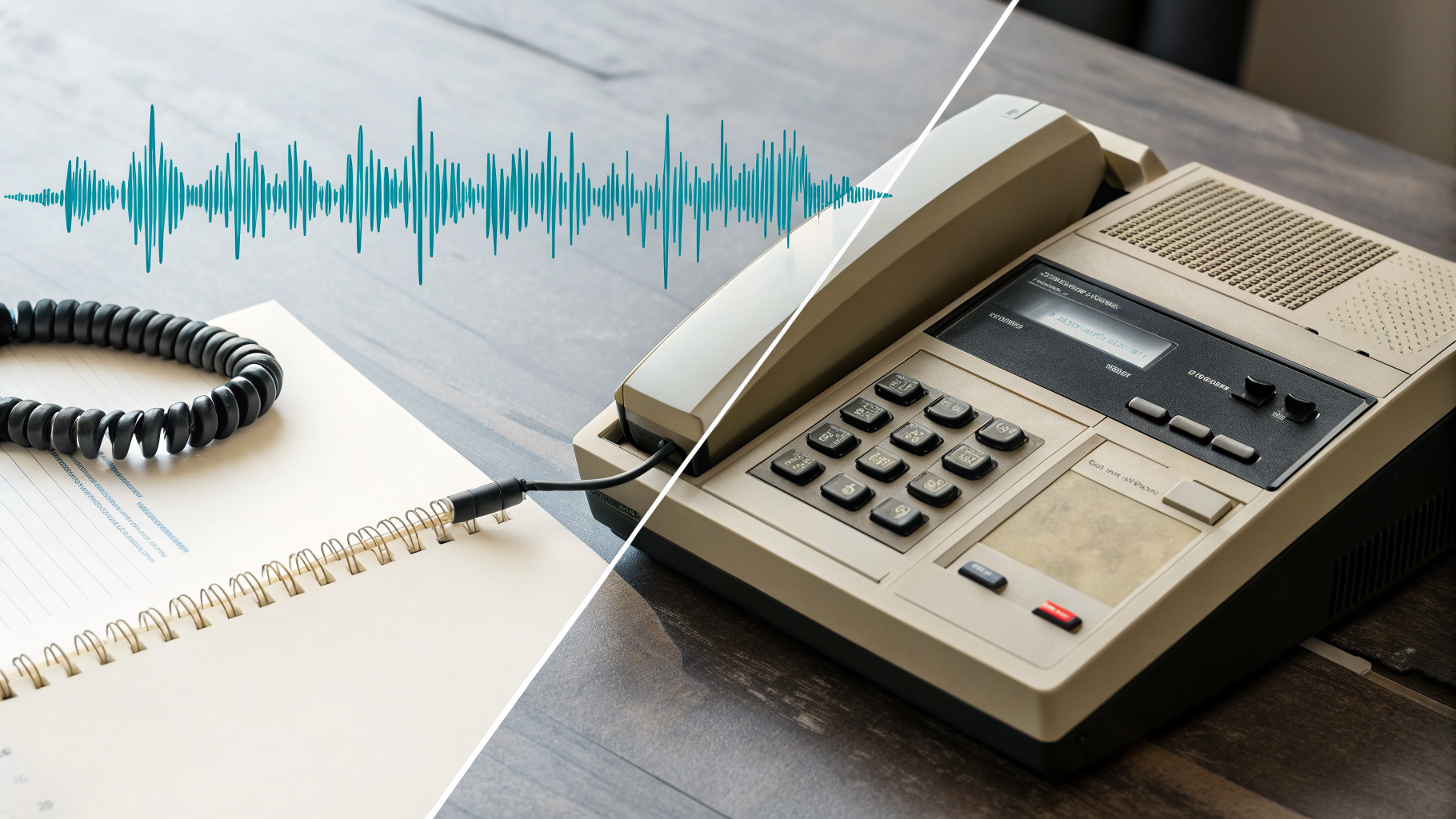
Voicemail versus an AI voice agent, side by side
What an AI voice agent does that voicemail never could
The gap widened in 2026. Voice platforms now handle call surges gracefully: ElevenLabs, for example, rolled out call queueing in September 2026, so that when more callers arrive than an agent can take at once, they hear hold audio and status updates instead of being dumped straight to voicemail. That single feature replaces the most common reason businesses relied on voicemail in the first place: the "all lines busy" moment.
Beyond that, an AI voice agent can answer the ten questions your callers actually ask -- hours, location, pricing ranges, whether you service their postal code -- qualify the caller, book directly into your calendar, and hand off to a human when the call is genuinely urgent. Voicemail can do exactly none of these. It's a mailbox; the agent is a receptionist that never sleeps.
When voicemail still makes sense
None of this means voicemail is worthless. For a low-volume personal line, an internal extension, or a solo operator who genuinely returns every message within the hour, voicemail is simple, free, and familiar -- and replacing it would be over-engineering. If your callers are mostly existing clients who are happy to leave a message and wait, the case for change is weaker.
The decision tilts toward an AI voice agent when missed calls turn into lost revenue: when new customers call once and don't call back, when you're paying for advertising that drives phone leads you can't answer, or when after-hours and peak-time calls are where your growth is hiding. If that sounds like your line, voicemail isn't saving you money -- it's quietly setting it on fire.
The real cost comparison
Voicemail's price tag is the reason it survives: it's effectively free. But "free" only counts the software, not the outcome. If even a handful of missed new-customer calls a month walk to a competitor, the lost revenue dwarfs what an AI voice agent costs -- and for many trades, clinics, and service businesses, that handful happens in a single busy week.
An AI voice agent, by contrast, is a predictable monthly cost that scales with usage rather than headcount. We walked through the real numbers -- setup, per-minute rates, and what Canadian businesses actually pay -- in what an AI voice agent really costs in 2026. The honest way to compare the two isn't "free vs. paid." It's "the cost of the tool vs. the cost of the calls you're currently losing."
Voicemail vs. AI voice agent: quick answers
Is an AI voice agent just a fancier voicemail? No. Voicemail records a one-way message and waits for you to act on it. An AI voice agent has a two-way conversation -- it answers questions, qualifies the caller, books appointments, and can text a confirmation -- so the caller's problem is often solved before they hang up, not hours after you call back.
Will callers know they're talking to an AI? Modern voice agents sound natural, and most Canadian businesses configure theirs to be upfront that it's a virtual assistant. In practice, callers care less about who answers than whether they got a fast, accurate answer -- which is exactly where voicemail falls down.
Can an AI voice agent handle calls in both French and English? Yes. A properly set-up agent can greet and serve callers in French or English on the same number and switch to the caller's language automatically -- something a single recorded voicemail greeting simply can't do.
During a rush, won't it just send people to voicemail anyway? That's the old failure mode. Newer platforms queue callers with hold audio and live status updates during peak volume instead of dropping them, so the "all lines busy" moment no longer defaults to a beep.

A tradesperson sees a call answered automatically by an AI voice agent
The bottom line for Canadian businesses
Voicemail answers your phone the way a locked door answers a knock: technically, but not usefully. In 2026, when 80% of callers won't leave a message and most won't call back, "please leave a message after the tone" is a polite way of sending business to whoever picks up next.
You don't have to replace voicemail everywhere overnight. Start with the line where missed calls cost you the most -- after-hours, overflow, or your main new-customer number -- and measure what changes in a month. If you want help deciding where an AI voice agent fits your setup, talk to our team or see how pricing works.