
The transfer button is not an admission of defeat
Picture a caller in Winnipeg on a Tuesday night. She asks, politely, to speak to a person. The AI voice agent, doing its best, offers to "help with that instead." She asks again. Same answer. By the third loop she hangs up — and she is not calling back. That single mishandled moment can undo weeks of otherwise flawless automated calls.
Here is the reframe that changes how you build a voice agent: the goal was never for the machine to handle every call alone. A great agent is judged as much by how gracefully it steps aside as by what it resolves on its own. Handing a call to a human is not the system failing. A transfer only becomes a failure when it is blind, late, unnecessary, or stripped of context.
This guide is a practical playbook for Canadian businesses — whether you run a clinic in Ottawa, a trades company in Calgary, or a shop in Halifax — on exactly when your AI voice agent should transfer to a person, when it should hold the line itself, and how to wire the handoff so it feels seamless instead of jarring.
Six moments when your agent should hand the call to a person
Start with the one rule that is never up for debate: when a caller explicitly asks for a human, transfer them. Immediately. No negotiation, no "are you sure," no third attempt to solve it first. "I want to speak to someone" is a hard trigger, full stop.
Beyond that, five situations reliably warrant a human. First, strong emotion or distress — a frustrated, grieving, or angry caller needs a person who can read tone, not a script. Second, genuinely complex or ambiguous problems that branch in ways no FAQ anticipated. Third, anything that creates a legal or financial commitment, the category we unpack in our guide to AI voice agent guardrails and liability; promises about contracts, refunds, or eligibility belong with a human who is authorized to make them.
Fourth, high-value opportunities — the enterprise lead, the six-figure quote, the VIP account — where a smooth human touch pays for itself many times over. Fifth, repeated misunderstanding: if the agent has failed to understand the caller twice in a row, it should stop trying and escalate. Two strikes, then a person. Guessing a third time only deepens the frustration.
A concrete example makes this real. A Vancouver plumbing company routes routine bookings to its agent, but the moment a caller says the word "flood," "no heat," or "emergency," the agent stops booking and warm-transfers to the on-call dispatcher with a one-line summary. Same phone number, same agent — but the emotional, time-sensitive calls reach a human in seconds while the everyday ones never tie up a person at all. That is the whole art: matching the call to the right responder automatically.
And the calls it should confidently keep
The opposite mistake is just as costly: transferring everything. If your agent punts every call to a human, you have simply added a slow, robotic layer in front of the same bottleneck you were trying to remove — and you have thrown away the economics that made automation attractive in the first place, which we broke down in our comparison of an AI voice agent versus a receptionist.
The sweet spot for full automation is structured, repetitive, low-emotion work: business hours and location, booking and rescheduling appointments, answering common questions, qualifying leads, and taking detailed messages. These are the calls an agent handles cleanly at 2 p.m. or 2 a.m. without breaking a sweat.
After-hours is where this pays off most. Roughly nine in ten calls that arrive after closing go unanswered at businesses relying on voicemail — a leak we quantified in our piece on what an AI voice agent actually recovers from missed calls. When no human is available, the right move is rarely a transfer into a dead extension; it is a competent capture-and-callback that respects the caller's time across all six Canadian time zones.
Warm transfer beats blind transfer, every time
There are two ways to move a call. A blind (or cold) transfer dumps the caller onto a human with no warning and no context, forcing them to repeat everything from the top. A warm transfer briefs the receiving person first — a quick private summary of who is calling, what they need, what the agent already tried, and a read on their mood — before the caller is connected.
For most small and mid-sized businesses, warm transfer with a short whisper briefing is the gold standard. Done well, the human picks up already knowing the situation and steps in with confidence within a few seconds. Industry practitioners who study this, such as the team behind these AI-to-human handoff best practices, are blunt about it: the transfer is only a failure when it is blind, late, or context-free.
Voice makes this harder than chat. Latency you would never notice while typing becomes painful dead air on a live call, and the audio has to stay continuous through the handoff. Real-time transcription is the foundation that makes a clean voice handoff possible — it is what lets the agent hand over an accurate summary instead of a guess.
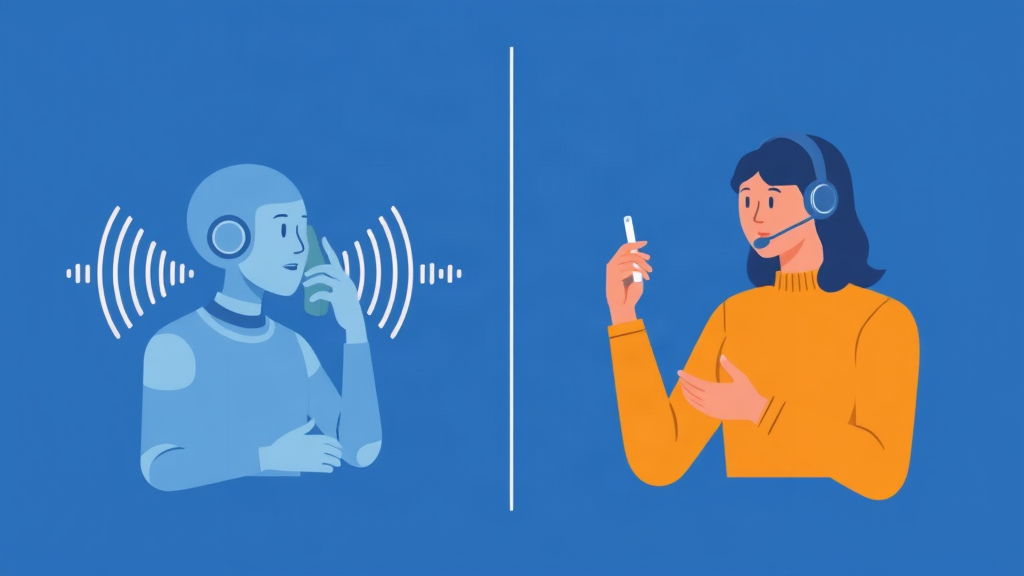
AI voice agent handling a routine call while warm-transferring another to a human agent
How to set it up: a step-by-step for Canadian businesses
Step one, write down your escalation triggers explicitly. Do not leave "transfer to a human" as a vague instruction; list the exact conditions — explicit request, two failed comprehension attempts, any mention of cancellation or legal terms, callers flagged as high value. An agent transfers well only when it knows precisely what it is watching for.
Step two, define the destinations and the fallbacks. Which person or department takes which type of call? What happens when that line is busy or it is 11 p.m.? Every trigger needs a primary destination and a graceful fallback, usually a message capture with a promised callback window.
Step three, configure the actual transfer tool in your platform. Modern voice stacks expose call-transfer and human-handoff functions you can wire to those triggers; ElevenLabs' agent platform documentation is a good reference for how transfer tools and guardrails are set up in practice. Step four, build the context summary the human hears on pickup — caller name, reason, what was attempted, sentiment — so no one has to ask the caller to start over.
Step five, tune for latency, because a slow, faster real-time model is the difference between a natural handoff and awkward silence; the recent gpt-realtime models from OpenAI exist precisely to shrink that gap. Step six, test with real scenarios before you go live — call your own agent as an angry customer, as someone who mumbles, as a caller who just wants a human — and confirm each path lands where you intended.
Don't forget the privacy handoff
A handoff is also a data event. The moment your agent passes a summary, a phone number, or account details to a human or into your CRM, you are moving personal information — and in Canada that is governed by PIPEDA federally, with additional provincial rules, most notably Quebec's Law 25, layered on top for many businesses.
Keep the transferred context to what the human actually needs to help, log who received it, and make sure any recording or transcript used in the handoff is covered by the consent your agent captured at the start of the call. A tidy handoff that quietly overshares is still a privacy problem waiting to happen.
The mistakes that make handoffs feel worse than no agent at all
The classic sin is the blind transfer that forces the caller to repeat their whole story to a human who is starting from zero. A close second is dead air — long, unexplained silence after the agent says "connecting you now." Tell the caller what is happening and roughly how long it will take.
Then there is the transfer to nowhere: routing someone to a line that just rings out or drops to a generic voicemail without warning. If no one can pick up, the agent should say so and offer a concrete callback, not fake a live transfer. And never let the agent negotiate against a clear request for a person — that one behaviour generates more complaints than almost anything else a voice agent does.
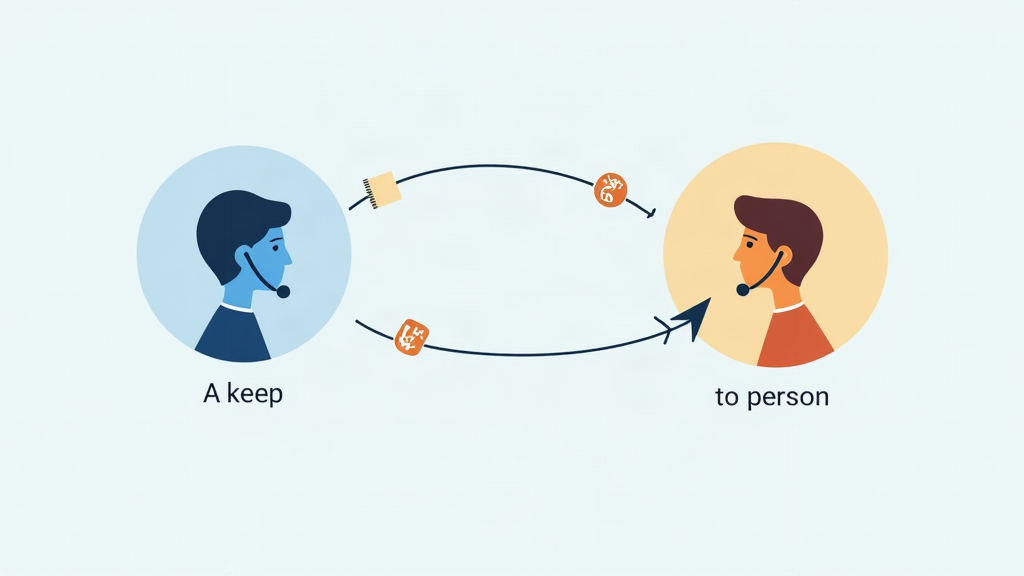
Decision flow showing when an AI voice agent keeps a call versus transfers it to a human
The bottom line
The businesses that win with voice AI in 2026 are not the ones whose agents never transfer. They are the ones whose agents transfer at the right moment, to the right person, with the full story already in hand. Automate the structured, repetitive calls without apology, and design the human handoff with the same care you would give your best receptionist's warm transfer.
If you want help mapping your own escalation triggers and wiring a handoff that callers barely notice, that is exactly the kind of setup we build every day for Canadian businesses at Agent IA Vocal. Start small: pick the two or three moments that most deserve a human, wire those cleanly, and expand from there once you trust the routing. Get the transfer right, and the machine and the human finally start working as one team.