Friday at 7:12, and the phone will not stop
The host stand at a busy Toronto bistro is already buried. Two walk-ins want a patio table, one delivery driver is waiting for a bag that is somehow both “coming right now” and not ready, and table 14 needs the bill split three ways. The phone rings once, twice, six times. Nobody gets it.
By the time someone snatches the receiver, the caller is gone. Maybe it was a family trying to book a table for 8:30. Maybe it was a regular asking whether the mushroom risotto is still on. Maybe it was a $140 takeout order. In restaurants, you usually do not find out which calls mattered most. You just feel the loss in the till later.
That is the basic case for an AI voice agent for restaurants: not some abstract tech project, but a way to stop good business from leaking out during the exact half-hours when your staff can least spare a hand.
The money hiding inside unanswered calls
Restaurant owners know the feeling already, but the numbers back it up. One analysis of more than a million restaurant calls found that roughly a third went unanswered during peak hours, and that lunch and dinner rushes drove most of the day’s call volume. That tracks with common sense. People call when they are hungry, on the way, or trying to make a plan for the next hour, not when your dining room is empty at 3:17 p.m.
And when people hit voicemail, many do not wait around. Surveys of diners have found that a lot of callers simply try the next restaurant. That sounds harsh until you remember how people actually behave. If someone is standing on a sidewalk in Calgary with two kids and wants a table, or sitting in a car in Halifax trying to place takeout orders before hockey practice ends, patience is not really part of the scene.
Fast response wins. The old Harvard Business Review research on response speed was about leads, not restaurants specifically, but the principle is familiar to anyone who has worked a host stand: the odds drop fast when the answer does not come quickly. The first place to pick up often gets the booking.
That matters in a sector as crowded as food service. Statistics Canada is a good place to look for the scale of retail and food-related activity in this country, and you do not need to be an economist to see the point. Canadian restaurants compete in every market, from downtown Vancouver to suburban Ottawa to St. John’s, often against three alternatives on the same block and a dozen more in a delivery app. Restaurant missed calls are not a small operational annoyance. They are lost reservations, lost orders, and lost first impressions.
What the phone is really doing all day
Owners sometimes talk about “the phone” as if it were one job. It is not. It is six or seven jobs wearing the same ringtone.
At lunch, it might be office workers asking whether you can squeeze in four people at 12:15. At 2 p.m., it is someone checking your holiday Monday hours, then a tourist in Montreal asking whether the kitchen is still open after 9, then a parent in Winnipeg wanting to know if the grilled cheese can come without butter. By late afternoon, the calls shift again: private event inquiries, reservation changes, “we’re running 20 minutes late,” “do you have a high chair,” “is there parking,” “can I order pickup for 7:30,” “do you still have the tasting menu,” “is the broth vegetarian,” “can you do gluten-free?”
A surprising share of those calls are simple, repetitive, and rules-based. That is not an insult to hospitality. It is just true. Hours, address, parking, reservation availability, menu items, common substitutions, whether you can book a table, whether the dining room is accessible, whether the patio is open, whether you take corkage, whether takeout orders can be placed over the phone. The questions change by concept, but the pattern is steady.
And that is exactly why AI phone answering for restaurants is worth a close look. The calls that pull a server off the floor or a manager away from expo are often the same calls that can be handled consistently by a system that has the right information and knows when to hand off.
What an AI voice agent actually does for a restaurant mid-rush
The first useful thing an AI voice agent does is answer immediately, even when five people call at once. Human hosts cannot split themselves in half. Software can. If a snowstorm hits Edmonton, a long weekend starts in Halifax, or a festival crowd pours into downtown Montreal, call volume spikes all at once. We have written before about how AI voice agents handle seasonal call surges, and restaurants feel that same pattern constantly, just compressed into lunch, dinner, and event nights.
The second job is getting the details right. Names, phone numbers, party size, date, time, special requests. A tired employee scribbling on a host pad while someone asks for extra hot sauce beside them is not always the gold standard of accuracy. A good voice agent confirms each field, reads it back, and stores it in the right place. That is the difference between “I think I heard 15” and “party of 5, Friday, 9 p.m., under Singh.” Reliable booking is not magic; it is disciplined call flow, which is why the same principles in what an AI agent must do to actually book appointments apply neatly to restaurant reservations too.
Then there are takeout orders. This is where many restaurants still lose money through pure friction. A caller wants two pad thais, one without egg, one extra spicy, spring rolls, and a Thai iced tea. The line is noisy, the kitchen printer is clattering, and somebody hears “no peanuts” as “extra peanuts,” which is not a charming mistake. A voice agent can capture takeout orders item by item, repeat them back, and in some setups even collect payment securely over the phone. If you want the practical side of that, this explanation of phone payments with an AI voice agent lays out how it works.
None of this means a machine replaces the judgment of a strong floor manager. It means the repetitive front-end work gets handled cleanly, so your people can focus on service and exceptions.
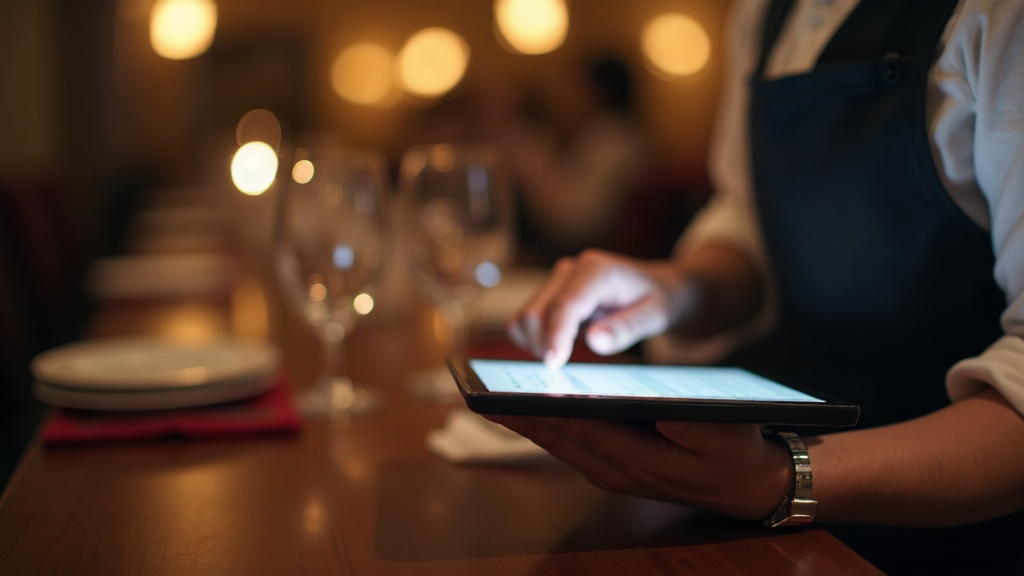
Taking a phone reservation at the host stand during a busy service
One country, six time zones, many voices
Canada is not one neat little caller profile. A restaurant in this country may hear English, French, Punjabi, Mandarin, Arabic, Tagalog, Spanish, or a mix of two languages in the same minute. Even when the call is entirely in English or entirely in French, accents vary wildly from region to region. A host in Vancouver knows that. So does a diner in Ottawa. So does a bistro in Montreal where a caller may begin in French, switch to English for the reservation name, then back again to ask about the wine list.
That is why language support is not a nice extra. For many Canadian restaurants, it is part of basic accessibility and customer service. An agent that can answer in English and French, and switch mid-call without getting confused, is far more useful than one built for a single-language script. It does not need to speak every language in Canada to be valuable. But it should at least handle the two official languages properly, with room for the business to decide how far to extend from there.
There is also the simple matter of time. In a country with six time zones, a restaurant group with locations in Toronto, Calgary, and Vancouver cannot manage phone behaviour as if every dinner rush happens at once. The right setup can route, answer, and log calls according to each location’s hours, menus, and local staffing reality. That matters more than flashy features.
Menus, allergens, and the places cheap bots fall apart
If there is one area where restaurants should be skeptical, it is menu accuracy. This is where bad automation gets dangerous, not just annoying.
Take a real question: “Does the pad thai have peanuts?” A decent agent should not bluff. If the current menu data says the dish contains peanuts or may come into contact with them, it should say that plainly. If the menu has a peanut garnish that can be removed but the kitchen cannot guarantee against cross-contact, it should say that plainly too. And if the system is not certain because the item changed last week, or because the kitchen handles nuts broadly, the correct answer is not a smooth lie. The correct answer is: I am not certain, let me flag this for a staff member to confirm, or take your number for a quick call back.
That sounds obvious, but it is exactly where cheap bots fail. They try to be helpful by sounding confident when they do not know. In a restaurant, confidence is not the goal. Accuracy is.
The same goes for gluten, dairy, shellfish, halal questions, vegan substitutions, and kids’ menu details. A good voice agent works from an up-to-date menu and policy set provided by the restaurant. It should know what it knows, and it should know when to stop and hand the call to a human. Ideally it also logs the question, so owners can see recurring gaps. If ten callers in a week ask whether the fryer is shared, that is useful operational information, not just phone traffic.
An AI voice agent for restaurants is strongest when the answers are current and bounded. It is weaker when owners expect it to improvise around a menu that changes daily and is never documented anywhere except in the chef’s head.
Will it fit your POS, reservations, and the way you already work?
This is usually the least glamorous part of the conversation and the most important. The question is not “does it use AI.” The question is “will it plug into the systems my staff already rely on without creating fresh chaos.”
For reservations, many restaurants already live inside OpenTable or Resy. Others use a simpler booking tool, a house account, or a paper book because that is what still works on a packed Saturday. A voice agent can connect in different ways. Sometimes it writes directly into the reservation platform. Sometimes it uses an API through a middleware layer. Sometimes, if the setup is basic, it just sends a structured text or email to the host stand for confirmation. None of those is inherently wrong. They are just different levels of integration.
The same practical reality applies to POS systems such as Lightspeed, Square, and Toast. Some restaurants want phone orders to flow right into the ordering system. Others are fine with the agent collecting the order and sending it to a kitchen printer, a tablet, or a staff phone for quick review before it is fired. For some operators, especially independents, that lighter hand-off is actually better. Fewer moving parts means fewer surprises on a Friday night.
This is the honest answer: integration is rarely one-size-fits-all. Some connections are native. Some need custom work. Some are not worth forcing if a simpler process is more reliable. Any vendor who tells you every setup is easy is probably skipping the part where your staff have to live with it.
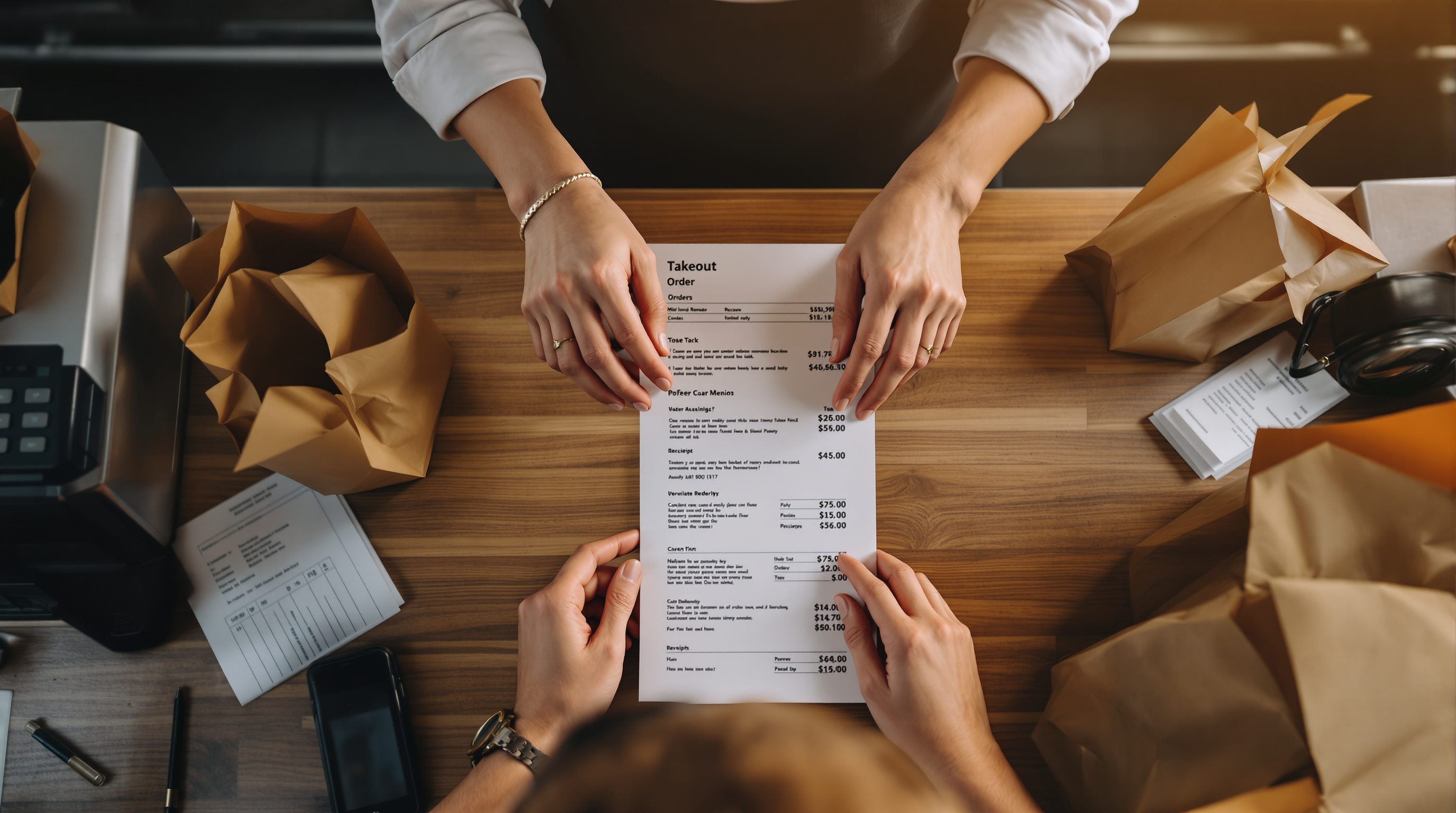
Packing a phone takeout order at the kitchen pass
Who should use it, who should test carefully, and the privacy piece
For a busy independent spot that misses calls every service, the case can be straightforward. If you are losing reservations, fumbling takeout orders, or asking a bartender to answer the phone while pouring six pints, there is likely enough value to test. The same is true for a small chain that wants consistent phone handling across locations in places like Ottawa, Edmonton, and Halifax.
For other restaurants, the answer is more conditional. If your concept changes menu items constantly, takes highly customized orders, or depends on a very personal reservations style for VIP regulars, you may want a narrower deployment. Let the agent handle hours, directions, basic questions, and overflow first. Then decide whether to expand into booking and ordering once you trust the results.
The smart way to evaluate it is boring, which is usually a good sign. Test how it handles your busiest half-hour, your trickiest menu questions, your no-shows and late arrivals, your allergy calls, your private event inquiries, and the names people always mishear. Listen to recordings. Try regional accents. Call in English, then French. Ask it something ambiguous on purpose. See whether it admits uncertainty or makes things up.
And do not ignore privacy. If calls are recorded or transcribed, Canadian privacy rules apply. The Office of the Privacy Commissioner of Canada is the right starting point for understanding the broader expectations around personal information, consent, and handling recorded conversations. Restaurants do not need to become privacy scholars overnight, but they do need to treat caller data seriously.
If you are curious, the sensible next step is not a giant rollout. It is a short demo with your actual menu, your actual hours, and a few real call scenarios from your restaurant. That will tell you more than any sales pitch. In this category, plain evidence beats promises every time.