
A plumber in Mississauga listens to a 7 a.m. voicemail. The caller opened in English, rattled off an address, then turned away from the phone to describe a burst pipe in Punjabi to someone in the background — and the old answering machine caught none of what mattered. The job went to whoever picked up first. That caller was not an edge case. In a country where roughly one in eight people speaks a language other than English or French at home, the “edge” is most of the map.
Canadian businesses — from Victoria dental clinics to Winnipeg contractors to Halifax law offices — are handing their phone lines to AI voice agents to catch after-hours calls, book appointments and stop the slow leak of missed revenue. The quiet question underneath every one of those deployments is the same: can the agent actually understand the person on the other end? Not a crisp speaker from a demo video, but a real caller from Surrey, Laval or Moncton, with an accent, a second language, and the very normal habit of switching between the two mid-sentence.
Here is what the 2026 data says about how well AI voice agents handle Canada’s languages, where they still stumble, and what you should test before you point your business line at one.
The number most phone systems quietly ignore
Start with the census, because the scale tends to surprise people. In the 2021 Census, about 4.6 million people — 12.7% of the population — reported speaking a language other than English or French most often at home, according to Statistics Canada. Close to one in four Canadians has a mother tongue that is neither official language, and more than 200 languages were reported across the country. Meanwhile, English–French bilingualism sits near 18% nationally — so the caller who opens in French and finishes in English is not unusual either.
That diversity is not spread evenly, which is exactly why a one-size phone script fails. Mandarin and Punjabi dominate in parts of the Greater Toronto and Vancouver areas. Tagalog has surged with immigration across the Prairies. Arabic, Spanish and South Asian languages are climbing nationally. And in Quebec, the baseline expectation is French first. If your phone line only truly works for a mid-Atlantic English speaker, you are, statistically, turning away a meaningful slice of the people trying to give you money.
Why language is a revenue problem, not a nice-to-have
Here is the part that gets lost in the “does it sound human” conversation: a missed or mishandled call is a lost customer, full stop. When a caller cannot make themselves understood in the first fifteen seconds, they do not file a complaint. They hang up and dial the next business on the list. You never see the loss because it never shows up as a record anywhere.
Put a dollar figure on it. If an after-hours call is worth, say, $300 in booked work, and your line fumbles even two of those a week because the caller’s accent or language confused an old system, that is roughly $30,000 a year walking out the door — silently. We walk through that math in more detail in our breakdown of what an AI voice agent costs versus a traditional answering service, and the broader adoption picture in our roundup of AI voice agent statistics for Canada. The headline is simple: language coverage is not a feature, it is a revenue filter.
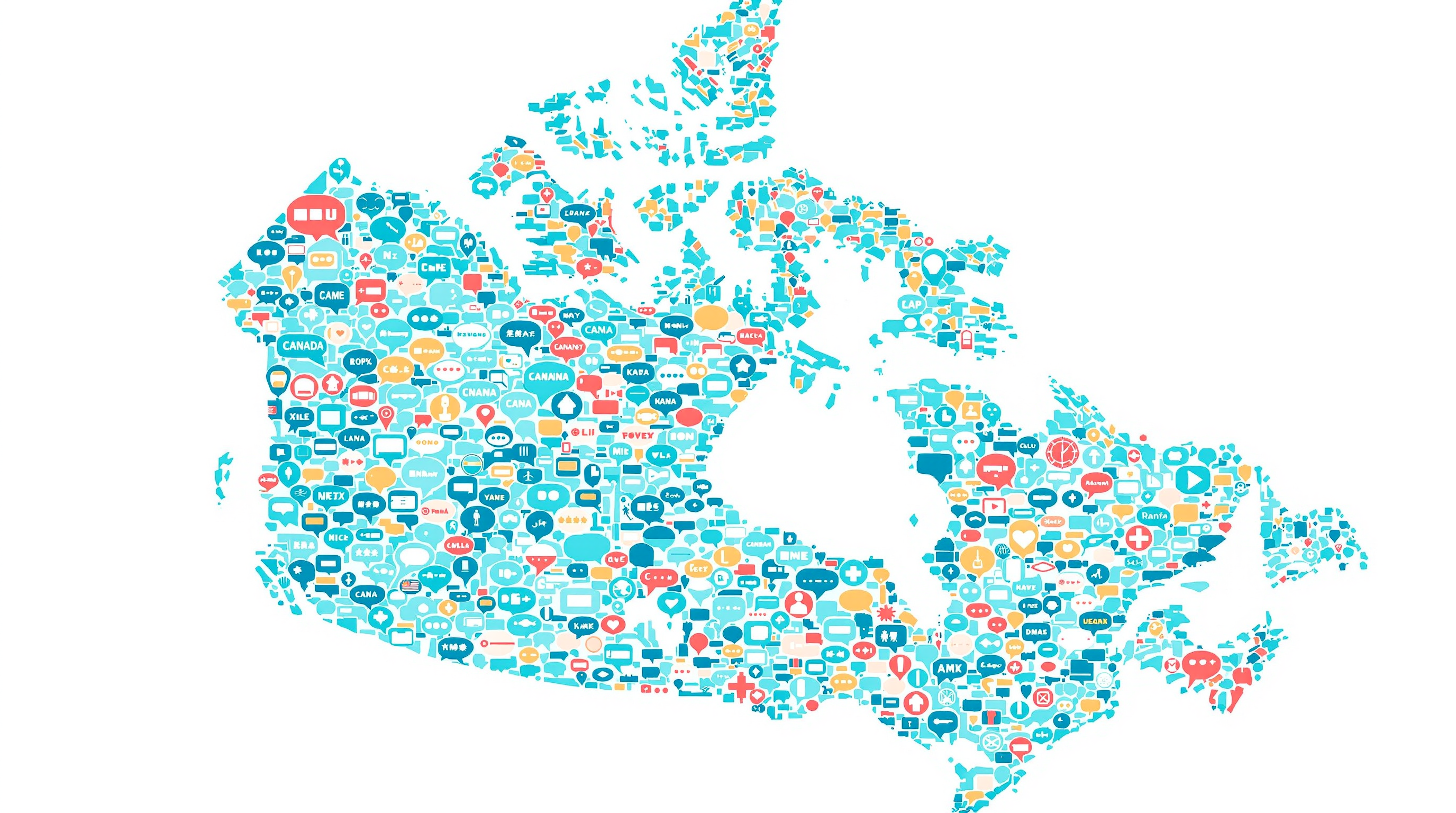
Illustration of Canada's many spoken languages shown as colourful speech bubbles over a stylized map
How well do AI voice agents actually understand accents in 2026?
Better than they did even two years ago — and still not magic. The honest version: modern speech recognition handles “standard” North American English extremely well, often with error rates low enough that you would never notice a slip. The further a caller’s accent sits from that training-data centre of gravity, the more the error rate climbs.
Independent benchmarking consistently shows the same shape. Clean, familiar accents transcribe almost perfectly. Heavily accented English — a strong regional accent, a recent arrival speaking their third language — sees word errors rise, and once enough words land wrong, the conversation itself starts to wobble. Open-data projects like Mozilla Common Voice exist precisely because the industry knows this gap is real and is trying to train it away with more diverse voices.
What this means in practice is less scary than it sounds, because a phone call is a narrow task. An agent booking an appointment does not need to understand everything a caller might say about the weather — it needs to reliably capture a name, a callback number, a date and a reason. A well-built agent that confirms each of those back to the caller (“I have Priya, calling back at 416-555…, is that right?”) can quietly correct a lot of accent-related misses that a silent, assume-nothing system would turn into a wrong booking.
The French question: Québécois French is not France French
This is where a lot of generic “supports French” badges fall apart. A model trained mostly on European French can handle a Parisian news anchor and then trip over a caller from Saguenay. Quebec French has its own vocabulary, its own rhythm, and accents that vary from the Outaouais to the Gaspé. “Supports French” and “handles a real call from a small-business customer in Trois-Rivières” are not the same claim.
For a Canadian deployment, the thing to verify is not whether an agent speaks French — nearly all of them will — but whether it was tuned on Canadian French, and whether its voice output sounds local rather than imported. A caller hears the difference instantly, and an agent that sounds like it is reading from Paris can feel as off as a chatbot that calls a toque a “beanie.” We dig into the voice-quality side of this in our piece on bilingual AI voice agents that actually sound human.
Code-switching: the real Canadian stress test
Accents are the easy problem. The hard one — the genuinely Canadian one — is code-switching: a caller who glides between English and French (or English and a third language) inside a single sentence. “Oui bonjour, I’m calling pour prendre un rendez-vous for next Thursday.” A human receptionist in Ottawa or Montreal does not even blink at that. A voice agent has to detect the switch, keep transcribing accurately across it, and answer in the language the caller clearly prefers.
This is still one of the harder tasks in speech AI, and it is exactly the scenario most vendor demos skip. Bilingual names and addresses make it worse: a “Geneviève” spelled out, a street like “Rue Sainte-Catherine” dropped into an English sentence. The 2026 reality is that the best agents handle smooth, common switches well and still fumble rapid-fire or mid-word switches. If your customer base is genuinely bilingual — and in much of Canada it is — this is the first thing you should throw at any agent during a trial, not the last.
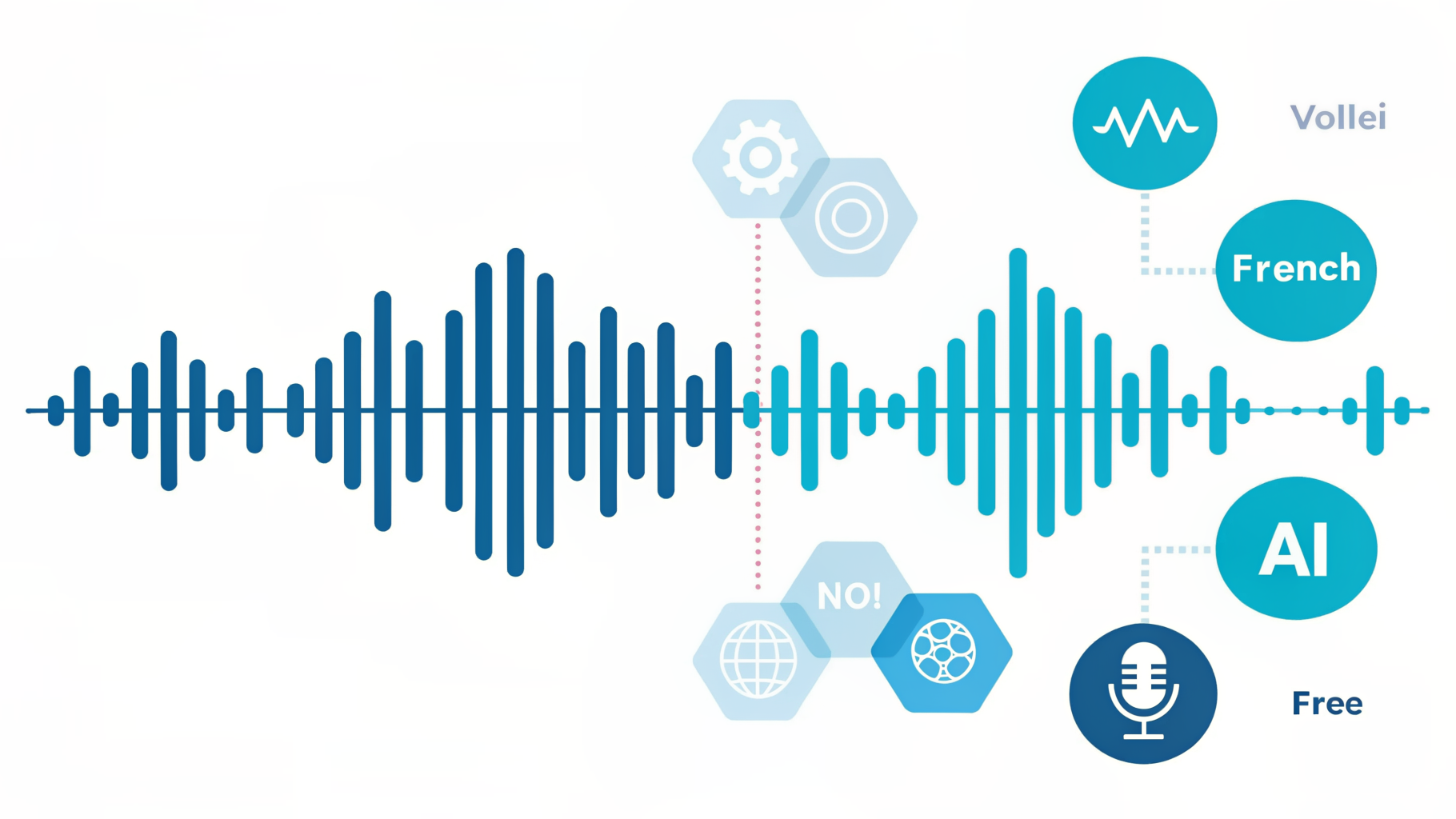
An AI voice agent processing a sound wave that splits into multiple languages and accents
The rules layer: Bill 96, data residency, and serving people in their language
In Quebec, language service is not only good manners — it is law. Under Bill 96 (Law 14), businesses operating in the province face reinforced obligations to serve customers in French, with real enforcement behind them. The Canadian Federation of Independent Business maintains a plain-language guide to what that means for smaller operators. If you deploy a voice agent for a Quebec-facing line, French cannot be a bolt-on — it has to be the default, and it has to be good.
There is a second Canadian wrinkle the big global platforms rarely mention on their homepage: where your callers’ audio is actually processed and stored. Privacy expectations — and in some sectors, obligations — can make it matter whether a recording of a customer’s voice leaves the country. It is a fair question to ask any vendor, and a surprising number of international tools answer it vaguely. For a Canadian business, “which languages” and “whose servers” are two halves of the same due-diligence conversation.
What to test before you trust an agent with your phone line
Skip the glossy demo and run your own five-minute audit. Call the agent the way your messiest real customer would. Try a heavily accented caller, if you can arrange one. Open in French and switch to English halfway through. Spell out a name with accented characters. Give a Quebec street address inside an English sentence. Then do the reverse. You are not looking for perfection — you are looking for whether the agent confirms what it heard, recovers gracefully when it mishears, and never silently books the wrong thing.
A good agent will repeat key details back, ask again instead of guessing, and switch languages to match the caller rather than stubbornly holding its line. A weak one will sail confidently past a misheard phone number and leave you with a dead callback. The difference does not show up in a feature list. It shows up on the twentieth real call.
Where this is heading
The trend line is clear: the gap between “standard” and “accented” speech is narrowing every year as training data gets more diverse, Canadian French gets its own proper tuning, and code-switching moves from research problem to product feature. For Canadian businesses, that turns a long-standing weakness of automated phones — that they only really worked for one kind of caller — into something closer to an advantage. An agent that answers every call, in the language the caller chooses, at 2 a.m., is not a downgrade from a bilingual receptionist you cannot afford to staff around the clock. In a country this linguistically rich, it might be the only way to actually answer everyone.
The businesses that win the next few years will not be the ones with the flashiest demo. They will be the ones that treated “which languages, how well, and whose servers” as a serious question — and tested the answer on their own real calls before trusting it with their front door.