
On December 11, 2026, OpenAI will switch off two of the voice options that millions of people use inside ChatGPT. The "Advanced" and "Standard" voices are being retired and folded into a single new experience called GPT-Live, and OpenAI only began notifying users of the change on November 10. If you use ChatGPT mostly to settle arguments in the car, you will barely notice. But the announcement reads very differently if your business answers its phone with an AI voice, because it is a blunt reminder of something uncomfortable: the voice technology you rely on is not actually yours. It can change, or vanish, on a timeline you do not control. (You can read the details of OpenAI's voice retirement here.)
To be fair, that particular change is happening inside the ChatGPT consumer app, not to a telephone system. But it is the loud version of a quiet trend. Over the past year, voice-AI startups have been bought, merged, and wound down at a pace most owners never see. When Meta absorbed the team behind PlayAI in 2025, the standalone platform was reportedly shut down and its customer data deleted within months. Smaller API providers have posted "sunset" notices giving developers a few weeks to move. For a side-project chatbot, that is an inconvenience. For the number your customers call, it is a continuity problem.
So let's treat it like the operational risk it is. What happens to a Canadian business when its AI voice provider gets acquired, deprecates its API, or simply turns off the lights, and what can you do now, while everything is working, so that day is a shrug instead of a scramble?
Why a disappearing provider hits your phone harder than your chatbot
A website chatbot going dark is embarrassing. A phone line going dark is lost revenue, in real time. When someone in Winnipeg calls your HVAC company at 7 p.m. about a flooding basement and hears dead air, they do not file a support ticket. They call the next company on Google. The cost of a voice outage is not theoretical, and it is not spread out, it is concentrated in your busiest, highest-intent calls.
There is a second reason the phone is more fragile. Your AI voice agent is not one piece of software. It is a chain: a phone number, a telephony carrier, a speech-to-text layer, a language model, a text-to-speech voice, and the integrations that push bookings into your calendar or CRM. A provider that "shuts down" might only be one link in that chain, but if it is the link that owns your number or your call routing, the whole thing stops. Most owners have never been told which company actually holds each link, which is exactly the problem.
The three ways a voice provider vanishes
It gets acquired. This is the most common exit in 2026, and the most deceptive, because the headline sounds like good news. "Acquired by a big tech company" reads as validation. But many of these are acquihires: the buyer wants the engineers, not the product. The team moves to a lab, the roadmap freezes, and the platform you depend on is quietly deprecated over the following months. You often get weeks of notice, not years.
It deprecates the API. Even providers that are perfectly healthy retire old models and endpoints. A speech model you built your agent around gets a sunset date; a transcription API is marked legacy; a "v2" replaces "v1" with different behaviour. If your agent was tuned against the old version, the new one can change how it understands accents, handles French, or interprets your prompts, subtly, and without anyone on your team noticing until calls start going sideways.
It runs out of road. The least discussed and most brutal: the company simply fails, pivots, or loses funding. There is rarely a graceful 30-day export window when a startup is insolvent. This is why a provider's stability is a feature you should be shopping for, not an afterthought, the same way you would weigh reliability and uptime before trusting an AI voice agent with your front line.
What you actually lose, and what you get to keep
When a provider disappears, not everything is at risk equally. Knowing the difference tells you where to focus.
Your phone number is the crown jewel, and the good news is that in Canada it is portable by law. You are not supposed to lose it just because a software vendor folded, more on that below. Your agent's brain, the prompt, the script, the list of questions it asks, the way it routes calls, is just configuration. If you have a copy of it, you can rebuild it on another platform in hours. If it lives only inside the dead provider's dashboard, you are rewriting it from memory. Your call history, recordings, transcripts, and the data captured on each call, is the piece most likely to be deleted on shutdown, and the piece most tangled in Canadian privacy law. Your integrations, the links to your calendar, CRM, or booking system, usually need to be rebuilt, but they are rebuildable if you have documented them.
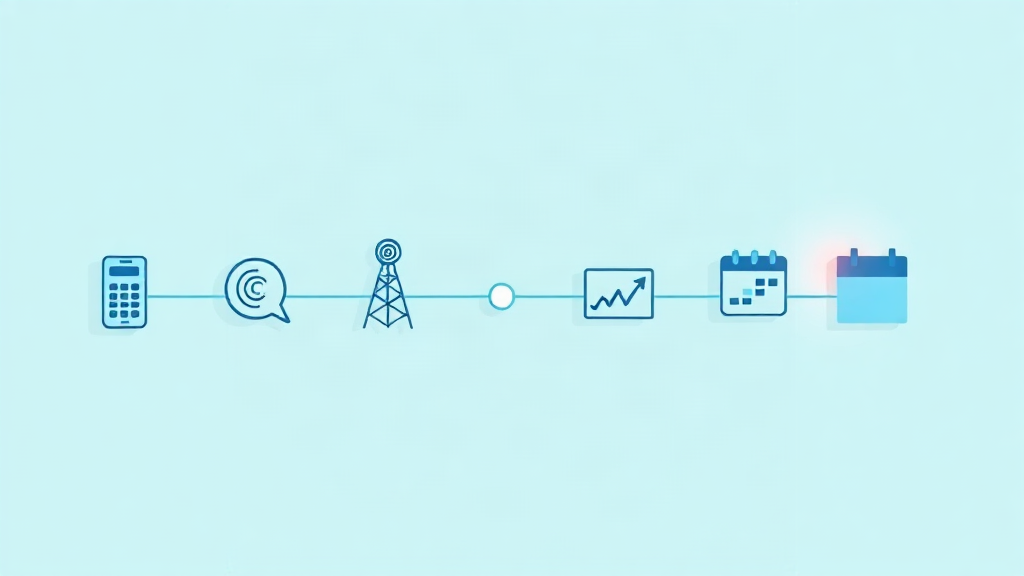
The chain behind an AI voice agent: phone number, carrier, speech-to-text, language model, voice, and calendar integration
The Canadian continuity checklist
Here is the practical part. None of this takes long, and most of it you only have to do once.
1. Make sure you own your number. Ask your provider a direct question: is this number registered to my business, and can I port it out to any Canadian carrier on request? Number portability is a regulated consumer right in Canada, overseen by the CRTC, but it only protects you cleanly if the number is in your name, not buried in the vendor's account. Where you can, keep your main business number with your own carrier and forward it to the AI agent, rather than letting the agent's platform be the number's home. Forwarding you can redirect in minutes; a port-out from a defunct company can take days you may not have.
2. Get your data out, on a schedule. Do not wait for a shutdown notice to discover you cannot export. Confirm that you can download your call recordings, transcripts, and logs in a usable format, and actually do it periodically. While you are at it, ask where that data physically lives: a Canadian data centre, or somewhere else? That single question matters for the next section.
3. Keep your configuration in a document you control. Copy your agent's greeting, prompts, FAQ answers, transfer rules, and business hours into a plain document in your own Google Drive or Notion. If you ever have to move, this is the difference between an afternoon and a bad week.
4. Read the exit clause before you sign, not after. The contract questions almost nobody asks: how much notice do they owe you before discontinuing service? Will they help you migrate? How long do they keep, or delete, your data after you leave? Who owns the recordings? A provider that answers these clearly is telling you something good about how it will treat you on the way out.
5. Have a second provider in mind. You do not need to run two platforms at once. You just need to know, today, who you would call if your current one went dark, so the decision is not made in a panic.
The part Canadian law makes non-negotiable
Your call data is not just an operational asset; it is regulated personal information. Under PIPEDA, the federal privacy law, you remain accountable for your customers' information even when a third-party AI handles the call. If your provider gets acquired by a foreign company and your data moves across the border, or gets deleted without you keeping a copy, that is your compliance problem, not just theirs. Businesses with customers in Quebec have an even sharper version of this under Law 25, which sets specific rules for transferring personal information outside the province.
Two things follow from this. First, you should know where your data lives before a provider changes hands, because an acquisition can quietly relocate it. Second, recording calls in Canada generally requires that callers be aware they are being recorded, and that obligation does not disappear when you switch platforms. We go deeper on this in our guide to what PIPEDA asks of Canadian businesses using AI voice agents.
How to migrate without misleading your customers
Some vendors will advise you to tell customers that a forced migration is just a "system upgrade." Resist that. If the change is invisible to callers, you do not need to say anything at all. But if it affects how calls are handled, how data is stored, or who is processing it, your customers, and Canadian privacy expectations, are better served by a short, plain notice than by spin. Trust is hard to win on a phone line and easy to lose, and "we quietly moved your data to a new company and hoped you would not notice" is not a story you want surfacing later.
The migration itself, if you have done the checklist, is mostly mechanical: point your forwarded number at the new agent, paste in your documented configuration, reconnect your calendar, and run a dozen test calls, including the hard ones, like a caller switching between French and English mid-sentence, before you cut over. Keep the old setup reachable for a few days as a fallback if the provider still exists.

A business-continuity checklist beside a Canadian data centre, representing owning your number and exporting your call data
Questions to ask before you ever need this plan
The best time to handle a provider shutdown is the day you choose a provider. Alongside the usual questions about price and features, add the ones that reveal how trapped you would be: who owns my number? Can I export my data, and from where is it served? What notice do you give before discontinuing service? Our full list of questions to ask before buying an AI voice agent in Canada is a good place to start, and the answers tell you as much about a vendor's character as its demo does.
The bottom line
AI voice technology is moving fast, and fast cuts both ways: the capabilities are improving, and the companies behind them are consolidating. For a Canadian business, the goal is not to predict which provider survives. It is to make sure that if any one of them disappears, bought, sunset, or simply gone, your phone keeps getting answered and your customer data stays in your control. Own your number, keep your data and your configuration in your own hands, read the exit clause, and know your backup. Do that, and the next "we have been acquired" email is a two-minute read instead of a fire drill.