
It’s Saturday at noon in Plateau-Mont-Royal. One stylist is halfway through a bleach application, another is rinsing toner, the receptionist is checking out a client while trying to answer a question about balayage pricing, and the phone keeps ringing. Again. By the fourth missed call, someone looking for a same-day appointment just moves on to the next salon on Google.
That’s where an AI voice agent hair salon setup starts making practical sense. Not as a flashy AI experiment. Not as a “maybe later” tech project. As a revenue protection tool for businesses where demand often arrives at the exact moment nobody can pick up. In hair salons, spas, and esthetic clinics across Quebec, lost calls usually don’t mean “call back later.” They mean lost bookings, empty slots, and clients who never make it into your chair.
Why Quebec salons and spas still miss 30% to 40% of incoming calls
Beauty businesses don’t receive calls in a smooth, predictable flow. They come in waves: Thursday evening before the weekend, Saturday morning, the week before Mother’s Day, prom season in the spring, and the holiday rush in December when everyone suddenly needs hair, nails, lashes, skincare, and massage appointments before Friday. The busier the team gets, the harder it is to answer the phone consistently.
That’s why salons and spas commonly miss 30% to 40% of incoming calls during business hours. Not because they don’t care, but because they’re actively serving clients. A stylist can’t stop in the middle of a color correction. An esthetician can’t grab the phone while working on a facial. A massage therapist can’t interrupt a treatment room session to answer pricing questions. And according to Famulor, 69% of salon and spa customers have abandoned a booking because they couldn’t reach anyone.
In Quebec, there’s another layer: language. A spa in Laval may handle French and English all day. A salon in the Mile End might get calls from bilingual locals, tourists, and allophone clients who simply want quick answers about availability, pricing, parking, or whether a service is offered. If no one answers after hours, on Sundays, or during peak periods, many callers won’t leave a voicemail. They’ll keep searching.
So the real question isn’t whether your business misses calls. It’s how much those missed calls are worth. If one out of three missed calls could have become an appointment, the math adds up fast. Especially when some of those bookings are higher-ticket services like bridal packages, corrective color, extensions, or microblading. For a broader cost breakdown, this article on receptionist vs answering service vs AI voice agent helps frame the hidden cost of “we’ll call them back later.”
How an AI voice agent works in a hair salon or spa
An AI voice agent is not just a smarter voicemail. It’s an automated phone assistant that can understand natural speech, respond in real time, and follow rules built around your business. That can include booking requests, common service questions, cancellation handling, lead capture, appointment reminders, or routing urgent calls to the right person.
In practice, the caller says what they need in their own words: “I need a women’s haircut this week,” “How much is a hydrating facial?”, “I need to move my appointment,” “Do you do men’s cuts?”, “Can I book for prom makeup?” The system identifies the intent, checks the configured workflow, and either answers directly, offers available next steps, gathers the right details, or escalates when a human should take over.
What matters most for Quebec businesses is not just the technology itself but how it’s implemented. With Agent IA Vocal, the setup is handled by the TECHMA team. That includes call flows, service logic, integrations, transfer rules, bilingual handling, and business-specific wording. It’s not a self-serve platform where salon owners are left alone to wire everything together between clients. TECHMA configures it around the real operating reality of the business.
There’s also compliance. Salons and spas often collect more than names and phone numbers. They may store allergy notes, skin sensitivities, treatment history, or other personal information. In Quebec, that brings Loi 25 into the conversation. If you want a solid privacy angle from another service sector facing similar issues, this article on missed calls, conversion, and Loi 25 is a useful reference point. Different industry, same operational and privacy stakes.
Four automations that actually move the needle
1) 24/7 appointment capture. This is the most obvious win, but also the one with the fastest ROI. A client calls at 9:15 p.m. after putting the kids to bed. A tourist in Old Quebec wants a blowout for the next morning. A bride calls on Sunday asking about a trial booking. Instead of hitting voicemail, they reach a live conversational system that can guide the next step. In many cases, about one missed call in three can still convert into an appointment when an AI agent steps in, and roughly 25% of those interactions can include upsell potential.
2) Instant answers to repeat questions. Price checks, service duration, opening hours, walk-in policy, parking, bilingual service, hair type compatibility, prep instructions. These calls matter, but they don’t always need a staff member to stop what they’re doing. A well-configured AI assistant can answer them immediately and consistently. According to CloudTalk, salons and spas are among the strongest use cases for AI reception because of the high volume of repetitive, timing-sensitive inquiries.
3) Cancellations, rescheduling, and waitlist recovery. This is where many businesses leak revenue twice. First, a client cancels. Then nobody processes the opening fast enough to refill it. An AI voice agent can capture the cancellation, help reschedule, and trigger the right internal follow-up so the slot has a chance to be rebooked. Could a human do this too? Of course. But will it happen consistently during a packed Saturday? That’s another story.
4) SMS reminders and premium lead capture. No-shows can cost 20% to 25% of potential revenue in beauty businesses when they pile up, and automated reminders can cut that in half, based on the statistics cited by Famulor. On top of that, the agent can gather high-value inquiries properly: bridal hair, group bookings, microblading, advanced skin treatments, extensions, event makeup. Instead of a missed call, your team receives a qualified lead with the date, service, budget range, and contact details.
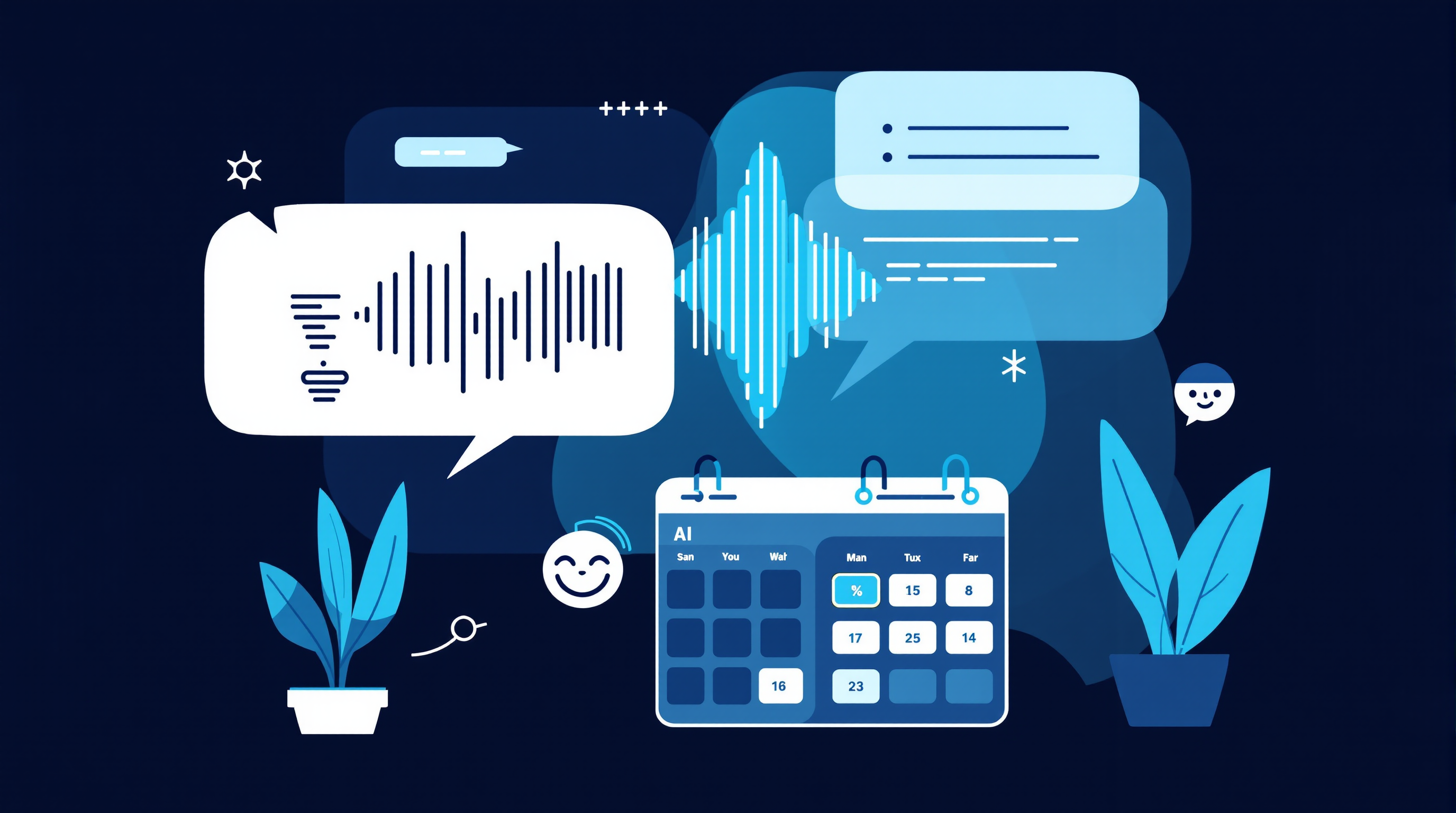
Bilingual AI voice agent booking salon and spa appointments around the clock
Sector-specific benefits for Quebec beauty businesses
The first benefit is recovered revenue. Imagine a Plateau salon missing 20 calls on a busy Saturday. If just one-third of those calls become bookings through an AI voice assistant, that’s around 6 or 7 appointments saved. At an average ticket of CAD $85, that’s already more than CAD $500 in one day. If some of those calls involve color services, spa packages, or premium esthetics, the number climbs much faster.
The second benefit is fewer no-shows. A simple reminder workflow with confirmation can prevent forgotten appointments, timing mistakes, and last-minute confusion. For spas and esthetic clinics, where appointment blocks are longer and harder to refill, reducing no-shows by half is not a small operational improvement. It directly restores billable capacity without adding headcount.
The third is better service for bilingual and multilingual clients. A Laval spa with a French-English customer base doesn’t want callers bouncing off voicemail because they weren’t sure which language to use. A Montreal salon serving locals and tourists can’t afford friction on basic booking calls. An AI assistant that handles French and English smoothly, and can manage varied phrasing, helps the business stay accessible without putting more pressure on the front desk.
There’s also a staff experience benefit. Fewer interruptions during services. Less scrambling to answer repetitive questions. More focus on the client in the chair or on the treatment bed. And in a market that’s accelerating quickly, with virtual reception and AI phone handling growing fast in 2026, early adopters gain a practical advantage. This piece on Quebec voice AI market trends shows how fast the space is moving, while GetNextPhone highlights the broader growth of AI receptionist adoption among small businesses.
Common objections from salon and spa owners — and the real answers
“My loyal clients will hate talking to a robot.” Fair concern. But in real life, clients usually hate not getting an answer more than they hate speaking to an assistant. When the business is transparent and says it uses an assistant to help with bookings, common questions, and after-hours calls, acceptance is often above 80%. The key is honesty. Don’t pretend it’s a human. Present it as a faster way to help clients get what they need.
“It’s too expensive for a small salon.” Compared to what? A full-time receptionist? An answering service that doesn’t understand your service menu? The cost of missed appointments every week? Agent IA Vocal offers transparent pricing in CAD, with plans in the CAD $49 to $199 per month range, and the setup is handled by TECHMA. For many salons, one recovered premium booking can cover the monthly cost.
“My front desk is enough.” Maybe on a quiet Tuesday. But what about the Saturday before Mother’s Day? Prom season? December holiday rush? A strong front desk is valuable, but no receptionist can answer every call while checking out clients, coordinating walk-ins, and supporting the team. The AI voice agent doesn’t have to replace your staff. It catches overflow, after-hours demand, repetitive questions, and missed opportunities.
“I’m worried about client data.” You should be. That’s not a minor footnote. In Quebec, beauty businesses need to think about privacy, Canadian hosting, internal access control, and how personal information is handled under Loi 25. That’s one reason the TECHMA-led setup matters. It brings structure and accountability, especially for businesses collecting sensitive notes tied to skin conditions, allergies, or treatment suitability.
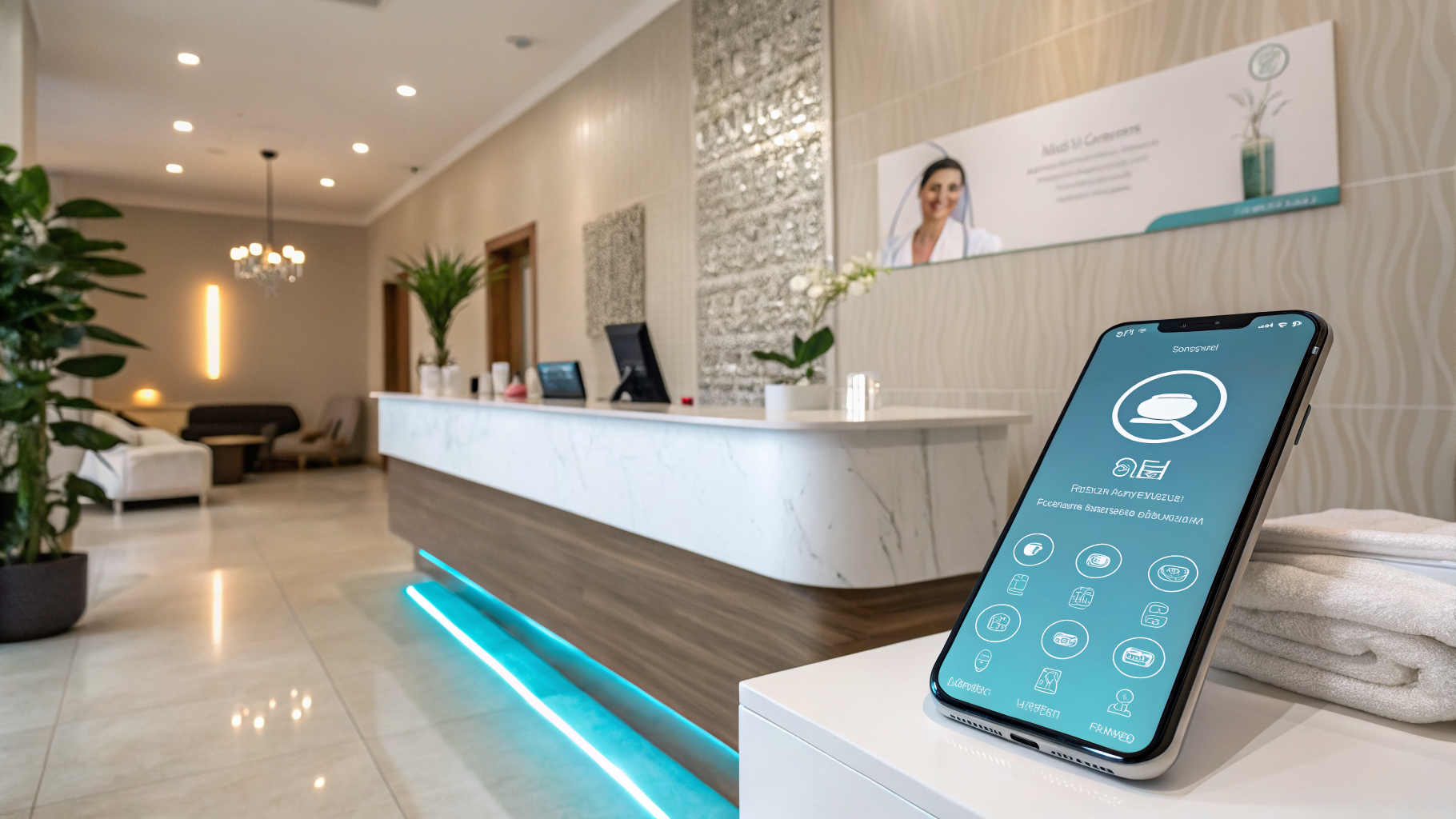
Automated SMS reminders cutting no-shows and refilling freed salon slots
What to measure before and after deployment
If you want to know whether an AI voice agent is working, start with a baseline. Track total incoming calls, missed call rate, how many voicemails actually get returned, and weekly no-shows. Then add your average appointment value. That gives you a clean business case before anything is implemented.
After launch, measure how many calls the agent handled, how many turned into booked appointments, how many were transferred to staff, and how many cancellations or reschedules were processed properly instead of disappearing into voicemail. Also track premium inquiries captured for bridal, event, or advanced esthetic services. That’s often where the ROI becomes visible first.
One more metric is easy to overlook: interruption load on staff. How many fewer disruptions happen during live services? How much more present is the team with in-person clients? It’s harder to quantify than a booked appointment, but operationally it matters a lot. And honestly, what salon owner wouldn’t want a less chaotic Saturday?
FAQ — real questions from Quebec salons and spas
Can an AI voice agent handle more than basic bookings? Yes. It can manage a large share of standard requests such as haircuts, simple color appointments, facials, massages, waxing, nails, and consultations. For more complex services like bridal packages, corrective color, or advanced esthetics, it can qualify the inquiry and pass a structured lead to your team.
Does it work in both French and English? Yes, and that’s a major advantage in Quebec. For a Laval spa or a Montreal salon, bilingual phone handling can reduce friction and help convert callers who might otherwise move on quickly.
Will it replace my receptionist? Not necessarily. In many businesses it acts as reinforcement, not replacement. It covers overflow, after-hours calls, FAQs, cancellations, reminders, and lead capture while your front desk team stays focused on in-person service and higher-touch interactions.
Is setup complicated? No, because TECHMA handles the configuration. That’s a key difference versus self-serve tools. Call logic, service categories, transfer rules, and integrations are adapted to your actual business model.
Conclusion: recover missed bookings without adding chaos to the team
In salons, spas, and esthetic businesses, missed calls are not a minor inconvenience. They are lost bookings, unfilled time slots, new clients who never come back, and pressure piled onto teams that are already busy. During peak seasons like prom, Mother’s Day, and the holidays, that hidden revenue leak becomes impossible to ignore.
A properly configured AI voice agent hair salon solution helps Quebec beauty businesses answer when no one can pick up, reduce no-shows, support French and English callers, and handle client information more responsibly within a local compliance mindset. If you want to see what that could look like for your salon or spa, book a demo at Agent IA Vocal or review transparent CAD pricing at the pricing page. TECHMA handles the setup for you, so your team doesn’t have to figure it out between color appointments.