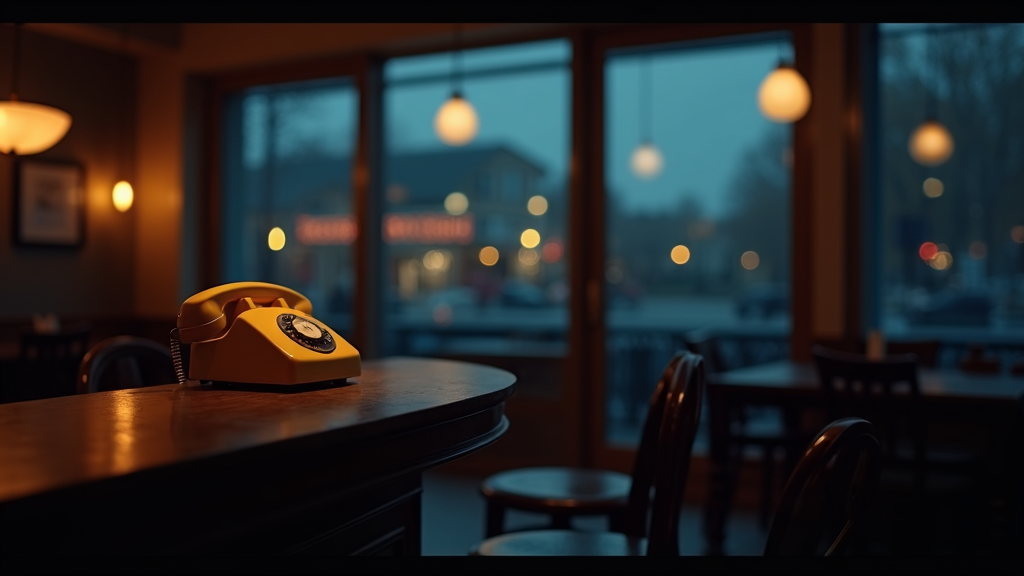
It's Friday 6:17 PM. The dining room is packed. The phone keeps ringing. Nobody answers.
If you run a restaurant in Quebec, you know the scene by heart. The dinner rush is in full swing, your hostess is juggling three tables that want to pay simultaneously, two walk-ins standing near the door, and the phone — ringing again, for the sixth time in twenty minutes.
Industry data shows that 43% of restaurant phone calls go unanswered, and 80% of callers won't leave a message. Those are reservations that will never happen. And since July 17, 2025, the problem just got bigger.
Because Quebec's new no-show law doesn't just let you absorb the losses anymore — it imposes specific confirmation obligations on you. And if you don't meet them, your right to charge no-show penalties evaporates.
What the July 17, 2025 law actually changes for you
The Quebec government did the math: Quebec restaurateurs lose an average of $49,000 per year per establishment to no-show reservations, with some losing up to $100,000. The government's industry-wide estimate is over $400 million in lost revenue. Too much to keep ignoring.
As of July 17, 2025, you have the right to charge a maximum penalty of $10 per person for no-shows. But there's a catch: this right is conditional. You must have confirmed the reservation with the customer between 6 and 48 hours before the scheduled time. Without that documented confirmation, no penalty allowed.
Translation: you just inherited a new mandatory task. For a restaurant that takes 200 reservations a week, that's roughly 200 outbound calls or texts to manage on top of everything else. With no new headcount. With the same team that's already maxed out.
The problem isn't your staff. It's the arithmetic of the rush.
An average restaurant gets about 187 calls per day. During the peak dinner window, it's concentrated: between 5 PM and 7 PM, the phone rings more than during the rest of the day combined. And that's exactly when your hostess has the least bandwidth to pick up.
We're talking about calls worth $45 to $85 on average each, depending on party size and check. A missed call is a direct hole in your evening's revenue. Multiply that by the 30-40% missed call rate during peak hours, and you have your $49,000 annual loss.
Now add the new 6-48 hour confirmation requirement. Your hostess has to not only answer new calls, but also call back every already-booked customer. With a team that's already under pressure, it's no longer an efficiency question. It's mathematically impossible.
How an AI voice agent fits into the equation
An AI voice agent is a phone system that answers calls with a natural-sounding voice, understands what the customer is saying in both French and English, and executes specific actions: taking a reservation, checking availability, transferring to a human if the conversation goes sideways.
For a Quebec restaurant, that means three concrete things. First, no more missed calls between 5 PM and 7 PM — the agent can handle ten conversations at once without breaking a sweat. Second, the 6-48 hour pre-confirmations happen automatically, fully compliant with the new law, without a single human having to dial. And third, integration with your reservation system (OpenTable, libro, Resy, Tock) means every booking and every confirmation reflects in real-time in your book.
Meanwhile, your hostess does what she does best: welcoming the people standing in front of her.
The 4 tasks an AI voice agent crushes in a restaurant
**1. 24/7 reservation taking, in French and English.** It's Thursday 11:47 PM and a tourist at the hotel next door decides he wants dinner at your place tomorrow night. Before, he hit voicemail and called your neighbor. Now, the agent takes the info, validates the slot, sends the confirmation. The new GPT-Realtime-Translate API launched May 7, 2026 even lets it switch languages mid-call without a single hitch — which matters a lot in Old Montreal or Quebec City during peak season.
**2. Automatic 24-hour pre-confirmations. Law-compliant.** The agent calls or texts the customer the day before, asks if they're keeping the reservation, and updates the system. If they cancel, the slot frees up instantly on your board. No more no-show surprises. No more empty tables on a Saturday night.
**3. Smart routing of special requests.** Allergies, birthdays, private bookings, parties over 10. The agent identifies these calls in 4 seconds and either transfers to a human if you want, or logs them in the customer record with the right flags.
**4. Handling repetitive questions.** "What time do you close?", "Do you have gluten-free options?", "Do you take groups on Sundays?" The calls that eat up 60% of your hostess's time for zero direct revenue. The agent dispatches them in 20 seconds.
The cold math: what it actually returns
Take a 60-seat restaurant in Montreal open 4.5 days a week. Before the AI voice agent: 30-40 missed calls per week, or roughly 25 lost reservations. At a $65 average check and a 2.4-person average party, that's about $3,900/week in uncaptured revenue. Annualized: $200,000 walking out the door.
Add the no-show losses from unconfirmed bookings under the new law ($49,000/year average, per government numbers), and you're looking at roughly $250,000 that most restaurateurs absorb as background noise — because they don't see the true cost.
An AI voice agent at Agent IA Vocal runs between $49 and $199 per month, all-in, with configuration and integrations handled by our team. Payback is usually measured in weeks, not months. For the accounting-grade breakdown, we already dissected the true TCO of an AI voice agent for a Quebec SME in a recent article.
The objections we hear from restaurateurs all the time
**"My customers will figure out it's a machine and hang up."** With the current generation of synthetic voices, that's increasingly untrue. Most callers don't realize they're talking to AI — and even when they do, they don't care if the conversation actually accomplishes something. What makes them hang up is hitting voicemail.
**"The system won't understand Quebec accents."** Current models are trained on hours and hours of Quebec French. "J'aurais voulu m'asseoir su' la terrasse en avant" parses just as well internally as the textbook version.
**"My regulars want to talk to Marie, not a robot."** The agent routes calls based on rules you define. Your VIPs can always be transferred to Marie. For everyone else — new customers, time questions, groups — the agent handles it. Marie is never replaced. She's unburdened.
**"I don't have time to set this up."** Which is exactly why we exist. At Agent IA Vocal, our TECHMA team handles everything: connection to OpenTable or libro, rule configuration, staff training, go-live. You pick up the phone Monday, and Tuesday your agent is answering calls.
FAQ — What restaurateurs ask us most
**Can the agent handle the 6-48 hour confirmation required by the no-show law?** Yes. It's actually the simplest use case to configure. The agent goes through the reservation book every morning and evening, contacts customers in the legal window, and documents every attempt. The proof of confirmation is archived automatically.
**What if a customer wants to change their reservation during the call?** No problem. The agent has real-time access to your reservation system, checks available slots, and makes the change on the spot. The customer hangs up with their new confirmation by SMS in the same minute.
**What happens if the agent doesn't understand a request?** It politely transfers to a human. That's configured by default after two failed comprehension attempts. No customer ever gets stuck in a loop.
**How long until we're live?** On average, 5 to 10 days between "yes, let's do it" and the first call answered by the agent. The integration phase with your reservation system takes about 48 hours, the rest is calibration. We handle it. Several other industries — like plumbers and HVAC companies in Quebec — face the same kind of call seasonality and adopt the voice agent for the same reasons.
Conclusion: it's no longer about "if," it's about "when"
The July 17, 2025 law tipped the math for Quebec restaurateurs. Before, the AI voice agent was an efficiency tool. Now, it's compliance infrastructure. Your competitors who already made the jump are recovering their no-shows, their peak hours, and their peace of mind.
Summer 2026 is coming. The terrasses are about to reopen, tourists are returning, and the dinner rush is going to hit harder than before. If you wait for things to get worse before acting, you'll have missed the window.
Take 20 minutes to see how it works in real life: book a personalized demo or check out our plans starting at $49/month, configuration and integration included.