Friday Night, 7:47 PM in Outremont, the Phone Rings for the Eighth Time
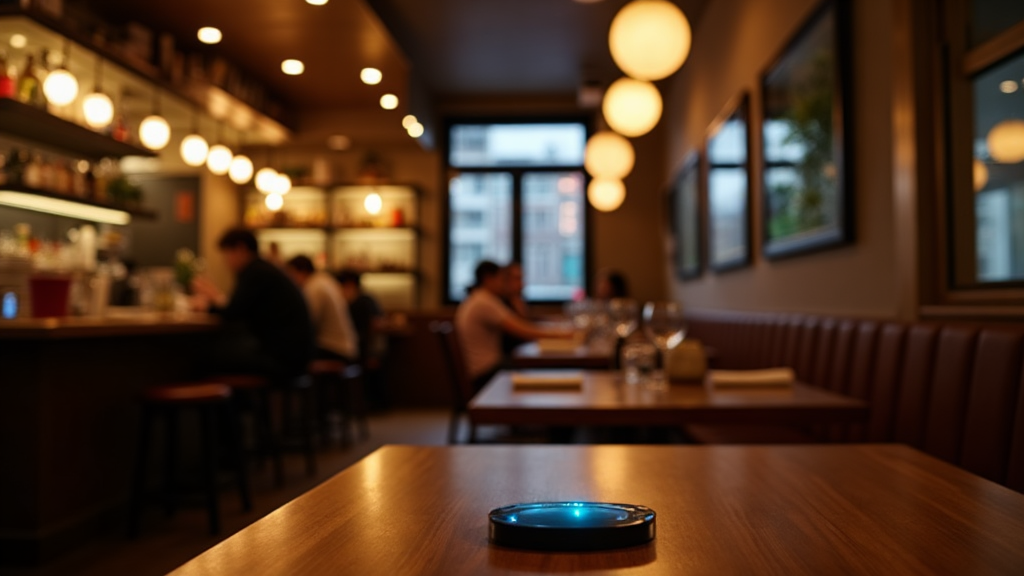
Friday night, 7:47 PM. Dinner service in full swing. The bistro on Bernard Street in Outremont is running at 92% capacity. The phone rings, but the host — the only one — is dealing with a party of six that just walked in without a reservation. Nobody picks up.
It's the eighth time tonight. Seven missed calls before this one. According to a Toast study released in April 2026, 83% of customers who hit voicemail simply call the next restaurant on their list. The math is brutal: at an average bill of $65 per two-top, those eight calls just cost somewhere between $520 and $1,040 in revenue, on this Friday alone.
And yet the owner can't hire a second host. Not because he doesn't want to — because he can't find one.
The Real Crisis: 67% of Quebec Restaurants Are Looking for a Host Who No Longer Exists
The May 2026 numbers are hard to swallow. According to Restaurants Canada's latest report, 67% of restaurant operators across the country can no longer fill service, bar, and host positions. In Quebec, it's worse: the transition from the PEQ to the PSTQ program has generated zero invitations for the restaurant sector, forcing workers with expired permits to leave the province.
Meanwhile, 80% of Canadian restaurateurs can't hire kitchen staff. One in three operators is either breaking even or actively losing money. That's triple the 2019 rate.
Here's the detail the headlines miss: in this equation, the role hurting most is paradoxically the most strategic one. The host on the phone is the restaurant's first point of contact. They're the one who turns a call into a reservation, a question into a loyal customer, a complaint into a recovery. When that role goes unfilled, it's not just missed calls. It's the first line of revenue collapsing.
For Quebec restaurateurs, the math has shifted. As we saw with veterinary clinics, when the labor pool simply isn't there, you stop looking for a human and start looking for a tool that does the work.
How an AI Voice Agent Actually Works in a Quebec Restaurant in 2026
Before we go further, let's demystify what this means concretely. An AI voice agent for restaurants, in May 2026, is not a touchtone "press 1 for reservations" system. It's a real voice — bilingual French-English with automatic detection — that answers the phone, understands context, and completes tasks.
Concretely, when the phone rings at 7:47 PM at our Outremont bistro, here's what happens:
The agent picks up on the second ring. "Good evening, Bistrot Bernard, what can I do for you?" The caller says "I'd like to book for four people next Friday." The agent checks the reservation system in real time (Libro, OpenTable, or the restaurant's in-house solution), proposes two available slots — 6:30 PM or 9:00 PM — takes the name and number, asks about allergies or special preferences, confirms the reservation, and sends an SMS confirmation. Total call duration: 47 seconds.
During those 47 seconds, the host on the floor never looked up from the table chart. She finishes seating the party of six, smiles at the couple who's been waiting three minutes, and stays in command of her dining room. That's the real game: it's not about replacing the human on the floor, it's about freeing the human from the phone.
Four Tasks an AI Voice Agent Does Better Than an Overwhelmed Host
Let's be precise. The agent doesn't replace everything. But on four specific tasks, it consistently outperforms human performance under stress.
1. 24/7 reservations, including after-hours. 38% of reservation calls in Quebec come between 10 PM and 8 AM, according to phone operator data. Before, those customers left a voicemail or hung up. Now, the agent takes the booking at 2 AM without flinching. Recovery: 12 to 15% of calls that would have been lost become confirmed covers.
2. Allergy and dietary restriction screening. The agent can be configured to systematically ask "Do you have any allergies or dietary restrictions?" and forward the info to the kitchen via the management system. No more forgotten notes, no more panic when the customer arrives, no more legal risk. It's also Quebec Law 25 compliance: this data collection happens with explicit consent, documented by the agent.
3. No-show prevention via automated reminders. 24 hours before the reservation, the agent calls or texts to confirm. Restaurants that try this with humans often drop the practice — it's tedious, time-consuming. The agent doesn't complain. Result: no-show reduction lands between 30-40% across deployments observed in Quebec in 2026.
4. Smart routing of complex calls. Privatization request for an 80-person wedding? The agent identifies it as complex, collects essential details (date, party size, approximate budget), promises a callback from the owner or floor manager within two hours, and creates the lead in the CRM. The owner calls back at 2 PM the next day, already briefed, with a head start on the competition.
The Economic Math Quebec Restaurateurs Are Running in May 2026
Let's talk money. An AI voice agent for an independent restaurant in Montreal currently costs between $99 and $199 per month, all-in with setup and updates. That's less than a quarter of a host position at $18/hour.
What does it bring in? A 2026 Forbes report cited by OpenTable documents monthly revenue increases per restaurant between $3,000 and $18,000 after AI voice agent deployment — with the low end for small bistros and the high end for multi-location chains.
Why such a wide range? Three variables: call volume, current no-show rate, and percentage of after-hours calls. The more calls a restaurant misses today, the more an AI agent recovers in revenue. For an average bistro in Outremont missing 25-40 calls per week during peak hours, we're easily talking $5,000 to $8,000 per month in additional revenue.
ROI measures in weeks, not years. That's the invisible ROI we wrote about in an earlier piece: the numbers are only visible if you measure them, but they're there.
The Three Objections We Hear Most Often (And the Real Answers)
Objection 1: "My customers will hate talking to a machine."
It's the number one objection, and it's honest. The answer is just as honest: yes, some customers will hang up. Probably 5 to 10%. But 89% of Americans say they're open to interacting with an AI agent for a restaurant, according to 2026 surveys. In Quebec, the rate is slightly lower — around 78% — but the trend is climbing. And more importantly: customers who hang up today would have probably hung up on voicemail too.
Objection 2: "What if the agent makes things up or gets it wrong?"
That's the hallucination fear, which we covered in depth in our article on the 7-step anti-hallucination protocol. The short version: a properly configured AI voice agent doesn't guess. It consults the reservation system. If the info isn't there, it says "let me connect you with the manager" — it doesn't invent a fictional menu schedule. That's the difference between a hacked-together system and a professional deployment.
Objection 3: "The agent will sound robotic in Quebec French."
That was true in 2024. Not in 2026. Current voice models — ElevenLabs v3, GPT-Realtime-2 — automatically detect Quebec French and adapt expressions. "Pis là, vous voulez ça pour combien de personnes?" sounds as natural as "Et donc, ce sera pour combien de personnes?". The simple test: let your mother-in-law try it without telling her it's an AI. If she doesn't notice within the first 30 seconds, you've won.
Integration With the Tools You Already Use
A critical point for Quebec restaurateurs: the AI voice agent must integrate with existing systems. There's no question of replacing everything.
Typical deployments in May 2026 connect the agent to: Libro for reservations (very popular in Quebec), OpenTable for chains, TouchBistro for POS, or the restaurant's in-house solution via Make.com and Zapier. For SMS confirmations and reminders, the agent goes through Twilio or Quo (Canadian option in CAD).
Configuration takes three to five days on average. Not three months. Not "we'll see in the fall." The TECHMA team — not the restaurateur — handles everything: connects APIs, programs call flows, tests with realistic scenarios (group bookings, allergies, modifications, cancellations), and stays available for adjustments during the first two weeks of production. It's included in the monthly plan. No integration is self-service.
For restaurateurs used to being told "sign up, it's two clicks," it's refreshing. For those who've already tried a hacked-together chatbot and lost three months, it's reassuring.
The Risk of Doing Nothing in 2026
Here's the uncomfortable part. The labor shortage in Quebec restaurants is not going to improve in 2026, and probably not in 2027 either. Immigration policies remain restrictive, working conditions in restaurants haven't magically improved, and the next generation is largely choosing other careers.
Meanwhile, your neighbor on Saint-Denis Street, or your direct competitor in Griffintown, may have already deployed an AI voice agent. According to Aircall, AI voice adoption in North American restaurants surpassed 50% in major urban centers in 2026. Montreal is one of them.
The cold calculation: if you're missing 30 calls per week and your competitor is missing 5, the revenue difference is in the tens of thousands of dollars per year. And that gap only widens with time, because customers who had a good phone experience come back. The others try a different restaurant.
Frequently Asked Questions
Can the agent take a reservation for a private event with a custom menu?
Yes, partially. It collects key parameters (date, party size, event type, approximate budget, dietary preferences) and creates a complete lead in your CRM. The callback for menu customization is handled by the owner or floor manager within two hours. The agent doesn't negotiate the menu itself — it pre-qualifies.
What happens if the agent can't understand a customer?
After two rephrasing attempts, the agent transfers the call to the owner's or floor manager's cell phone. If nobody answers, it takes a detailed message and sends an immediate SMS notification. No customer gets stuck in a phone menu.
How does it comply with Quebec's Law 25 on personal data?
The agent explicitly requests consent for collecting name, phone, and dietary preferences. All data is stored on servers in Canada, encrypted at rest and in transit. Call recordings are retained for the minimum necessary duration and accessible to the restaurant via a secure console. It's compliant with Law 25 as enforced since September 2024.
What if I want to change the tone, name, or greeting messages?
It's adjusted by the TECHMA team within a few hours. "Hello, Bistrot Bernard" or "Good evening and welcome to Bistrot Bernard, this is Sophie taking your call" — you choose. The voice can also be female or male, warmer or more formal. Mid-course adjustments are included in the plan.
The Phone Is Ringing. Who Picks Up?
Back to our Friday at 7:47 PM. The phone rings for the ninth time. This time, it's a couple wanting to book for Saint-Jean-Baptiste — so five weeks from now, peak season.
If the host is still busy seating the party of six, it's another miss. If the AI voice agent is in place, the call is taken, the reservation is confirmed, the reminder SMS is scheduled, and the restaurant's Saint-Jean waitlist just gained one more cover. Multiplied by 8, 10, 15 calls per night, it shifts the restaurant's financial trajectory.
At Agent IA Vocal, we deploy these agents for Quebec restaurants — independent bistros, brasseries, regional chains, caterers, tea rooms. Configuration takes three to five days, pricing starts at $99 per month, and the TECHMA team handles everything. Book 15 minutes with us to look at your specific case, or explore our plans if you'd rather look at numbers before talking.
The phone will ring tonight. The question is who picks up.