It usually starts with a phone vibrating on a nightstand at 2:07 AM.
A pipe has burst in Laval. A furnace has quit in Sherbrooke during a deep freeze. Water is pushing through a finished basement ceiling in Brossard. The customer is panicked, the voicemail box is full, and the shop that misses that call doesn't just lose one job. It often loses the emergency intervention, the restoration referral, the follow-up repair, and the long-term client.
That is the real after-hours problem for Quebec plumbers and HVAC contractors. Not staffing. Not marketing. Not even competition. The real leak is the phone line after 6 PM.
For many shops, the math is ugly: around 2 missed calls a day can translate to roughly $8K a month, or close to $90K a year in lost revenue. We broke down similar missed-call economics in our broader Quebec SMB analysis here. In plumbing and HVAC, where emergency intent is high and timing matters more than price, the damage can be even worse.
That is exactly where Agent IA Vocal fits. Not as a gimmick, and not as some self-serve app a contractor has to piece together on a Sunday afternoon. The TECHMA team deploys and integrates the whole system for clients: bilingual voice agent, qualification logic, dispatch workflow, SMS confirmations, and the handoff to your on-call techs.
Sector portrait: Quebec trades run on urgency, seasonality, and missed timing
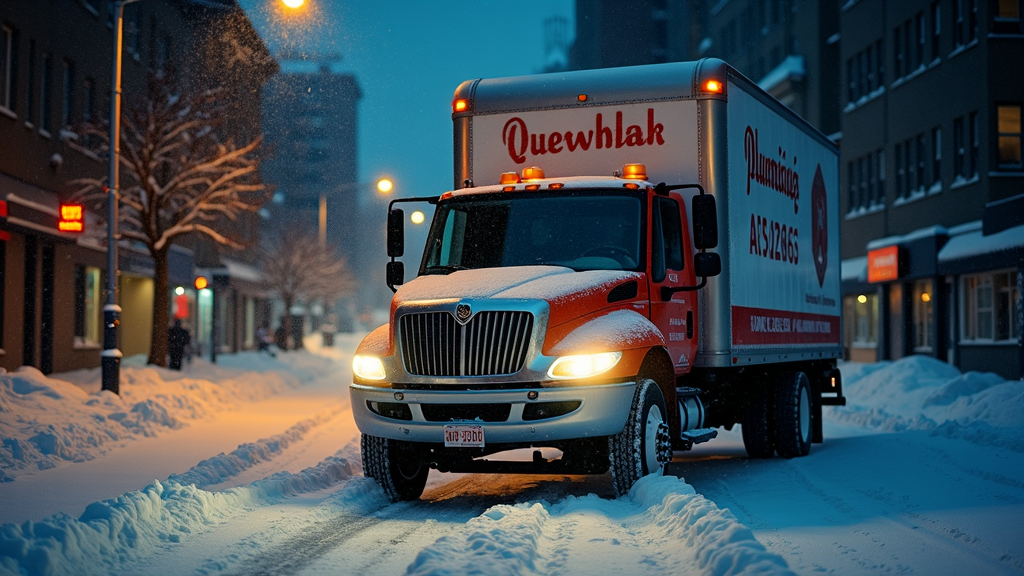
Quebec is not a gentle market for plumbers and HVAC contractors. Winter temperatures can drop below -30°C. That means frozen lines, burst pipes, backup heating calls, no-heat emergencies, and water damage situations that cannot wait until morning.
At the same time, the market is huge. The Régie du bâtiment du Québec oversees a sector with more than 7,000 licensed plumbing and HVAC-related contractors across the province. That's a lot of trucks, a lot of competition, and a lot of incoming calls that tend to bunch up at the worst hours.
And in Quebec, the language piece is not optional. Between francophone households, bilingual commercial clients, and Montreal's anglophone customer base, a shop that cannot answer clearly in both French and English leaves money on the table. Bill 96 sharpened expectations around French, and Loi 25 raised the bar on how customer information is handled. So the phone workflow now has to do two things at once: speak the customer's language and capture sensitive details correctly.
That sounds simple until three calls arrive within six minutes and the dispatcher is already trying to locate the on-call technician.
The 2 AM scenario every owner knows
Picture a typical overnight sequence.
At 1:54 AM, a condo owner in Montreal calls about water pouring from a ceiling vent. At 1:58 AM, a restaurant manager in Quebec City calls because the heating system has failed. At 2:03 AM, a homeowner calls for what turns out not to be an emergency at all, just a request for a water heater quote.
To the caller, each situation feels urgent. To the shop, they are three very different workflows:
- One needs immediate emergency triage and dispatch.
- One needs priority HVAC service before pipes freeze or operations stop.
- One should be logged as an estimate request for business hours.
Most small and mid-sized contractors do not have a polished overnight intake process for that. They have a cell phone rotation, a voicemail box, maybe a third-party answering service that takes a message, and a lot of improvisation.
That improvisation is expensive.
Some firms report that 53% of inbound emergency calls after 6 PM end up in voicemail, abandoned, or answered too late to win the job. In emergency trades, the first competent response usually gets the booking. Customers are not running a tender process while their basement fills with water.
Why humans break after hours
None of this is a criticism of dispatchers or owners. It is just operational reality.
Humans are not built to answer every call within two rings at 11:40 PM, 1:15 AM, 4:50 AM, and then again at 7:05 AM when the regular line opens. They miss details. They mishear addresses. They forget to ask whether insurance is involved. They promise a callback and then get pulled into another emergency. The best people still have limits.
There is also a classification problem. An after-hours caller rarely explains the issue in a neat category. They say things like, "There's water everywhere," or "The system stopped and the building is freezing." Someone has to quickly determine whether this is a plumbing emergency, an HVAC emergency, a maintenance issue, or simply an estimate request dressed up as urgent because it is nighttime.
That is where modern voice AI has become surprisingly practical. Not theoretical. Practical.
On May 12, 2026, ElevenLabs expanded its agent stack with support for Gemini 3.1 Pro and Qwen35 as LLM options, along with multi-agent visited_agents tracking that helps route calls between specialized flows. In plain English: one agent can answer, another can classify, and a third can handle booking or dispatch logic without losing the thread of the conversation. For plumbing and HVAC shops, that is ideal for separating true emergencies from estimates and routine maintenance. You can see ElevenLabs' trades-focused positioning here.
What a bilingual AI voice agent actually does
Let's make this concrete. A properly deployed system for a Quebec plumbing or HVAC shop should do five things, every time.
1. Answer within two rings
No voicemail maze. No "press 1." No delay while someone decides whether to wake the on-call tech. The call is picked up immediately, in French or English, and the customer hears a calm voice that sounds ready to help.
2. Identify the call type fast
Is this an emergency, an estimate, or a maintenance request? That distinction changes everything. Emergency calls need triage and dispatch. Estimate requests should be captured and routed to sales. Routine maintenance belongs in a daytime scheduling queue.
With multi-agent logic, the system can classify the intent and move the call into the right path without making the interaction feel robotic.
3. Capture the critical details
For emergency service, the agent should collect the service address, callback number, damage type, whether water is actively flowing, whether heat is out, whether vulnerable occupants are present, and whether insurance may be involved. If the caller is stressed, the system can repeat and confirm each item clearly.
4. Dispatch the on-call technician by SMS
Once the issue is qualified, the workflow should trigger an SMS or dispatch alert to the right technician or manager. Not a generic email that gets buried. A real, immediate mobile alert with the address, issue summary, and callback details.
5. Confirm ETA to the client by SMS
The customer should not be left wondering whether anyone is coming. The system can send a bilingual SMS confirmation with the ETA or next-step message, reducing repeat calls and calming the situation.
That is the model Agent IA Vocal is built around for Quebec businesses. And again, the important part: the TECHMA team handles deployment and integration. This is not self-service software shoved onto a contractor who already has enough to manage.
Concrete use cases for plumbers and HVAC contractors
The obvious use case is the burst pipe at night, but the workflow is broader than that.
Burst pipes and active water damage
The agent answers immediately, confirms whether water has been shut off, captures the address, asks if the insurer has been contacted, and dispatches the on-call plumber. If the situation is severe, it can flag the call as top priority.
No-heat emergencies during cold snaps
When temperatures plunge below -30°C, a no-heat call is not a routine inconvenience. It can become a property damage event in hours. The agent can identify heating failure, ask whether backup heat exists, and route the call to the HVAC tech on duty.
Commercial refrigeration or rooftop unit issues
Restaurants, small manufacturers, and retail locations often call outside business hours because that is when downtime becomes obvious. Here, quick classification matters: emergency service now, or first-slot morning callback?
Overflowing drains and sewer backups
These are messy, stressful calls where callers often ramble. A voice agent that stays calm, asks the same structured questions every time, and confirms the address accurately can outperform tired humans at 3 AM.
Non-urgent quote requests
Not every after-hours call should wake a technician. If someone wants a new heat pump quote or asks about a water heater replacement, the system can capture the lead and hand it to the office for the next business day.
We have seen the same pattern in other Quebec emergency-heavy sectors too, including veterinary clinics after hours here and dental practices trying to stop high-intent calls from slipping away here. Different industries, same operational bottleneck: the phone gets missed when urgency spikes.
The ROI math is not subtle
This is where most owners stop being skeptical.
Using the DCI Quebec-style benchmark, around 2 missed calls per day works out to roughly $8K a month, or about $90K a year per shop. In emergency plumbing and HVAC, that estimate is credible because a single won call can be worth hundreds or thousands of dollars once you include the immediate intervention, follow-up repairs, equipment replacement, or maintenance relationship.
Now compare that with the technology cost.
OpenAI's GPT-Realtime-2 pricing, published May 7, 2026, sits at about $0.032 per minute for audio input and $0.064 per minute for audio output. At 80 emergency calls a month, with an average duration of 5 minutes, the core LLM cost lands around $25 a month. The full pricing context is available from OpenAI here.
Of course, no real deployment is just raw model cost. There is telephony, orchestration, SMS, integrations, monitoring, and support. In the market today, a 20-truck HVAC shop can easily see pricing in the $1,500 to $3,000 per month range for a serious after-hours voice and dispatch setup.
That still leaves the economics lopsided.
If the system saves even a fraction of the calls currently going to voicemail, it pays for itself quickly. Recover one decent emergency job and you have likely covered a big chunk of the month. Recover a handful, and the ROI becomes obvious.
This is one reason Agent IA Vocal tends to make sense for multi-tech plumbing and HVAC shops in Quebec: the total cost of ownership is often lower than piecing together multiple vendors, especially when the TECHMA team is handling integration, deployment, and the ongoing operational setup under a flat monthly model.
Why bilingual automation matters more in Quebec than elsewhere
There is one last point that owners sometimes underestimate.
In many regions, an after-hours answering setup can get away with being merely functional. In Quebec, it has to be bilingual, compliant, and credible. A panicked caller in Montreal might switch from English to French mid-sentence. A property manager may expect clear documentation. A residential customer may want confirmation by SMS in the language they used on the call.
If the system fumbles that experience, trust drops immediately.
That is why deployment quality matters more than shiny demos. You do not need a voice bot. You need a bilingual intake and dispatch layer that works in the real world, under pressure, with local business rules, and with the language expectations Quebec customers actually have.
Conclusion: after-hours is where the revenue leak really is
For Quebec plumbers and HVAC contractors, missed calls are not an admin issue. They are a revenue issue, a customer experience issue, and in winter, sometimes a reputation issue too.
When the phone rings after 6 PM, the shop that answers first, classifies correctly, captures the right details, and dispatches fast usually wins. The shop that relies on voicemail and goodwill usually loses.
That is the switch happening in 2026. Not because AI is trendy, but because the math stopped being debatable.
If your team is still missing emergency calls overnight, Agent IA Vocal gives Quebec contractors a more practical option: bilingual answering, smart triage, automated dispatch, and SMS follow-up, all deployed and integrated by the TECHMA team for your shop.
If you want to see what that workflow would look like for your plumbing or HVAC business, the next step is simple: map your after-hours call flow, measure what is going to voicemail, and compare that number to what one missed emergency really costs. Most owners do the calculation once. They do not need to do it twice.