Monday morning. An email lands in my inbox. Subject line: "Why are you paying ElevenLabs in USD when there's a Canadian solution at $199 CAD?"
The sender isn't a client. It's a newsletter from a fresh Toronto-based AI voice agent provider. The third one this week.
Something shifted in the Canadian voice AI market this spring. Mihron AI started ranking #1 in "Best AI Receptionist Canada 2026" comparisons. Tough Tongue AI claims the title of "best bilingual voice agent for the Canadian market." Dialbox, Polaris Voice, Peak Demand, Vooban, and even a site simply named agentvocalquebec.com are emerging with roughly the same pitch: PIPEDA compliance, pricing in Canadian dollars, native Quebec French, and — the closer — "made in Canada."
The pitch is appealing. It's also, at times, misleading.
As an integrator who has deployed AI voice agents for Quebec SMBs for three years, here's what I tell clients who forward me these emails: yes, "made in Canada" deserves your attention. No, it probably doesn't mean what you think it means. And the question you should be asking is almost never the one you're being sold.
Why this wave is hitting now
Three forces converged in May 2026. None of them appear in the new entrants' marketing.
First, Quebec's Law 25 reached full enforcement in September 2024, and the Commission d'accès à l'information has started issuing its first formal notices. Quebec SMBs are getting audited for the first time on how they handle personal information — including their phone system recordings. Justified fear creates demand.
Second, the consolidation wave is shaking the foundations. Aircall just acquired Vogent six days ago, and that's only the beginning. When SMBs see their vendor swallowed by a French multinational, they instinctively look for more local, more controllable alternatives.
Third — and this is the part no new entrant will mention — margins on voice AI are collapsing. GPT-Realtime-Mini costs 70% less than it did six months ago. ElevenLabs has cut prices twice this year. For a newcomer to enter the dance, they need an angle. The Canadian flag makes a good one.
What "made in Canada" actually means
When Mihron AI or Tough Tongue position themselves as Canadian, what's actually Canadian here?
The team is Canadian. Headquarters is in Toronto, Vancouver, or Montreal. Billing is in CAD. Customer service speaks English (and sometimes French). That part is easy to validate.
What isn't: the engine running the agent. In nine cases out of ten, under the hood, you'll find the same three names. ElevenLabs (US-based, but with European data centers and an on-premise option). OpenAI Realtime (US). Anthropic Claude (US). The "Canadian provider" is in reality a configuration and integration layer on top of the same American infrastructure everyone else uses.
That's not necessarily a problem. It's often rational — these engines are the best in the world, and it would be absurd for a Quebec SMB to try to replicate them. But it means the promise "your data stays in Canada" deserves to be read very carefully. Ask your vendor where the audio recordings are stored, where the LLM inference runs, and where the transcripts live. Three questions, three possible answers, and often three different countries for the same call.
The 4 real questions to ask (before you sign)
I've accumulated a mental checklist through client audits. Here it is, raw.
1. Do you actually have a data sovereignty obligation? For a dental clinic processing health information under Law 25, yes — you need a pipeline that can prove, contractually and technically, that data stays in Canada. For a restaurant taking reservations? Probably not. Law 25 still applies, but data localization requirements are far less binding for routine information like a name and a phone number. Our practical Law 25 guide for voice AI details which businesses need what — and it's more nuanced than vendors will tell you.
2. Who handles integration, and with which existing tools? A voice agent that responds beautifully but doesn't write into your Acuity, your Dentitek, your Microsoft 365 Calendar, or your Zoho is useless. Mihron AI touts its NexHealth integration for Ontario dentists. That's great. You're in Quebec and you use Dentalexec? Ask the question. Often, the "Canadian provider" has built two or three very targeted integrations (Ontario dental clinics on NexHealth, law firms on Clio) and nothing else. The integrator is what separates a tool that works from a tool that sleeps.
3. Is the French voice actually Quebecois? Test it. Seriously. Call the demo. Say "bonjour." Listen. A voice that pronounces "réservation" like a Parisian, or "courriel" like someone from Marseille, will alienate your customers within 30 seconds. Several "Canadian providers" use metropolitan French voices because that's all that's available in their stack. The distinction isn't cosmetic: according to a recent analysis of the Canadian market, native Quebec bilingualism remains one of the two hardest criteria to satisfy in 2026 — and the one where the gap between vendors is thinnest.
4. Will the vendor still be here in 24 months? This isn't an accusation. It's statistical reality. The eight new Canadian entrants I'm tracking are all under 18 months old. How many will be acquired, merged, or simply vanished by 2028? If you build your phone operation on their infrastructure, you take that risk too. It's not an argument against them — it's an argument for asking the right portability questions before signing.
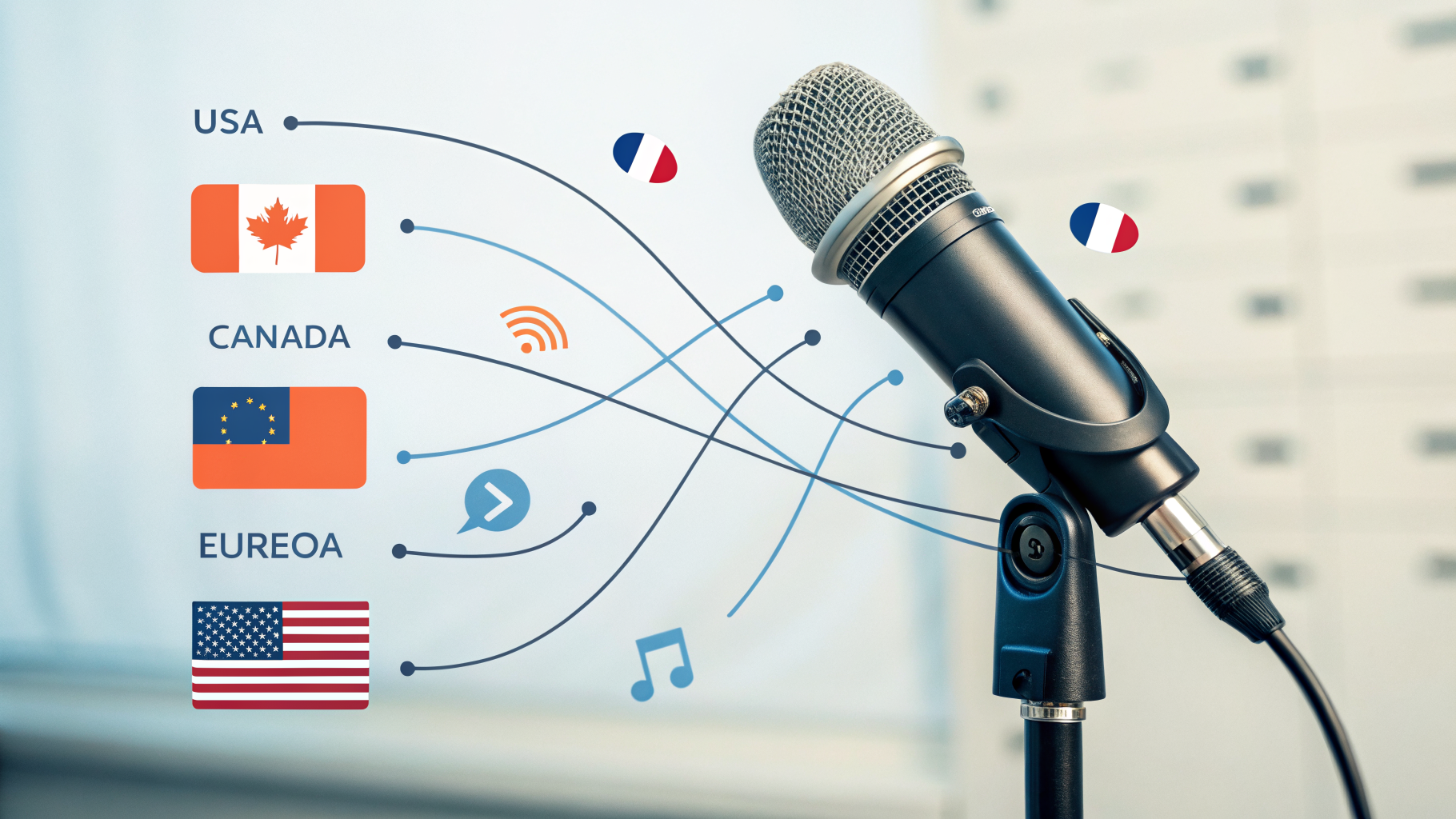
Schéma illustrant le trajet des données vocales entre juridictions
The blind spot: what really matters is the integrator, not the SaaS
Here's what most SMBs don't realize until their first failed customer call.
Whether you choose Mihron, Tough Tongue, ElevenLabs configured by TECHMA, or VAPI assembled by hand, the software represents 15 to 25% of the value delivered. The rest — writing the system prompt in authentic Quebec French, mapping CRM integrations, handling human handoffs, documenting Law 25 compliance, testing, monitoring, adjusting after the first 100 calls — that's the integrator's work.
A Canadian provider without a competent integrator is a plane without a pilot. An American provider with an excellent Quebec integrator who masters Law 25 is a plane that takes off. The flag on the tail is secondary.
And that's precisely the issue with the current wave of "made in Canada" providers: most sell a self-serve product. You configure your agent yourself through their web portal. No one sits down with you to understand that your notary office gets 40 calls per day, of which 12 are lawyers verifying a deed, and that those 12 calls must be transferred to your assistant — not to voicemail. That kind of understanding is human integration. No portal replaces it.
What I tell clients in 2026
Before signing with anyone — including us — ask these three questions.
First: what is my real compliance risk? If you're in healthcare, finance, law, or running a nonprofit with vulnerable data, data sovereignty deserves your attention. If you're in restaurants, home services, or retail — the priority is elsewhere. Don't pay the "Canadian" premium if it doesn't buy you anything useful.
Second: who's answering when something breaks at 10 PM on a Saturday? Because it will. An OpenAI API change. An ElevenLabs update that breaks transfer formatting. A Calendar integration that drops. If the answer is "open a ticket and we'll get back Monday," you're buying a product, not a solution.
Third: who owns French quality? If it's you, clicking checkboxes in a portal, you'll sound robotic. If it's a human who has written 50 prompts in Quebec French and knows why "Bonjour, comment ça va aujourd'hui?" sounds better than "Bonjour, en quoi puis-je vous aider?" on the phone — you're in good hands.
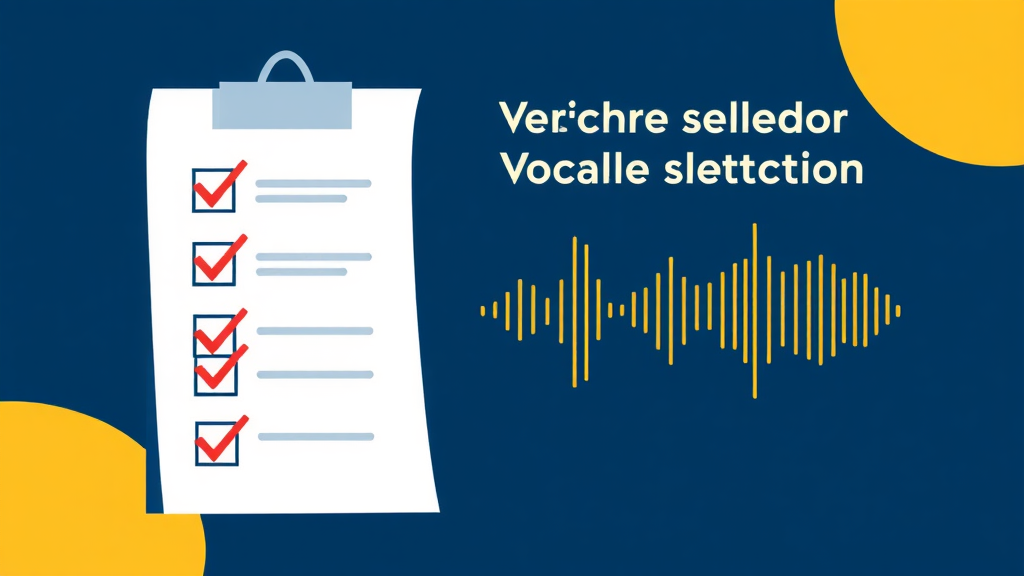
Liste de quatre questions à poser avant de signer avec un fournisseur
The verdict
The wave of "made in Canada" AI voice agents hitting this spring is real, and it will keep growing. For some Quebec SMBs — those with strict data sovereignty obligations — it represents a genuine option worth serious evaluation.
For the majority, it's marketing. Well-crafted, intelligent marketing — but marketing. The fact that your SaaS vendor is headquartered in Toronto rather than San Francisco doesn't change anything about the quality of your deployment if the integration is done by someone who doesn't know your business, your customers, or the particularities of your French.
What matters is the combination. A reliable technical infrastructure — whether American, European, or Canadian — deployed by a team that understands your SMB, your Law 25, and your Quebec clientele. The flag on the SaaS isn't the right criterion. The competence of the team piloting it is.
At TECHMA, we operate today on ElevenLabs (with on-premise option for clients under strict Law 25 obligations), we configure the integration with your existing stack, and we document compliance end-to-end. That approach — the integrator bridging the engine and your reality — is what separates a voice agent that takes off from one that sleeps.
If you're currently looking at one of these new Canadian providers and you're hesitating, write us. We'll give you an honest opinion, vendor-independent, on what truly fits your situation. And if Mihron is the right choice for you, we'll tell you that too.