
A customer calls your shop on a Tuesday afternoon to book an appointment. They say "Tuesday at two." The AI voice agent hears "Thursday at three," books it with total confidence, and moves on. Nobody flags it. Two days later you have a no-show on one side, a double-booking on the other, and a job worth a few thousand dollars has quietly slipped away — because a machine was certain about something it got wrong.
That little disaster comes from a 2026 industry analysis of AI receptionists, and it captures the real worry business owners have this year. The fear was never that the voice would sound robotic. By late 2026, most agents sound perfectly natural. The fear is that an AI will make a mistake politely, confidently, and without telling anyone.
So the honest question for a business owner in Toronto, Calgary, Halifax or anywhere else in the country isn't "does it sound human?" anymore. It's "can I trust one with a live call?" The short answer, as of November 2026, is a qualified yes. The technology took some real steps forward this fall. But the "qualified" part matters, and it depends entirely on what you check before you hand over your phone line.
The 2026 shift: from sounding human to being trustworthy
For a couple of years, the whole industry was obsessed with one thing: making AI voices sound less like a GPS unit from 2012. That problem is mostly solved. The interesting work in 2026 moved somewhere less flashy and far more useful — reliability. Can the agent hear a caller on a noisy job site? Can it protect a credit card number? Can it admit when it doesn't know instead of inventing an answer?
You can see the shift in what the major platforms actually shipped this fall rather than in what they promised. The releases stopped being about new accents and voices, and started being about the boring, load-bearing stuff that decides whether a real call goes well or goes sideways.
Why does this matter so much right now? Because a voice agent's whole value proposition is handling the calls a human can't — the 7 p.m. booking request in Vancouver while your front desk in Halifax closed hours ago, the overflow during a lunch rush, the three callers who hit your line at once and would otherwise land in voicemail. Spread across six time zones, a Canadian business can field calls almost around the clock. But that payoff only lands if the agent gets those unsupervised calls right. An after-hours booking that is quietly wrong is worse than a missed call, because at least a missed call leaves a voicemail you can fix in the morning.
What actually got better in 2026
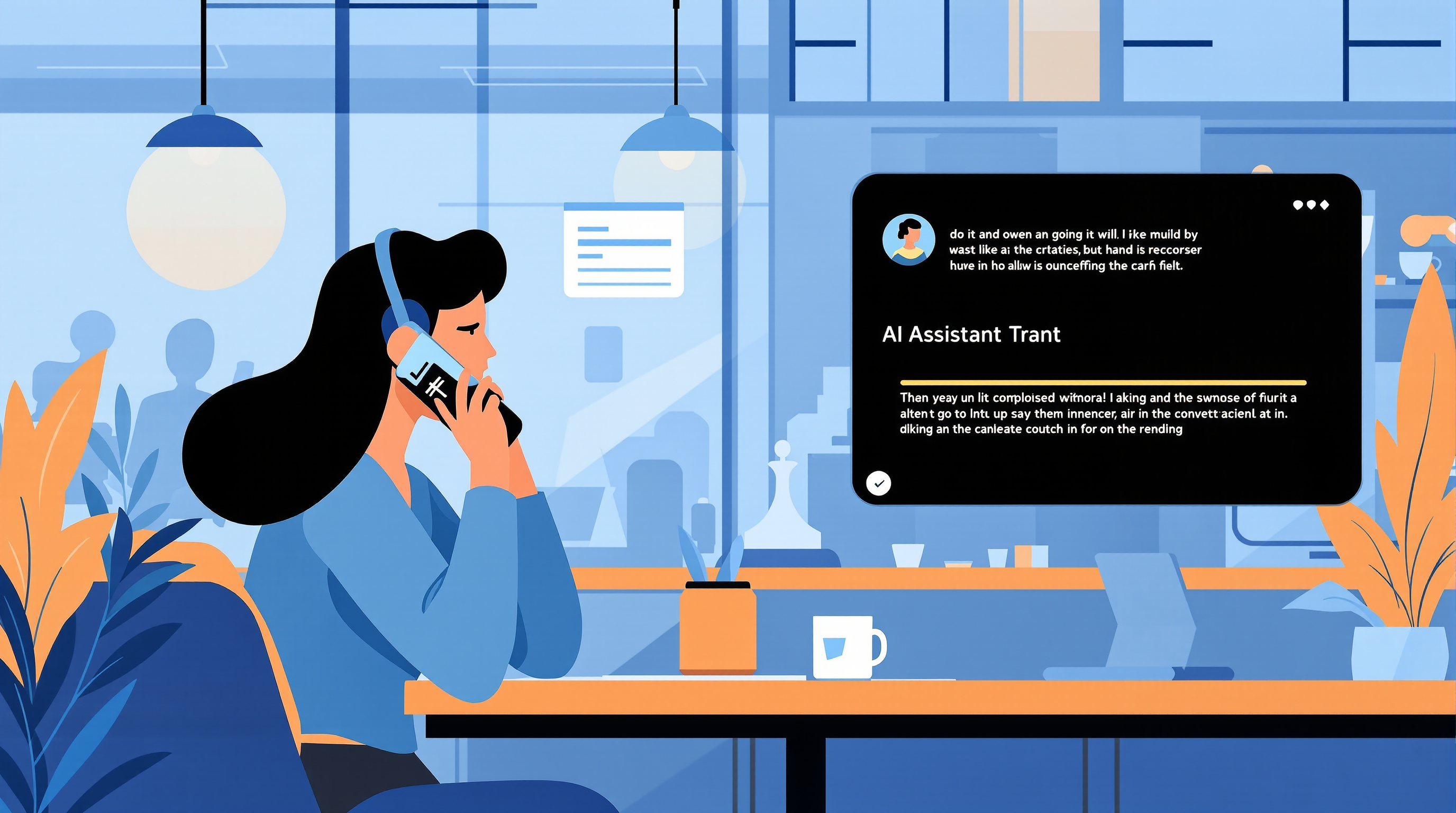
AI voice agent handling a call from a noisy real-world environment
Agents can finally handle a messy, real-world call
Real calls are not recorded in a quiet studio. They come from a truck cab on Highway 401, a busy salon in Vancouver, a kitchen with a radio on in Winnipeg. According to ElevenLabs' November 2026 changelog, voice agents can now detect when there are other people talking in a caller's background and politely ask them to move somewhere quieter — once, without talking over them. It sounds small. It is actually one of the biggest sources of mishearings, and it is now being handled instead of ignored.
The same release extended how long an agent can stay on a single call to two hours, up from forty minutes. Most businesses will never need that, but it signals the direction: fewer dropped threads, fewer "sorry, the system timed out" moments in the middle of a complicated booking.
Sensitive details can be scrubbed in real time
Here is one that should matter to any Canadian business that takes personal information over the phone. The newest systems can redact sensitive data — personal identifiers, health information, payment card details — from the live transcript as the call happens, rather than storing everything in the raw and cleaning it up later (or never). That is a direct answer to a question regulators and customers keep asking: what exactly are you keeping, and for how long?
If your agent ends up handling card numbers or health details, this changes your risk profile in a good way. It pairs naturally with the practical side of taking payments or sensitive details over the phone, where what the system retains is often more important than what it collects.
Protecting sensitive caller data during an AI voice agent call in Canada
The accuracy push is real — and so is the marketing
Vendors have noticed that "reliability" sells, and the language has gotten loud. You will see phrases like "zero-hallucination architecture" and "parallel verification agents" in pitch decks. Some of the engineering behind those claims is genuine: retrieval from a trusted knowledge base instead of free-form generation, low-temperature models that are less prone to improvising, and confidence thresholds that escalate to a human when the agent isn't sure.
But treat the superlatives with the skepticism they deserve. As McKinsey noted in its analysis of where voice agents still struggle, these systems improve with deliberate testing and oversight, not with a label on a brochure. A vendor who says their agent never makes mistakes is telling you something about their marketing, not their product.
Where AI voice agents still get it wrong
An honest piece has to say this plainly: they still fail, and the failures cluster in predictable places.
The worst one is the confident wrong answer. A human receptionist who isn't sure will say "did you mean Tuesday or Thursday?" An AI that mishears can book the wrong slot and never realize it failed — exactly the mishap from the top of this article. Ambiguous requests, strong accents, names it has never encountered, and overlapping speech are all still soft spots. So is the handoff: an agent that refuses to transfer a frustrated caller to a human is a problem, not a feature.
None of this means the technology isn't ready. It means the right question is not "is it perfect?" but "when it fails, does it fail safely?" A good deployment makes the agent cautious: ask to confirm, read the booking back, and escalate on low confidence. A bad one lets it guess.
The Canadian layer almost nobody else mentions
Most articles on this topic are written for a generic, borderless audience. If you run a business in Canada, you have obligations they skip entirely. Federally, the handling of your customers' personal information falls under PIPEDA, as explained by the Office of the Privacy Commissioner of Canada. That shapes how a voice agent should get consent, what it can record, and how long it can keep a transcript.
Provinces add their own layers. Quebec's Law 25, in particular, sets stricter rules on consent and on where data is stored, and it applies even to a business based elsewhere if it serves Quebec customers. Alberta and British Columbia have their own private-sector privacy statutes. The practical upshot for an owner in Ottawa or Edmonton is simple: before an AI agent answers a single call, you should know where its transcripts are stored, whether that is inside Canada, and how a customer's data gets deleted on request. The specifics are worth confirming with a lawyer — but the vendor should have clear answers, and plenty don't.
This is also where recording calls and getting consent in Canada stops being a technicality and becomes part of whether you can trust the system at all.
A reliability checklist before you trust an agent with live calls
You don't need to be technical to pressure-test a voice agent. You need to ask good questions and run a few real calls. Here is what actually separates a trustworthy deployment from a risky one:
- Where does the data live? Ask whether transcripts and recordings are stored in Canada, and how a customer's information is deleted on request.
- Does it record, and does it say so? The agent should disclose that it is an AI and, where required, that the call may be recorded.
- How does a caller reach a human? Test it. Ask for "a real person" twice and see whether it transfers cleanly, including after hours.
- Run the noisy-call test. Call from your car or a busy room and see whether it copes or falls apart.
- Check the confirmations. Does it read back the date, time, and spelling of a name before booking?
- Test both languages. If you serve English and French callers, run a call in each — a credible bilingual AI voice agent should handle the switch without stumbling.
- Ask about failure, not just success. A vendor who can describe how their agent behaves when it's unsure is more trustworthy than one who only shows you the perfect demo.
The bottom line
AI voice agents in 2026 are genuinely more trustworthy than they were a year ago. They handle noisy calls, protect sensitive data, and escalate when they should — when they're set up properly. The mistake is trusting the marketing instead of the testing. Run the calls, ask the hard questions, and confirm the Canadian privacy details before anything goes live. Do that, and a voice agent becomes a dependable extension of your business. Skip it, and you're just hoping the machine guesses right — which, as one lost Tuesday booking shows, is a bet that eventually costs real money.