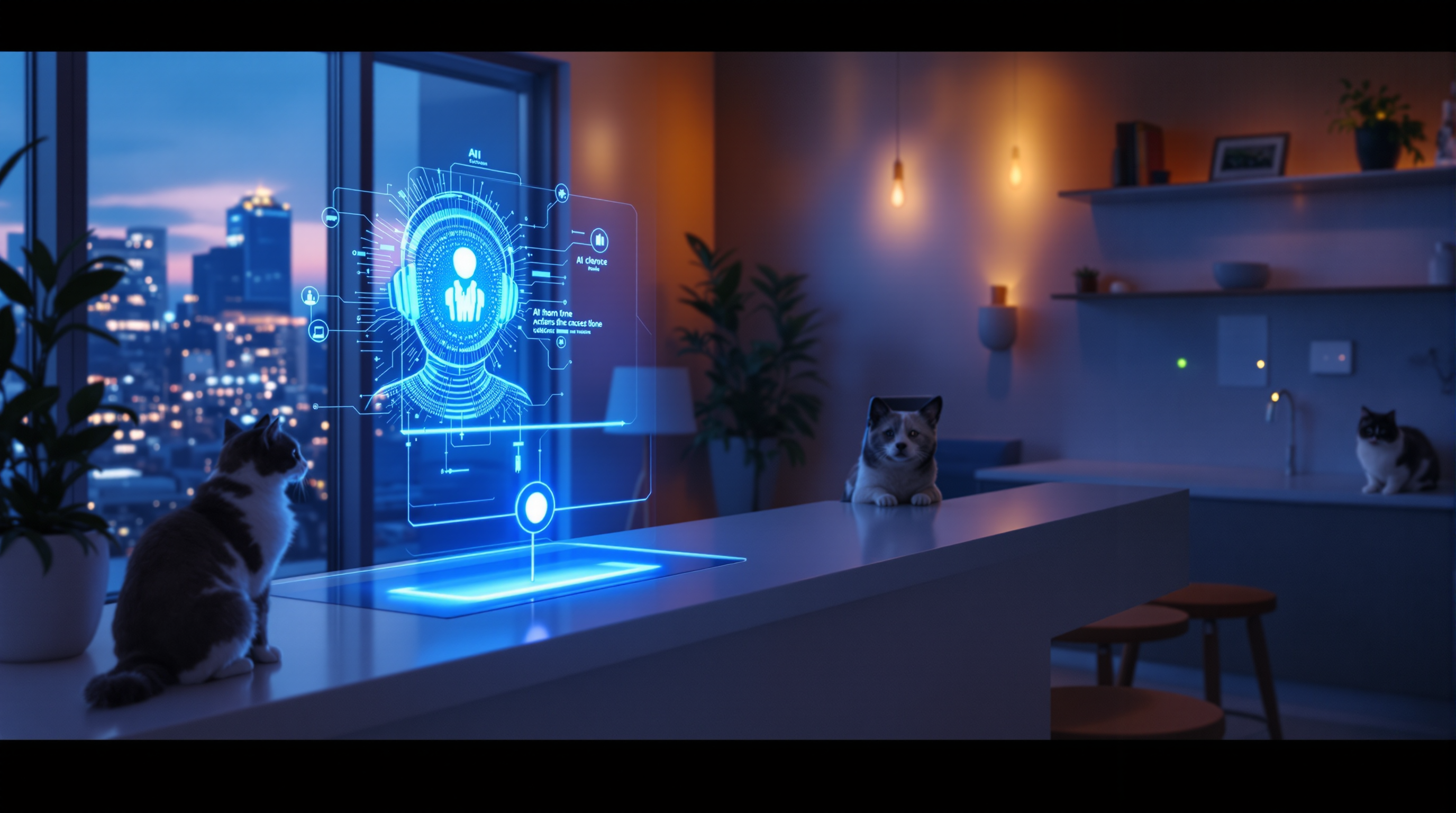
It’s 10:04 PM on a Saturday. A dog can’t breathe properly. Your clinic phone is ringing.
A family in Laval is standing in their kitchen, staring at their bulldog. He’s restless, wheezing, and suddenly refusing to lie down. They do what almost every pet owner does first: they call their veterinary clinic.
The problem? The front desk went home hours ago. The voicemail is generic. The message is long. The caller is panicking. They hang up before the instructions finish.
Now imagine the same moment with an AI voice agent veterinary clinic setup. The phone is answered instantly. The caller hears a calm, clear voice in English or French. It asks what’s happening, identifies possible respiratory distress, provides the right emergency direction, and routes the call according to your clinic’s after-hours protocol. No endless ringing. No missed opportunity to help. No client left wondering whether to wait, drive, or call somewhere else.
For veterinary clinics in Quebec, that difference is not theoretical. It affects patient outcomes, staff burnout, client retention, and revenue. And in a province where pet ownership is high and expectations around service keep rising, phone handling is no longer a small operational detail. It’s a frontline clinical and business issue.
Why veterinary clinics in Quebec feel phone pressure more than ever
Veterinary medicine has always been emotionally intense. But the communication load? That has become its own full-time job.
Quebec has 3,077 veterinarians, serving a population where pet ownership is deeply woven into daily life. According to Canadian pet ownership statistics, pet ownership remains strong across the country, and in Quebec specifically, 67% of Quebecers own cats. Dogs, cats, senior pets, exotic pets, anxious owners, follow-ups, medication questions, vaccine reminders, urgent triage calls, appointment changes — all of it lands on the phone.
And the volume is not small. The average clinic handles roughly 75 to 150 calls per day. That’s before you account for seasonal spikes, holiday closures, storm days, or those Monday mornings when every voicemail seems urgent.
Here’s where things get expensive.
Veterinary clinics miss between 22% and 28% of incoming calls. Even worse, 85% of callers who don’t get an answer never call back. That means a missed call often isn’t a minor inconvenience. It’s a lost appointment, a lost surgery consult, a lost dental cleaning, a lost prescription refill, or a lost long-term client relationship. According to a study on veterinary phone statistics, these patterns are common across the industry.
Think about the math for a second. If a clinic misses 20 calls in a busy day and most of those people do not call back, the leakage adds up fast. And in veterinary medicine, a single client may be worth far more than one visit. The average client lifetime value is $12,800. That number changes how you look at every unanswered ring.
One missed call is not just one missed nail trim. It could be years of wellness exams, diagnostics, medication, dental work, emergency referrals, and care for multiple pets.
Then there’s after-hours reality. About 34% of after-hours calls are true emergencies. So when the phone goes unanswered at 9:30 PM, you may not just be losing business. You may be delaying care for an animal that genuinely needs fast direction.
The communication problem isn’t just operational. It’s reputational.
Many clinic owners assume clients judge them mainly on medical quality. Of course that matters. But for many pet owners, the experience begins long before the exam room.
If the phone rings six times and drops to voicemail, that becomes the first impression.
If a worried owner can’t get a simple answer about whether to come in, that becomes the emotional memory.
If a clinic is impossible to reach for scheduling, refills, or updates, that becomes the reason they try another practice.
In fact, 78% of clients switching vets cite poor communication. Not poor surgery outcomes. Not parking. Not wall color in the waiting room. Communication.
That should get every clinic owner’s attention.
And let’s be honest: most teams are not failing because they don’t care. They’re overloaded. A receptionist is checking in a nervous cat owner, processing a payment, answering a technician’s question, printing discharge instructions, and trying to grab a ringing line at the same time. Nobody wins in that setup.
This is exactly where an AI receptionist vet clinic system becomes practical rather than futuristic.
What an AI voice agent actually does in a veterinary clinic
Let’s strip away the buzzwords for a minute.
An AI voice agent is not a toy chatbot with a robotic voice and no context. When properly configured by TECHMA IT, it acts like a phone-based communication layer for your clinic. It answers calls instantly, understands common client requests, follows your clinic’s workflows, and escalates when needed.
No self-service setup. No “figure it out yourself” dashboard. No asking your head receptionist to become a software integrator on Thursday afternoon. TECHMA IT handles the implementation and tailoring based on how your clinic actually operates.
Here’s what that can look like in practice:
1. Instant call answering
Whether it’s 8:07 AM in Quebec City, lunchtime in Sherbrooke, or 10 PM in Longueuil, the system answers immediately. That alone changes the experience. Clients no longer hit voicemail just because your staff is already on two lines.
2. Bilingual conversations for Quebec reality
Many clinics serve both French- and English-speaking clients. An AI voice agent can greet and guide callers in the appropriate language, reducing friction and improving clarity in stressful moments.
3. Appointment request handling
Clients call for wellness exams, vaccines, skin issues, limping, vomiting, follow-ups, and surgery bookings. The voice agent can collect the reason for the visit, preferred times, pet type, and contact details, then route or log the request according to your workflow.
4. Emergency triage routing
No, it does not replace veterinary judgment. But it can identify keywords and situations that match your emergency escalation rules. Trouble breathing, active bleeding, toxin ingestion, seizure activity, urinary blockage symptoms — these can trigger urgent instructions or immediate routing.
5. Refill and routine inquiry handling
“Can I refill Bella’s thyroid medication?” “What time do you close today?” “Do you see rabbits?” “Do I need to fast my dog before surgery?” These repetitive questions consume front-desk time all day. A voice agent can answer many of them consistently.
6. After-hours guidance
This may be one of the biggest wins. Instead of a passive voicemail, callers get interactive help that follows your clinic’s after-hours protocol. That matters when one-third of after-hours calls are true emergencies.
7. Message capture with structure
Not all messages are equal. “Please call me back” is not useful. A strong AI phone workflow captures the pet name, species, issue, urgency level, owner callback number, and preferred language. Staff start the day with organized information instead of a pile of vague voicemails.
How phone automation animal clinic workflows reduce chaos at the front desk
Most veterinary clinics do not need “more technology” in the abstract. They need fewer interruptions, fewer dropped balls, and fewer moments where a team member has to choose between the pet in front of them and the phone ringing behind them.
That’s where phone automation animal clinic use cases become very concrete.
Appointment overflow management
When all lines are busy, the AI voice agent can take overflow calls instead of pushing people into voicemail. This is especially useful during morning rushes, vaccine season, and post-holiday surges.
New client intake
New clients often have more questions, more uncertainty, and more comparison shopping behavior. If your clinic misses that first call, there’s a good chance they call the next clinic on Google. An AI voice agent can capture new-client information immediately and reduce those losses.
Post-op and medication questions
Routine follow-up calls often come in waves. “Is this swelling normal?” “Can I give the next dose now?” “She hasn’t eaten since the dental.” Some of these need escalation. Some simply need standard instructions. Automation helps sort the difference quickly.
After-hours filtering
Not every 11 PM call is life-threatening. Not every 11 PM call is non-urgent either. The system can separate likely emergencies from routine concerns and direct each caller appropriately.
Multi-location consistency
If your group operates in Montreal and Brossard, or Quebec City and Lévis, call handling can become inconsistent across locations. A centralized AI voice layer helps standardize greetings, scripts, escalation paths, and information quality.
Seasonal overload support
Flea season. Vacation boarding questions. Holiday schedule confusion. Back-to-school adoption spikes. Veterinary phones don’t stay flat year-round. Automation gives clinics elasticity without hiring temporary front-desk staff every time call volume jumps.
The financial upside is bigger than many clinic owners expect
Let’s talk numbers, because this is where skepticism usually turns into interest.
If your clinic receives 100 calls per day and misses 25% of them, that’s 25 missed calls daily. If 85% of those callers never call back, you’re potentially losing contact with more than 21 people per day.
Of course, not every missed call becomes a lost long-term client. But even a handful do.
Now add the fact that an AI voice agent can reduce missed calls by 75%. That means a clinic missing 25 calls per day could bring that number dramatically down. Fewer missed calls means more booked appointments, more retained clients, and fewer frustrated pet owners drifting to another clinic because someone else answered first.
And the cost? For many small and mid-sized businesses, solutions in this category fall in the range of $49 to $199 CAD per month, depending on scope and call complexity. Compared with the value of even one retained client over time, that is a very small line item.
If you want a broader perspective on budgeting, platform differences, and what companies often overlook when comparing options, read our guide to the real cost of AI voice agents.
There’s another financial angle people miss: staff efficiency.
When reception teams spend less time answering repetitive calls, they can focus more effectively on in-clinic service, billing accuracy, scheduling optimization, and patient flow. That doesn’t mean replacing humans. It means using humans where human judgment matters most.
If you’re weighing that balance, our AI vs human receptionist comparison breaks down the strengths of each approach.
Benefits for veterinary clinics beyond “answering more calls”
Better client experience
Pet owners are emotional callers. They’re often worried, rushed, or calling with a barking dog in the back seat. Fast answers matter. Clear direction matters. A calm, structured interaction creates trust before the appointment even starts.
Reduced team burnout
Ask almost any veterinary receptionist what drains them, and phone overload will come up fast. Constant interruptions make every task harder. Automation lightens that pressure.
Improved emergency handling
Since 34% of after-hours calls are true emergencies, having no live response is risky. AI-supported routing gives those callers a better first step.
More consistent communication
Humans vary. One staff member is warm but forgets details. Another is efficient but sounds rushed. Another gives a different answer about fasting instructions. A voice agent provides consistency for routine information.
Stronger retention
Remember: 78% of clients who switch vets cite poor communication. Better phone access is not just about acquisition. It protects your existing client base.
Bilingual service at scale
Quebec clinics often need to move smoothly between English and French. That’s easier said than done during peak periods. An AI voice agent helps bridge that gap without forcing callers into awkward workarounds.
Common objections from clinic owners — and the real answers
“Our clients want a human.”
Yes — especially for sensitive, complex, or emotional situations. But many callers mainly want a fast, competent response. They want to know whether you’re open, whether the issue is urgent, whether they can book, and what to do next. The real frustration is usually not “I spoke to automation.” It’s “No one answered.”
“We can’t trust AI with emergencies.”
You shouldn’t treat it as a veterinarian. That’s not the point. The point is structured intake, urgent keyword recognition, and routing based on your clinic’s protocols. Compared with voicemail, that is a major improvement.
“It’ll sound robotic.”
Bad systems do. Well-configured systems don’t have to. Voice quality, call flow design, and prompt structure matter a lot. This is why implementation matters, and why TECHMA IT’s setup process is important.
“We’re too small for this.”
Small clinics may benefit the most. If you only have one or two front-desk staff, every interruption hits harder. Missing five to ten calls a day in a small clinic still adds up quickly.
“What about client data and confidentiality?”
That’s a fair question, especially in healthcare-adjacent environments where trust matters. The right approach is not to ignore the issue but to understand how data is handled, stored, accessed, and protected. For a deeper look, read our article on data privacy and AI voice agents.
FAQ: AI voice agent veterinary clinic
Can an AI voice agent replace my veterinary receptionist?
No — and that’s usually not the best goal. The strongest use case is support, not full replacement. It handles repetitive, overflow, and after-hours calls so your human team can focus on in-person service and complex cases.
Is this useful only for large animal hospitals?
Not at all. A solo or small companion animal clinic in Trois-Rivières may feel the impact just as much as a larger hospital in Montreal. If you receive regular call volume and miss calls during busy periods, there is a use case.
Can it work in both English and French?
Yes. That’s especially important in Quebec, where clinics often serve bilingual communities and want a smoother caller experience.
Can it handle after-hours calls?
Yes. In fact, after-hours handling is one of the highest-value applications because it helps guide true emergencies and reduces dead-end voicemail experiences.
What kinds of calls should still go to staff immediately?
Complex medical discussions, emotionally sensitive updates, euthanasia-related communication, difficult complaints, and any case where human empathy or judgment is central should be escalated to staff.
How much does it cost?
Typical pricing for SMB-focused deployments often falls between $49 and $199 CAD per month, depending on features, call volume, and workflow complexity.
How long does setup take?
That depends on your clinic’s call flows, languages, and routing rules. The key point is that TECHMA IT handles the setup and configuration. This is not a self-serve DIY project dumped on your team.
Will clients accept it?
Most clients accept fast, useful communication more readily than clinic owners expect. If the system is clear, polite, and routes them correctly, acceptance tends to follow results.
The clinics that win the phone experience will win more than calls
Veterinary care is built on trust. But trust has tiny starting points. A phone answered on the first ring. A frightened owner getting direction instead of voicemail. A refill request handled smoothly. A bilingual caller feeling understood. These moments seem small until they aren’t.
And that’s the real story here.
An AI voice agent veterinary clinic solution is not about chasing novelty. It’s about protecting revenue, reducing missed calls veterinary teams can’t afford to lose, and building a communication system that matches the urgency and emotion of animal care.
For many clinics in Quebec, the question is no longer whether phone automation will become part of operations. The question is whether they will adopt it before more clients leave because another clinic answered first.
If you want to explore pricing and see what an implementation could look like for your veterinary clinic, visit https://agentiavocal.ca/pricing.