It's 11:47 AM, and Dr. Tremblay's Clinic Is Losing Money
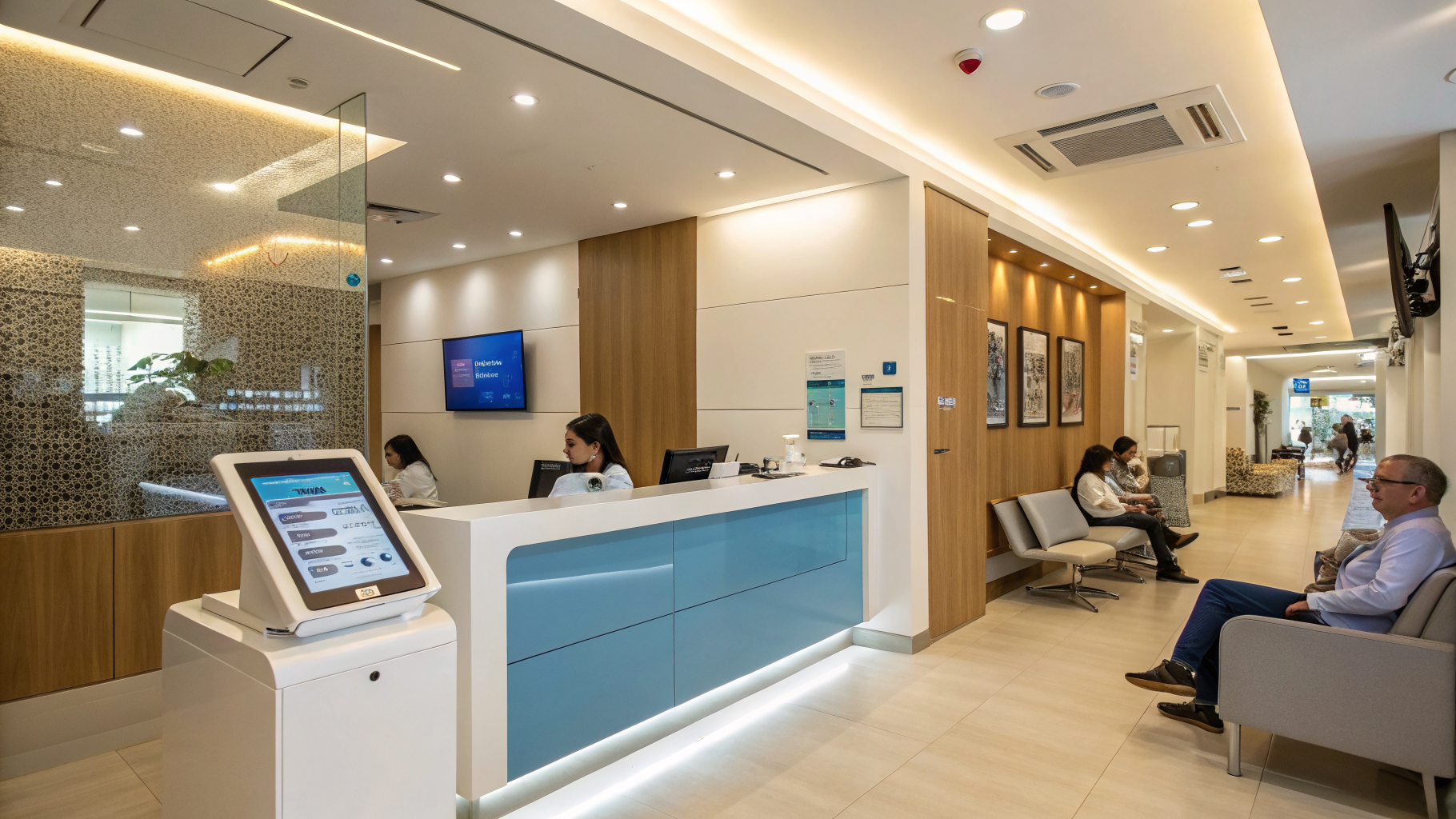
Tuesday morning in Laval, Quebec. Two hygienists in treatment rooms, a dentist deep into a root canal, and a receptionist juggling the patient at the front desk, line 1 on hold, and line 2 ringing into the void. Result? Three missed calls before noon — including one from a new patient who needed an emergency appointment for a fractured crown.
This scenario isn't unusual. According to a Resonate AI study covering thousands of dental practices, 38% of incoming calls go unanswered at the average dental clinic. Each missed new patient call represents an immediate loss of roughly $850 — not counting the patient's lifetime value, estimated between $15,000 and $25,000.
Dr. Tremblay's clinic was losing an estimated $47,000 per year in direct revenue. Not because of a bad dentist. Not because of careless staff. Simply because no one could pick up the phone fast enough, often enough.
Then they installed an AI Voice Agent.
The Real Cost of a Missed Call in Dentistry
Before we talk solutions, let's understand the scope of the problem. Most dental clinic managers drastically underestimate what unanswered calls actually cost them.
Here are the numbers, drawn from real data compiled in 2025-2026:
A dental practice receives an average of 40 to 60 calls per day. If it misses 35% of them — which is common when staff are busy in treatment rooms — that's roughly 15 to 21 lost calls daily. DenteMax estimates that the average annual loss from missed calls ranges between $100,000 and $150,000 for a practice that doesn't address the issue.
The most painful part? Missed calls almost never result in a callback. The prospective patient simply calls the next practice on Google. And you'll never know you lost them.
There's also the no-show problem. A typical dental practice sees 10-15% of its appointments cancelled or simply ignored. Multiplied by an average $200 per visit, the losses add up fast. Over a year, a mid-sized clinic can bleed $30,000 to $50,000 just from empty chairs that should have been filled — chairs that represent not only lost revenue but wasted prep time for your hygienists and assistants.
And here's what makes it worse: these two problems feed each other. When your front desk is overwhelmed, confirmation calls don't go out on time. When confirmations don't happen, no-shows spike. When no-shows spike, your team scrambles to fill last-minute gaps — which means even less time to answer incoming calls. It's a vicious cycle that gets harder to break the longer you ignore it.
What an AI Voice Agent Actually Changes
An AI Voice Agent for dental clinics isn't the robotic phone menu from 2015 that recites a list of options. It's an intelligent voice assistant that understands natural language, identifies the reason for the call, and takes action in real time.
Here's what the system installed at Dr. Tremblay's clinic handles without any human intervention:
Instant response, 24/7. No call goes unanswered. Whether it's 8 AM, during the lunch rush, or 9 PM on a Sunday, the AI Voice Agent picks up, identifies the need, and engages in conversation. Remember that 30% of calls to dental clinics come outside business hours — calls that were previously 100% lost.
Automated appointment booking. The agent checks the calendar in real time, offers available time slots, and confirms the reservation. No human needed to verify the schedule or call the patient back.
Reminders and confirmations. The AI automatically contacts patients 48 hours and 24 hours before their appointment. At the Tremblay clinic, no-shows dropped by 34% within three months. Based on 12 weekly absences at $200 each, that's about 4 avoided no-shows per week — roughly $41,600 recovered annually.
Intelligent triage. The agent distinguishes between emergencies (acute pain, broken tooth) and routine requests (cleaning, annual checkup) and adjusts its response accordingly. Urgent cases trigger an immediate notification to staff.
The Numbers After 6 Months: The Tremblay Clinic Case
Let's look at the concrete results after six months of running an AI Voice Agent at this 3-dentist, 4-hygienist clinic in Laval.
Call answer rate: from 62% to 99.2%. Virtually no missed calls, even during peak hours or evenings.
New patients captured per month: +8 additional patients on average who would have otherwise called a competitor. At $850 in immediate revenue per patient, that's $6,800/month or $81,600 annualized in first-treatment value.
No-shows reduced: from 14% to 9.2%. The 34% reduction in absences filled slots that previously sat empty.
Time freed for staff: the receptionist estimates spending 2 fewer hours per day on the phone, time now dedicated to in-person patient care and administrative tasks.
Using a conservative estimate — $47,000 in net additional annual revenue after deducting the solution's cost — the return on investment happened in under 6 weeks.
Why This Works Better Than a Chatbot or Answering Service
If you're wondering why not just use a website chatbot or an outsourced answering service, the difference is fundamental. As we explain in our detailed AI Voice Agent vs Chatbot comparison, the phone remains the number one channel for dental clinics. Patients — especially those in pain or facing an emergency — want to talk, not type.
An outsourced human answering service costs between $1.50 and $3.00 per call, doesn't know your real-time schedule, and can't book appointments directly in your system. The AI Voice Agent integrates with your practice management software and acts as a natural extension of your team.
And the 7 truths that virtual receptionist vendors won't tell you apply here too: not all solutions are created equal. You need to make sure the agent handles natural conversational language, integrates with your PMS (Dentitek, ABELDent, Dentrix, etc.), and is specifically configured for dental vocabulary.
The 5 Implementation Steps
Implementation at the Tremblay clinic took exactly 8 business days from first meeting to launch. Here's the process our team follows for each dental clinic:
Day 1-2: Call audit. We analyze current call volume, peak hours, most frequent call reasons, and answer rate. This is the foundation for configuring the agent correctly.
Day 3-4: Agent configuration. We program dental-specific conversation scenarios: appointment booking, emergencies, insurance questions, callback requests. The agent is trained on your clinic's vocabulary.
Day 5-6: Technical integration. Connection to your practice management software (PMS), calendar, and existing phone system. Our complete guide to choosing an AI Voice Agent details the integration criteria to verify.
Day 7: Live testing. The agent runs in parallel with the receptionist for one full day. Every interaction is reviewed and fine-tuned.
Day 8: Launch. The agent takes over incoming calls. The receptionist remains available for cases the AI redirects, but the bulk of phone volume is handled automatically.
What It Costs — and What It Returns
Let's not dance around it. An AI Voice Agent for a dental clinic represents a monthly investment that varies based on configuration complexity and call volume. For a clinic like Dr. Tremblay's (3 dentists, ~50 calls/day), the cost falls in a range comparable to about a quarter of an additional receptionist's salary.
But the math is simple. If you're missing even 5 new patients per month at $850 each, you're losing $51,000 per year. The AI Voice Agent recovers most of that from month one.
The typical ROI we see across Quebec dental clinics: between 4 and 8 weeks. After that, every month is pure net benefit.
Will Your Patients Hate Talking to a Robot?
Every dentist asks this. And the honest answer is that most patients don't even realize they're talking to AI. Voice agents in 2026 use natural-sounding voices, handle interruptions, understand accents, and adapt their speaking pace to the caller.
At the Tremblay clinic, we measured caller satisfaction after 3 months. Result: 91% satisfaction, compared to 78% before installation — mainly because patients no longer have to wait on hold or call back three times before getting an appointment.
The key is transparency. The agent clearly introduces itself, explains it can book an appointment right away, and always offers the option to speak with a human if the patient prefers. No deception, no frustration.
What's Next?
If your dental clinic receives more than 30 calls per day and your answer rate is below 85%, you're leaving money on the table. Probably a lot more than you think.
An AI Voice Agent doesn't replace your team — it frees them. Your receptionist can finally focus on in-person patient care, billing, and complex cases that require human judgment. The AI handles the volume, the repetition, and the impossible hours.
The technology has matured to a point where the question isn't whether AI voice agents work for dental clinics — the data is clear on that. The question is how long you're willing to keep losing $47,000 or more per year before making the switch. Every week you wait is another 100+ calls potentially going unanswered, another handful of patients walking into your competitor's office instead of yours.
Dr. Tremblay's clinic isn't an isolated case. It's what happens when you stop letting the phone ring into the void.