
The call comes in at 8:17 p.m.
A woman in Mississauga has just left the hospital after a rear-end collision on the 401. Her wrist is in a brace. She is tired, worried about missing work, and trying to figure out whether she should speak to a personal injury lawyer tonight or wait until morning. She calls Firm #1. It rings, then voicemail. Firm #2 has an answering line, but it takes a name and number only. Firm #3 picks up on the first ring, asks whether the accident happened in Ontario, whether there were injuries, whether she has already retained counsel, and offers a consultation slot for 9:30 a.m.
That third firm has a very good chance of winning the file.
This is the real business case for an AI voice agent for law firms Canada. Not a novelty. Not a toy. A practical intake layer that answers immediately, screens the matter, captures facts, and moves a qualified prospect toward the next step while the caller is still engaged. Across Toronto, Calgary, Vancouver, Ottawa, Winnipeg, Halifax, and smaller markets in between, firms are losing prospective clients on the first ring because no one is available when the caller is ready to talk.
And legal buyers rarely wait around. Especially after hours.
Why firms bleed calls before intake even begins
Law firms like to think missed calls happen at the edges: lunch, court appearances, evenings, holidays, or during a surge after a referral source sends traffic. In practice, the leakage is constant. By 2026, law firms are still missing up to 35% of inbound calls during business hours. That number alone should get any managing partner’s attention, because the problem is not just coverage. It is conversion.
When a prospective client calls, the old benchmark was simple: answer the phone. The new benchmark is stricter: complete the intake on first touch. That means collecting enough structured information to determine whether the matter fits the practice, whether it is urgent, whether there is an obvious conflict issue to review, and whether a consultation should be booked now.
Voicemail does not do that. A generic answering service usually does not do that either.
The second hard number is even more painful: 62% of callers will not leave a voicemail and simply call the next firm. That one behaviour changes the economics of intake. If a caller hangs up after 20 seconds and reaches another office that engages them immediately, the first firm never gets a second chance. No follow-up. No retargeting. No recovery.
And each missed call has real value. For many Canadian practices, each missed call is worth $200+ in lifetime value. In personal injury, family, and immigration, the number can be much higher depending on the matter type and downstream work. Even if you use the conservative floor of $200, the monthly loss adds up quickly.
Let’s keep it plain. If a small firm receives 200 inbound prospective-client calls in a month and misses 35% of them, that is 70 missed conversations. If 62% of those callers do not leave voicemail, roughly 43 prospects are gone. At $200+ in lifetime value each, that is at least $8,600 in lost opportunity. In many firms, the true number is several times higher.
This is why so many firms are rethinking reception. By 2026, over 60% of professional-services firms plan to deploy AI client-engagement tools. The driver is not hype. It is operational pressure: fewer missed calls, better intake quality, faster response, and less administrative drag on lawyers and assistants.
That is also why the conversation around a AI voice agent for law firms Canada is not really about replacing a receptionist. It is about building a better first-contact process across six time zones, variable call spikes, and bilingual demand.
If you want the short version, the firms that win are not merely available. They are ready.
What the agent actually does on the first call
It does more than answer
A serious AI intake setup is not just a pleasant voice saying hello. It is a structured workflow. The best systems are designed to move a caller from uncertainty to a clear next step in one interaction.
For Canadian firms, that usually starts with five jobs.
- Identify the practice area: personal injury, family, immigration, or another area the firm handles.
- Confirm jurisdiction: province, city, and whether the legal issue falls within the firm’s service area.
- Assess urgency: deadlines, custody issues, detention concerns, limitation periods, recent accidents, court dates, or immediate safety concerns.
- Capture core facts: names, contact details, timeline, opposing party names where appropriate for conflict screening, and a concise matter summary.
- Book the consultation: offer available times, collect consent for follow-up, and send the intake to the firm in a usable format.
That is the shift from “answer the phone” to “complete the intake.” It is the difference between a receptionist taking a message and a system performing legal client intake automation that actually helps the file-opening process.
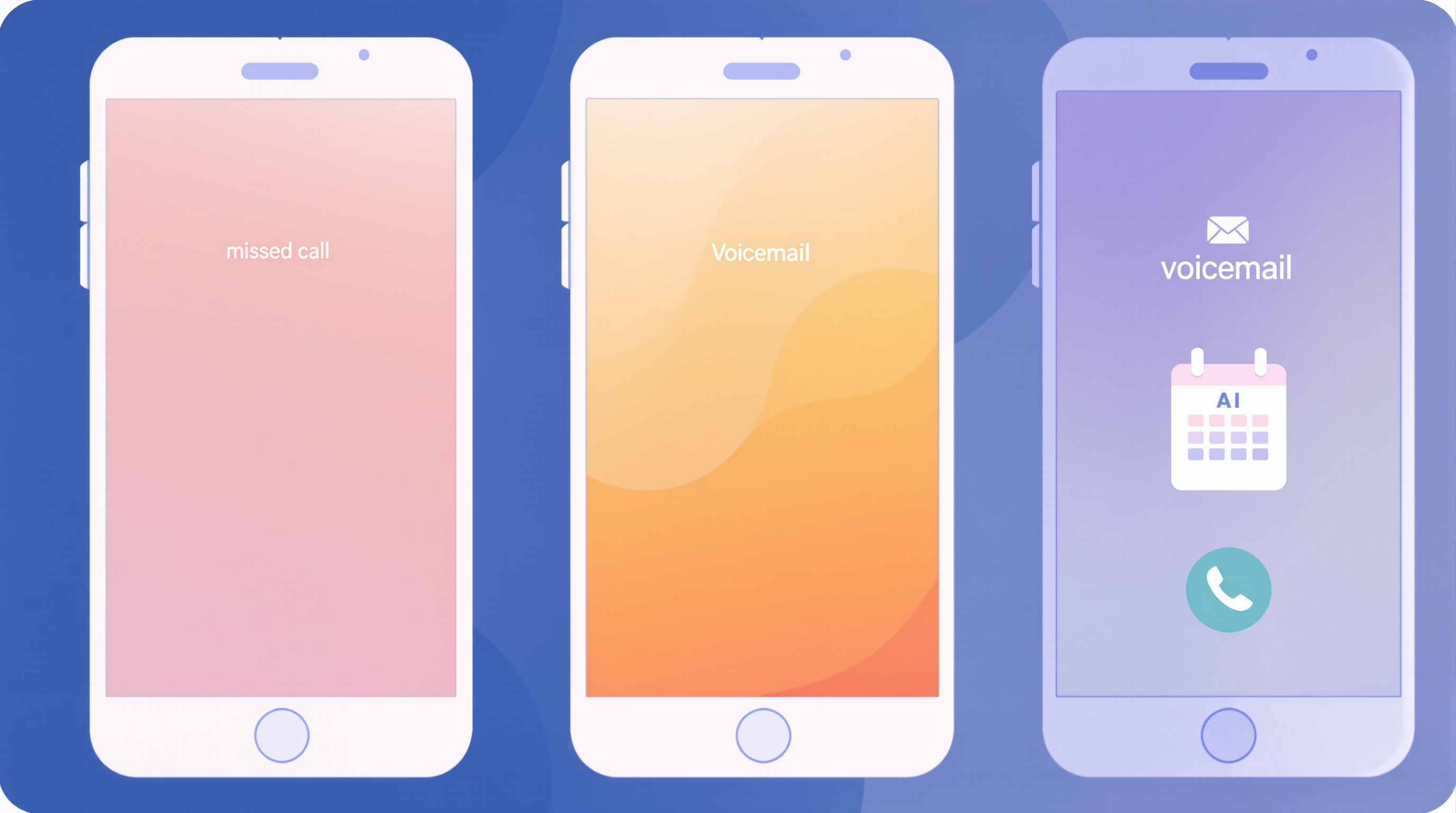
Two firms miss the call while the third books the consultation
Practice-area qualification matters
Take personal injury. The agent can ask whether the accident involved a motor vehicle, slip and fall, or another incident; when it happened; whether there was medical treatment; whether the caller is already represented; and whether there are immediate insurer or employer issues. It can identify high-urgency scenarios without attempting to advise on entitlement or case value.
In family law, the intake flow changes. The agent can ask whether the matter concerns separation, parenting time, support, or an urgent safety issue. It can ask what province the family matter is in, whether there is an existing court order, and whether there is a near-term hearing date. Again, no legal advice. Just relevant intake.
For immigration, the questions shift again: work permit, study permit, permanent residence, sponsorship, refusal, hearing, detention, or removal concerns. The agent can capture country of origin, application stage, deadline sensitivity, and preferred language. That matters, because immigration callers often need clarity fast and may be calling outside standard office hours.
Jurisdiction and fit save staff time
A lot of firms spend human time on matters they will never open. Wrong province. Wrong practice area. Existing counsel already retained. Limitation issue outside the firm’s appetite. Opposing party conflict. The AI layer can filter these calls politely and consistently.
That is where a modern law firm answering service should be judged: not on whether it sounds nice, but on whether it produces cleaner, more qualified opportunities for the people who actually do the legal work.
Booking is where revenue is won
If the matter fits, the agent should offer the next step immediately. A consultation slot. A callback window. A warm transfer if a human is available. A text or email confirmation. Firms that only collect a name and promise to call back are giving away momentum.
For a closer look at recovery mechanics, see what a voice agent actually recovers. The key point is simple: speed plus structure beats voicemail.
The confidentiality objection: fair concern, manageable with the right design
Every law firm asks the same question, and rightly so: what about confidentiality?
No responsible vendor should wave this away. Intake systems in legal settings need clear rules around data handling, access, storage, and conversation boundaries. This is business and operations guidance, not legal advice, but the right starting points in Canada include PIPEDA and the Federation of Law Societies’ Model Code of Professional Conduct.
From an intake perspective, four issues matter most.

Confidentiality guardrails and redacted digits in AI call intake
1. The agent should collect only what is needed
Good intake is disciplined. The caller does not need to narrate every detail of their life at 10:40 p.m. The system should gather enough information to determine fit, urgency, and the next action. That usually means contact details, broad matter facts, jurisdiction, opposing-party names for conflict review where appropriate, and scheduling preferences.
It should not invite callers to disclose unnecessary sensitive information. Less clutter also means better transcripts and easier staff review.
2. The firm must know what data is stored
Ask basic operational questions: Are calls recorded? Are transcripts stored? For how long? Who has access? Where does the data flow after the call? Does the intake push into a CRM, case-management platform, shared inbox, or all three? Can retention policies be controlled? These are not technical side notes. They are deployment decisions.
Many firms are comfortable storing structured intake notes but prefer stricter handling for audio recordings. Others want transcripts available for quality review but limited access by role. The right setup depends on the firm’s process and risk tolerance, but the rule is the same: decide this before launch, not after the first sensitive call.
3. Sensitive numeric data needs protection
Some callers will try to read out card numbers, SINs, policy numbers, or other sensitive numeric information. That is exactly where keypad-digit handling matters. In 2026, platforms like ElevenLabs shipped conversation guardrails and keypad-digit redaction, which helps firms design flows where sensitive digits can be entered by keypad and redacted from transcripts or logs where appropriate.
That is a useful control for payment-related or identity-related touchpoints. Better yet, many firms simply avoid collecting high-risk numbers by voice during initial intake unless absolutely necessary. Smart process design beats cleanup every time.
4. The agent must never drift into legal advice or fee quotes
This is the biggest behavioural guardrail. The voice agent should not assess legal merits, interpret rights, advise on what someone “should” do, or quote fees beyond tightly approved intake language. It can explain the firm’s process, gather information, identify urgency, and arrange the next step. It can say, “A lawyer will review your information and discuss options with you.” It should not say, “You definitely have a case,” or “That will cost $2,500.”
This is why scripted boundaries matter. If the caller asks for legal advice, the agent should acknowledge the question and route the matter to a lawyer or approved staff member. If you want a deeper operational view, read about guardrails and liability.
What to automate and what to escalate to a human
Not every call should stay with automation from start to finish. The strongest setups are selective. They automate the repetitive, high-volume, rules-based parts of intake and escalate the calls where human judgment, empathy, or risk review matters most.
Good candidates for automation
- After-hours and weekend intake
- Overflow during peak call periods
- Basic matter screening by practice area and province
- Consultation booking and reminders
- Collection of contact information and matter summaries
- Bilingual first-contact handling
- Status updates on simple administrative questions, where approved
Calls that should usually escalate
- Potentially urgent family safety issues
- Detention, removal, or same-day immigration emergencies
- Highly emotional callers who need reassurance from staff
- Prospects asking for legal opinions or tactical advice
- Complex conflict situations
- VIP referral sources or existing clients with sensitive concerns
The goal is not to trap every caller inside automation. It is to move routine calls through a reliable intake path while preserving a warm-transfer option when needed. That means the system should be able to hand the call to a human quickly, with context attached, so the caller does not have to repeat everything from the beginning.
That last part matters more than firms sometimes think. A bad transfer is almost as frustrating as no answer at all.
Bilingual and multilingual intake across Canada is no longer optional
Canadian firms do not serve one narrow caller profile. They serve people across six time zones, often under stress, sometimes from a hospital room, a police station parking lot, a shared apartment, or an airport. Some callers are most comfortable in English. Some in French. Some start in one language and switch midway through the call.
A modern 24/7 legal receptionist should be able to detect language in real time and continue the intake accordingly. For firms serving national immigration or cross-provincial practices, multilingual support can also help beyond English and French, but bilingual capacity is the baseline in Canada.
This is not only about courtesy. It affects conversion and data quality.
If a French-speaking caller reaches a line that can greet them naturally, ask intake questions clearly, and confirm the next step in French, the firm reduces drop-off and increases the chance of capturing accurate facts. The same goes for English-first callers who need a quick, confident interaction at midnight local time.
Consider the geography. A Vancouver firm may receive calls while Toronto staff are offline. A Halifax immigration practice may get an evening inquiry from Alberta. A national marketing campaign can create demand well outside the office’s local business hours. Bilingual, always-on intake closes those gaps without forcing a firm to fully staff every hour of the week.
That is one reason the AI voice agent for law firms Canada model fits the market so well: it aligns with national coverage, bilingual demand, and uneven call timing.
The ROI is usually obvious after one recovered matter
Let’s talk numbers without dressing them up.
AI phone handling in 2026 runs roughly $50 to $300 per month for many firms, depending on call volume, workflow complexity, and integrations. Even if you add setup work and internal review time, the monthly cost is modest compared with the value of one converted matter.
Start with the conservative missed-call figure again. Suppose a firm recovers only 5 to 10 calls per month that would otherwise have gone to voicemail or nowhere. If even one of those becomes a retained family file, a personal injury file, or an immigration matter with meaningful downstream work, the system can pay for itself many times over.
At the low end, if each missed call is worth $200+ in lifetime value, recovering just two calls can offset much of the monthly spend. At the realistic end, one recovered retainer can cover months of service.
This is why firms should stop comparing AI intake only to receptionist wages. That is the wrong benchmark. Compare it to lost revenue, lower intake quality, and staff time spent chasing half-complete messages.
A well-configured system also creates softer returns that matter operationally:
- Cleaner intake notes for lawyers and assistants
- Fewer back-and-forth calls to gather basic facts
- Higher booking rates from after-hours inquiries
- Better source tracking and reporting
- More consistent caller experience across offices and time periods
None of this means a firm should automate blindly. It means the financial threshold to test is very low. Frankly, that is what makes the category hard to ignore.
How to deploy without cutting corners
The best rollouts are boring in the right way. Controlled scope. Clear scripts. Measured outcomes. Weekly review. No grand promises.
Start with after-hours and overflow
The safest first deployment is usually after-hours intake plus daytime overflow. Those are the calls most likely to be missed anyway, and they create a clean before-and-after comparison. You can track answer rate, booking rate, transcript quality, and retained-matter outcomes without disrupting the whole front desk on day one.
This also helps staff trust the system, because they can see exactly what it handles and where it escalates.
Build script guardrails before launch
Write the opening greeting, practice-area questions, disqualification rules, escalation triggers, and no-advice language in plain English and French. Be specific. Decide which phrases are approved and which topics the agent must avoid. Include province-specific routing logic if the firm serves only certain jurisdictions.
For example, a family-law intake should know when to mark a matter urgent without discussing legal remedies. An immigration intake should know when to route same-day or detention-related issues to a human. A personal injury intake should gather incident details without speculating on liability or damages.
Keep a warm-transfer path open
If someone is available, the agent should be able to transfer live with a short summary: caller name, matter type, urgency, province, and any key facts already collected. That saves time and lowers frustration. If no one is available, the agent should book the next step and confirm timing clearly.
Review transcripts weekly
This is where firms improve fast. Review a sample of transcripts and recordings each week. Look for drop-off points, confusing questions, weak qualification, missed urgency signals, and caller phrasing that should be reflected in the script. Intake optimization is not a one-time setup. It is an operating habit.
Also review false positives and false negatives. Did the agent book consultations for matters the firm never handles? Did it fail to flag a conflict concern? Did it let a caller wander into sensitive disclosures unnecessarily? Tightening these points produces better outcomes quickly.
Measure the right metrics
Do not stop at answer rate. Track:
- Calls answered within the first ring or first few seconds
- Qualified-intake completion rate
- Consultation booking rate
- After-hours conversion rate
- Warm-transfer success rate
- Retained matters from AI-handled calls
- Staff time saved on first-contact administration
Those numbers tell you whether the system is just picking up calls or actually improving intake. There is a big difference.
Conclusion
Across Canada, law firms are not only losing calls when no one answers. They are losing clients when no one completes the intake while interest is highest. The old front-desk standard was availability. The new standard is immediate, structured, bilingual, compliant-minded intake that qualifies the matter, captures facts, flags urgency, and books the next step without drifting into legal advice.
For personal injury, family, and immigration practices in Toronto, Calgary, Vancouver, Ottawa, Winnipeg, Halifax, and beyond, the economics are hard to ignore: firms miss up to 35% of inbound calls during business hours, 62% of callers will not leave voicemail, and each missed call is worth $200+ in lifetime value. Against that, AI phone handling at roughly $50 to $300 per month is a small operational decision with outsized upside.
If your firm wants to test a practical, guarded approach, start with after-hours and overflow, define clear escalation rules, and measure booked consults and retained matters. If you want to see how that can work in your intake flow, book a demo.