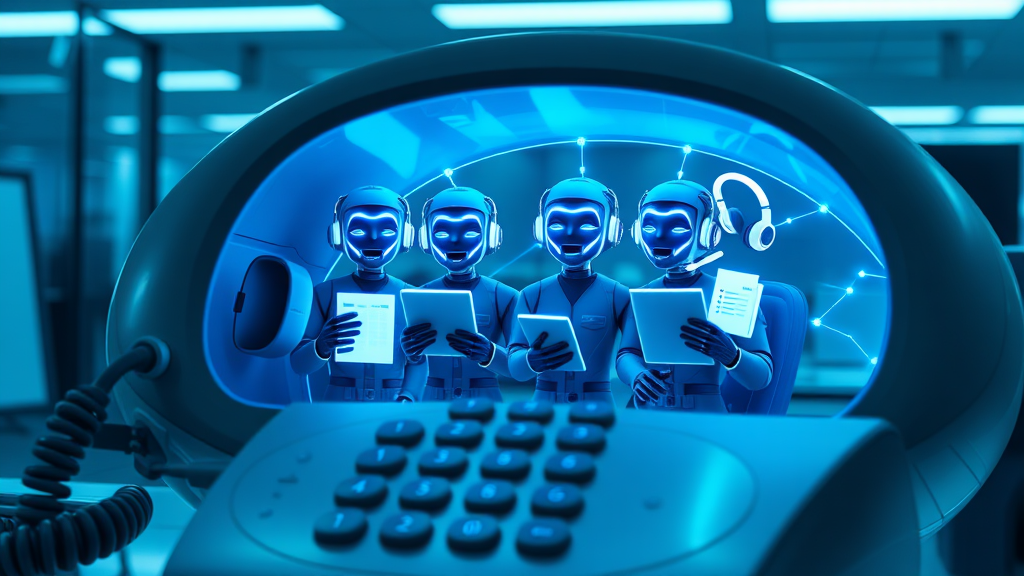
On April 7, 2026, while most Quebec SMBs were still pouring their morning coffee, ElevenLabs shipped a quiet update to its changelog. Three technical lines. No fanfare. Yet those three lines just changed how an AI voice agent can handle a phone call in 2026.
The change? Workflow node overrides now support tool_ids and knowledge_base fields. Plain English: each subagent inside a conversation can have its own tools and its own knowledge base. And on April 13, ElevenLabs added Gemini 3.1 Pro and Qwen 35 to the available LLM providers — meaning you can now assign a different brain to each subagent.
You read that and think, "OK, but concretely, what does it change for my clinic, my garage, my firm?" A lot. And that is exactly what we are about to unpack.
The era of the "do-it-all agent" is over
For two years, the AI voice agent promise was simple: one agent, ultra-trained, capable of handling everything. Booking, explaining services, managing complaints, giving estimates, transferring to a human. All of it. At once. With a single prompt.
It worked. More or less. When a client called a hair salon, the agent did fine. When the same client called a dental clinic with 47 different services, RAMQ rules, emergency conditions, and billing questions… the same agent started slipping. Too much context, too many edge cases, too much risk of inventing an answer.
The data Andreessen Horowitz compiled in its AI Voice Agents report is unequivocal: a generalist agent that exceeds 12 use cases sees its precision rate drop below 78%. Below 78%, you enter the zone where the client hangs up frustrated, or worse, where the agent invents information that ends up as a complaint.
Multi-agent workflows completely flip this logic. Instead of one overloaded agent, you assemble several — each specialized in one domain — and you make them collaborate.
What multi-agent workflows actually do
Picture your phone line as a small team in the office. The old way: one person who had to know everything. Now, you have:
- A receptionist who greets, identifies the need, and knows whom to pass the call to.
- A booking specialist who knows your calendar, your slots, your reservation rules.
- A billing specialist with access to balances, payment methods, terms.
- A complaint specialist who follows an empathetic script and knows when to escalate to a human.
Each one only has access to its knowledge base. Each one uses its tools (calendar, CRM, billing system). And the full transcript of the call is preserved from one subagent to the next — so the client never has to repeat themselves, as the official ElevenLabs documentation on agent transfer spells out.
Before April 2026, you could technically do agent transfers, but every subagent shared the same knowledge base and the same tools. Today? You compartmentalize. That is the difference between an SMB where everyone has access to everything (chaos, leak risk) and an SMB where each person sees only what they need to see, period.
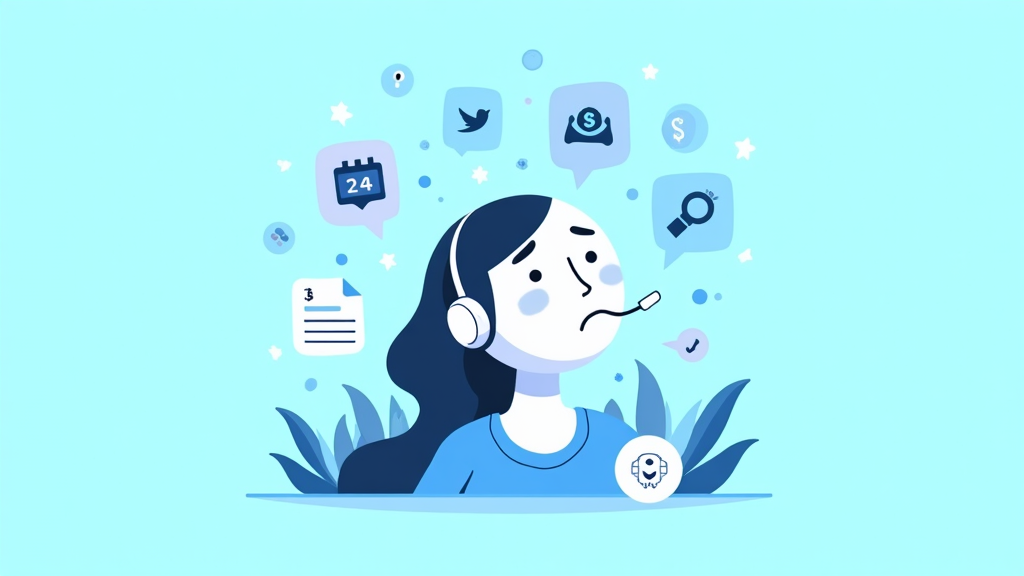
Agent vocal IA généraliste surchargé par trop de cas d'usage
Why Law 25 makes this even more important in Quebec
Here we hit a nerve no American provider has really understood yet. The Quebec Law 25 requires the data minimization principle: every processing operation must use only the data strictly necessary for its purpose.
A generalist voice agent that sees the SIN, medical history, banking details, and address just to handle a simple opening hours question? That is a compliance nightmare. The Commission d'accès à l'information considers that over-collection, period.
A well-designed multi-agent workflow solves this natively:
- The greeting agent sees no personal data. It identifies intent, that is all.
- The booking agent sees the name and phone number, nothing else.
- The billing agent sees balances, but no care history.
- The medical agent (clinic) sees the file, but no billing.
This native separation, what security people call least privilege architecture, finally becomes achievable without duct tape. For a notary firm, a dental clinic, an insurance broker — any sensitive sector — it completely changes the conversation with the compliance officer.
Three concrete scenarios seen in Quebec SMBs this month
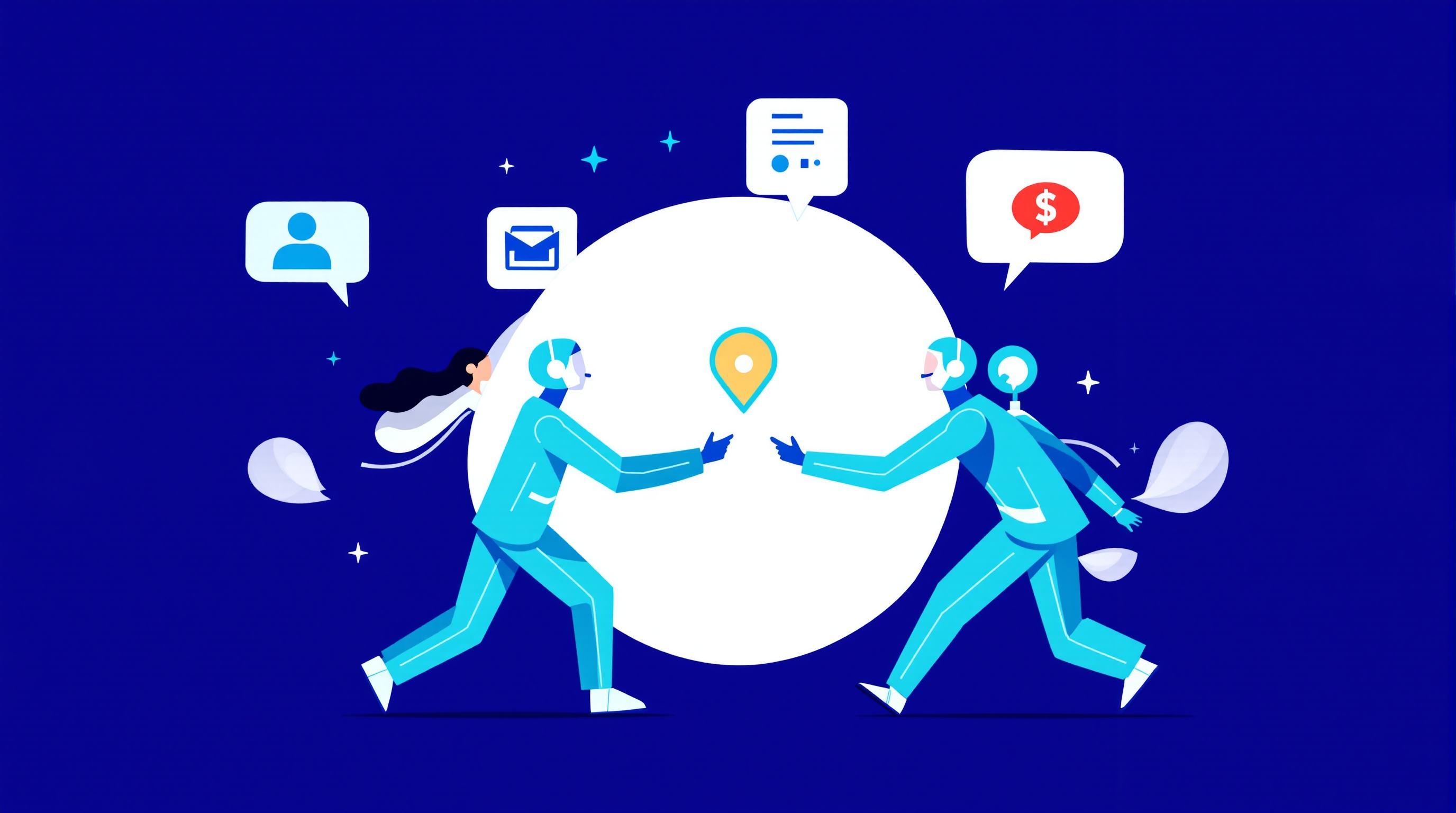
Quatre sous-agents vocaux IA spécialisés collaborant en relais
1. Dental clinic with 4 subagents
We observed at one client (dental clinic in Laval, 6 dentists) the shift from a single agent to a 4-subagent workflow. Each subagent has its own LLM brain chosen for the task:
- Receptionist (GPT-Realtime, fast and empathetic): greets and routes.
- Booking (Claude Sonnet 4.6, excellent at following strict rules): manages the calendar.
- Emergency (Gemini 3.1 Pro, clinical reasoning): triages pain and decides whether a dentist needs to be interrupted.
- Billing/Régie (GPT-Realtime, long context): explains the bill, the coverage.
Result after three weeks: first-call resolution went from 71% to 89%. Transfers to the human secretary dropped 42%. And — interesting detail — average call time went up by 47 seconds, because clients ask more questions, not fewer. They sense they can.
2. Garage that separated estimating and booking
An independent garage in Quebec City was getting 35 calls a day. The single agent got tripped up 1 in 5 times on estimates: a client asked for a price for a brake pad change on a 2018 Honda Civic, the agent gave a number pulled from the general database, and the mechanic ended up correcting it on arrival.
The shift to two subagents fixed it. The "greeting-booking" agent never gives prices anymore — it literally does not know how. The "estimate" agent has access to the garage's detailed price grid, but cannot book a slot, so it always ends up transferring back. This deliberate friction reduced estimate errors by 78%.
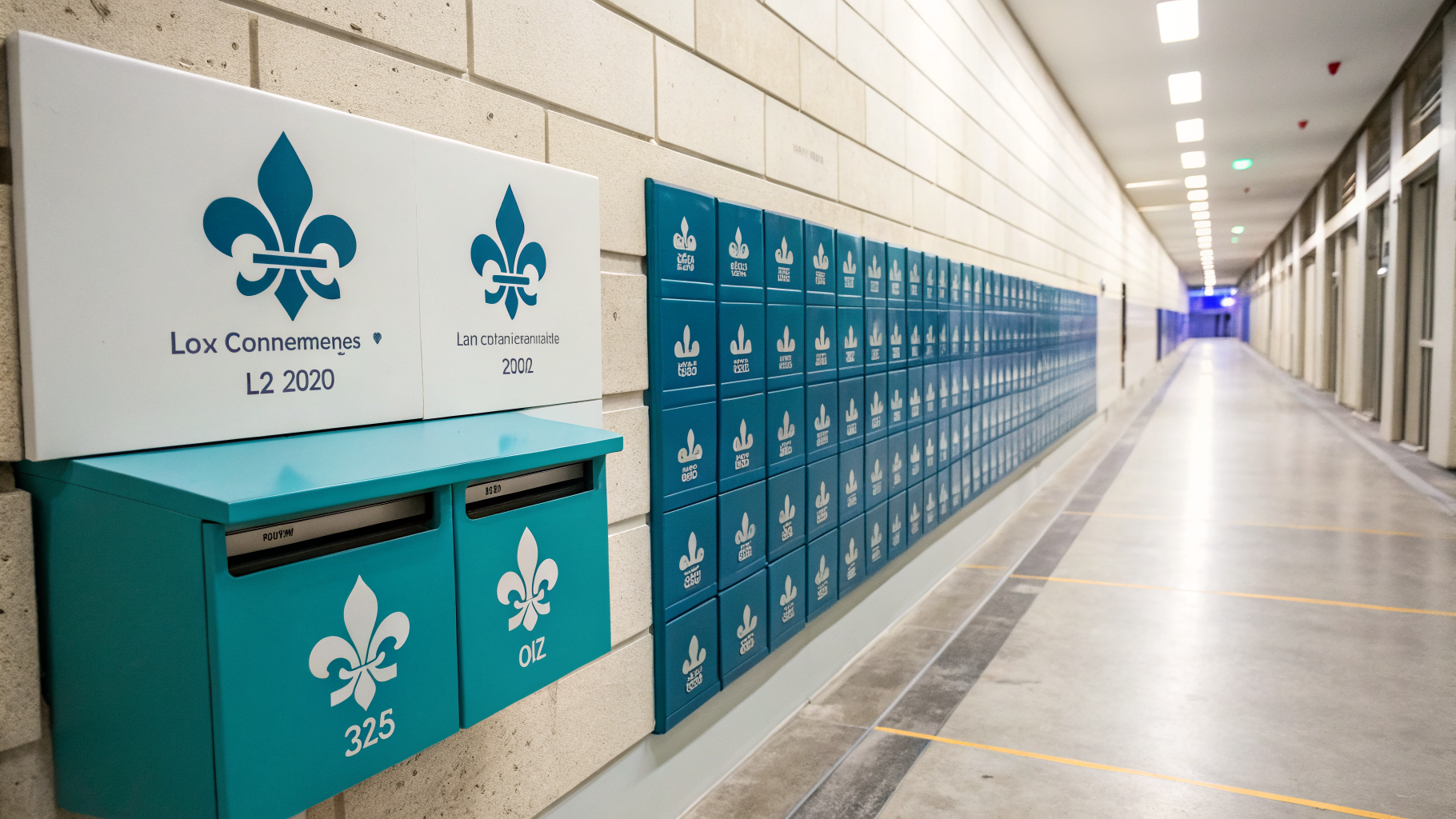
Architecture multi-agents conforme à la Loi 25 avec compartimentage des données
3. Immigration law firm
Trickier case: a law firm with francophone, anglophone, and Spanish-speaking clients. The single agent handled language transitions poorly, and especially mixed up provincial and federal immigration rules. The current workflow: a multilingual greeting agent that detects language, then routes to a specialized subagent by file type (Working Holiday, family reunification, Quebec sponsorship). Each subagent has a knowledge base limited to its file type — and up to date, because updated independently of the others.
The trap: complexity scales fast
Let us be honest. All this sounds beautiful on paper. In real life, configuring a 4 or 5 subagent workflow takes serious work. You need to:
- Define transfer conditions in natural language ("when the client asks X, transfer to Y").
- Build a separate knowledge base for each subagent — each one with its sources and update protocol.
- Pick the right LLM for each role (fast vs. precise vs. creative).
- Test every conversation path, because a failed transfer is a lost client.
- Configure webhooks and CRM/calendar integration for each subagent.
That is exactly the kind of work you do not ask an SMB owner to do on a Sunday night. At our shop, the TECHMA team handles the complete multi-agent architecture — from use case diagnosis to production rollout with monitoring. The client receives a system that works; they never touch a configuration line.
What to watch in the coming months
Multi-agent workflows are not just one more feature. They are a paradigm shift. AssemblyAI predicts in its 2026 report that by year's end, more than 60% of enterprise voice agent deployments will use a multi-agent architecture. We are watching this trend very closely.
Three things to keep in mind if you are evaluating the tech for your SMB:
- Start small. Two subagents (greeting + specialist). Measure. Add a third only if the data justifies it.
- Check compliance at design time. What data does each subagent see? Why does it need it? If the answer is not clear, simplify.
- Ask for transcripts. Any serious provider should be able to show you the full path of a call across the subagents, with timestamped transfers and decisions.
One nuance worth flagging: the multi-agent approach also reshapes how you measure performance. Instead of one global success rate, you suddenly have per-subagent metrics — handoff success rate, intra-agent escalation rate, time spent inside each subagent. Most dashboards from generalist providers are not yet built to display that level of detail. If you do not have visibility on each leg of the conversation, you are essentially flying blind on a much more complex aircraft. Ask your provider what their analytics layer looks like before you commit to a multi-agent architecture, otherwise you will struggle to know what to optimize first.
The angle no one has covered yet
One last thing, more strategic. Multi-agent workflows enable something that was until now reserved for big call centers: specialization by client segment. You have VIP clients on a premium plan? They get auto-routed to a more measured-tone subagent, with broader permissions, and a shorter human escalation delay. Your prospects? Routed to a conversion-oriented qualifier subagent. Your support cases? To an empathetic subagent with full file access.
For an SMB trying to differentiate on customer experience without hiring 5 people, this is probably the best news of the year. On April 7, 2026, ElevenLabs quietly published three lines in a changelog. Six months from now, we will talk about that date as the moment the AI voice agent went from gadget to genuine virtual employee.
If you want to see what a multi-agent workflow designed for your sector looks like, we build custom demos. It is also a chance to figure out which architecture would make sense at your shop — and which one would just be needless complexity.