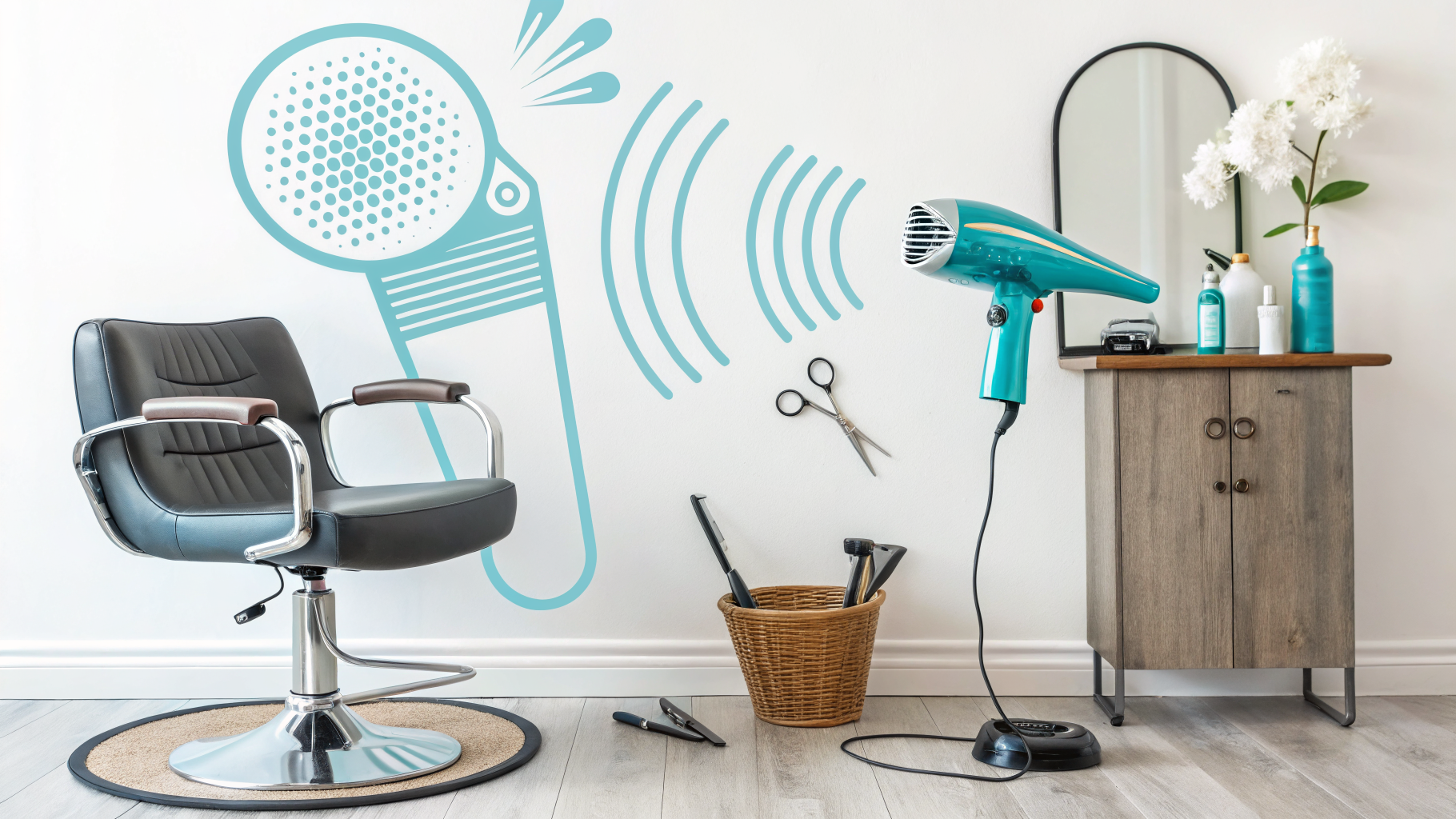
The empty chair on a Saturday afternoon
Saturday, 1:20 p.m. The front desk is checking out a client, a stylist is halfway through a blowout, someone else is mixing colour, and the phone rings into voicemail. That missed call might have been a haircut. It might also have been a $300 balayage, a facial package, or a bridal booking with real downstream value.
In salons and day spas, the empty chair is perishable inventory. If a 90-minute slot goes unbooked today, you do not warehouse it and sell it next week. It is gone. That is why an AI voice agent for salons Canada is not just an efficiency play; it is a revenue protection tool for businesses where demand arrives by phone at exactly the worst possible moments.
Across Toronto, Vancouver, Calgary, Winnipeg, and Halifax, the pattern repeats. Calls spike when the team is busiest. The person “answering phones” is also handling retail, greeting walk-ins, solving schedule conflicts, and keeping the floor moving. The issue is not effort. It is simple operational overload.
A strong AI voice agent does not replace the salon experience clients actually care about. It protects access to it. It answers, qualifies, explains, books, follows up, and captures opportunities that would otherwise disappear into missed calls and abandoned voicemails.
Why salons miss so many calls
The front desk in a salon is never just a front desk. It is a live control tower. Staff are bouncing between the POS, client arrivals, late appointments, product questions, service timing, and in some locations even helping on the floor. So when operators say salons miss up to 30% to 40% of inbound calls, that sounds high until you watch a Thursday evening or Saturday lunch rush in real life.
Think about when calls come in. A client wants to know whether you have room for a same-week manicure. Someone else is asking about the price difference between highlights and balayage. A first-time guest wants to book microblading but has allergy questions. Another person is running late and needs to push back a facial by 20 minutes. These are not rare edge cases. They are normal salon traffic.
Now add the behaviour side. How many callers will try three times? How many will leave a detailed voicemail? Not many. In competitive urban markets, people move on fast. If one salon does not answer, they call the next one. If nobody picks up, they book through a marketplace, message another provider, or simply postpone the appointment and forget about it. Same outcome: lost chair time.
This is where modern voice AI matters. There is a big difference between an old phone tree and a conversational agent that can handle natural turn-taking and use a knowledge base to answer real questions. ElevenLabs describes this shift well: the conversation feels less like pressing buttons through an IVR maze and more like speaking to a capable assistant. For salons, that matters because clients are not calling to “select option 4.” They are calling because they want help now.
The real cost of a missed salon call
A missed call is rarely worth only the first appointment. It often represents the beginning of a client relationship. A new colour client may rebook every eight weeks, buy take-home products, add a toner, upgrade to treatments, and refer friends. Lose the first call, and you may lose months or years of lifetime value.
The abandonment data is hard to ignore. According to CloudTalk and also Famulor, about 69% of salon and spa clients have abandoned a booking attempt because they could not reach a human. Nearly seven in ten. For any owner trying to grow, that number changes the conversation from “nice to have” to “how much are we leaking already?”
Let us run conservative math. Say your salon receives 100 inbound calls per week and misses 30 of them. Assume only 10 of those missed calls were genuine booking opportunities. At an average ticket of $90, that is $900 in lost weekly revenue, or roughly $3,600 per month. If several of those calls were for higher-value services such as balayage, colour correction, extensions, bridal styling, facials, or microblading, the real number climbs fast.
The empty chair metaphor matters because salon time is not recoverable inventory. A vacant 2 p.m. slot for a facial cannot be sold retroactively at 6 p.m. A colour block left open on a Saturday is not “delayed revenue”; it is expired revenue. That is why the ROI math for an AI voice agent can be surprisingly straightforward in beauty businesses. Saving a handful of bookings each week may cover the service many times over.
Then there is the second leak: no-shows. Famulor notes that no-shows can cost the average salon about 20% to 25% of potential revenue, while automated SMS reminders can reduce no-shows dramatically, often by roughly half and in some reported cases by up to 70%, according to their salon voice AI overview. If you want the business case behind this, our no-show reduction guide breaks down why reminders matter so much in appointment-driven businesses.
So the financial story is not just “we missed a call.” It is often “we lost the booking, then lost the chance to prevent future gaps too.”
What an AI voice agent actually does for a salon
Let us make this practical. A salon voice agent should do more than greet callers and dump them into voicemail.
First, it answers immediately during peak hours and after hours. If someone calls at 8:45 p.m. asking whether there is availability for a manicure on Friday, the agent can handle the inquiry, present options based on your rules, and capture details for follow-up if needed. With Agent IA Vocal, setup is not self-serve. The TECHMA team handles implementation around your services, pricing, booking policies, and brand tone.
Second, it handles high-frequency questions that consume front-desk time all day long. How much is a women’s cut? Do you charge extra for long hair? How long should I expect for a balayage? Do you offer men’s cuts? Is there a deposit for bridal services? Can I book a facial if I have sensitive skin? Do you do gel removal with the manicure? Most salons answer versions of these same questions constantly.
Third, it supports rescheduling and late-arrival flows. One client is stuck in traffic on the Gardiner. Another needs to move a blow-dry from Thursday to Saturday. Another wants to ask whether her colour appointment should be pushed because she is running 25 minutes late. These micro-interruptions add up. If an AI voice agent can absorb a meaningful share of them, your team gets back focus on the clients physically in the salon.
Fourth, it helps reduce no-shows through reminders and confirmations. This is one of the highest-impact use cases in beauty because premium services block large chunks of time. If a colour correction, microblading session, or longer facial treatment drops out at the last minute, the schedule may be difficult to refill. Automated confirmations and reminders improve attendance and give the salon more warning when a spot is at risk.
Fifth, it captures leads for higher-ticket services that often require qualification. Extensions. Bridal packages. Microblading. Corrective colour. Advanced skincare treatments. These are not always one-step bookings. They may require consultation, deposit rules, timing review, patch-test questions, or prep instructions. A voice agent can collect the basics cleanly so your team follows up with context instead of chasing incomplete voicemails.
And yes, cost matters. Compared with staffing every possible hour at the desk, there is a different economics model here. Our piece on receptionist cost versus AI voice support is useful if you are weighing where human coverage ends and automation starts. In many salons, the smartest move is not replacement. It is overflow coverage that stops revenue from slipping away.
The Canadian angle: multilingual clients, bilingual expectations, local service realities
Outside Quebec, salons still operate in a highly diverse communication environment. In cities like Toronto and Vancouver, callers may be native English speakers, newcomers, international students, or clients more comfortable mixing languages and asking practical questions in a conversational way. Calgary, Winnipeg, and Halifax each have their own local patterns too, but one common thread across Canada is this: clients expect convenience, speed, and clarity.
That means a salon voice agent should not sound like a stiff script. It should understand the way real clients ask real questions. “Do you have room for a root touch-up this week?” “Can I bring my daughter for a cut too?” “What’s the difference between ombré and balayage?” “Do you have someone good with curly hair?” If the system only handles robotic phrasing, adoption suffers.
Canada is also a bilingual country, and even outside Quebec, plenty of salons serve clients who switch comfortably between English and French, or between English and another language influence. In practice, a flexible phone experience matters. The goal is not to force every interaction into one rigid lane. It is to reduce friction so the client gets what they need quickly and confidently.
There is also the data side. Salons and day spas may collect notes that go beyond a basic booking: allergies, skin sensitivities, service history, patch-test needs, or preferences tied to personal care. If you are evaluating automation, privacy cannot be an afterthought. Our article on voice agents and client-data privacy focuses on Quebec law, but the underlying lesson applies broadly across Canada too: know what you collect, why you collect it, and how it is handled.
In short, Canadian salons need voice systems that reflect local service culture: quick, polite, practical, and able to support diverse callers without sounding like a call centre from another industry.
Common objections from salon owners — and honest answers
“Will clients really accept talking to a bot?”
Some owners imagine the comparison is between a warm, fully available receptionist and an AI. But that is often not the real comparison. The real comparison is between immediate help and no answer at all. If the voice agent is fast, clear, and useful, many clients will happily use it for straightforward requests.
“What about my regulars?”
Your regulars mainly want recognition and convenience. They do not want to call three times to move a blowout by 30 minutes. A well-configured agent can identify the client, understand the request, and apply your business rules. And if certain VIP clients should always route to staff, that can be built in. This is not all-or-nothing automation.
“Is setup going to be a headache?”
It should not be. Agent IA Vocal is sold as a managed service, with plans at $49/month, $99/month, and $199/month, and the TECHMA team handles setup. That matters for salon owners because the last thing you need is another DIY system to configure between clients.
“Will it sound robotic?”
That depends on the quality of the technology and the implementation. The best systems now handle interruptions, natural back-and-forth, and knowledge-based answers far better than old menu systems. The practical test is simple: does it solve the caller’s problem without creating friction? If yes, clients care less than many owners expect.
FAQ
Can an AI voice agent handle complex services like balayage, bridal packages, or microblading?
Yes, with the right rules. For some services, the agent can book directly. For others, it can schedule a consultation, explain deposit requirements, collect preliminary details, or route the lead for human follow-up.
Do I still need online booking if I use a voice agent?
Yes, ideally you use both. Online booking helps clients who are ready to self-serve. Voice support helps the many clients who still want to ask questions before booking, clarify pricing, or talk through timing and service fit.
Does this replace my receptionist?
Not necessarily. Many salons use voice AI to cover missed calls, evenings, busy windows, repetitive questions, and reminder workflows. It often works best as support for your team rather than a total replacement.
What happens if the agent cannot answer something?
It can transfer the call, capture a structured message, create a callback request, or escalate according to your priorities. A good deployment always includes a clean path for exceptions.
Fill more chairs, lose fewer calls
Great salons do not grow on artistry alone. They grow by turning demand into booked, completed appointments. If the phone rings while your team is deep in services, someone still needs to answer. Otherwise the empty chair wins: first as a missed booking, then as a lost client relationship.
Agent IA Vocal helps salons and day spas across Canada capture more calls, confirm more appointments, reduce no-shows, and stay responsive without overloading staff. Plans start at $49/month, with $99/month and $199/month options for more advanced needs, and the full setup is handled by TECHMA.
If you want to see how it could work for your salon — from cuts and colour to manicures, facials, balayage, bridal services, and microblading — book a demo, see our plans from $49/month, or reach out to us to plan the rollout. A few saved calls each week can fill a surprising number of chairs.