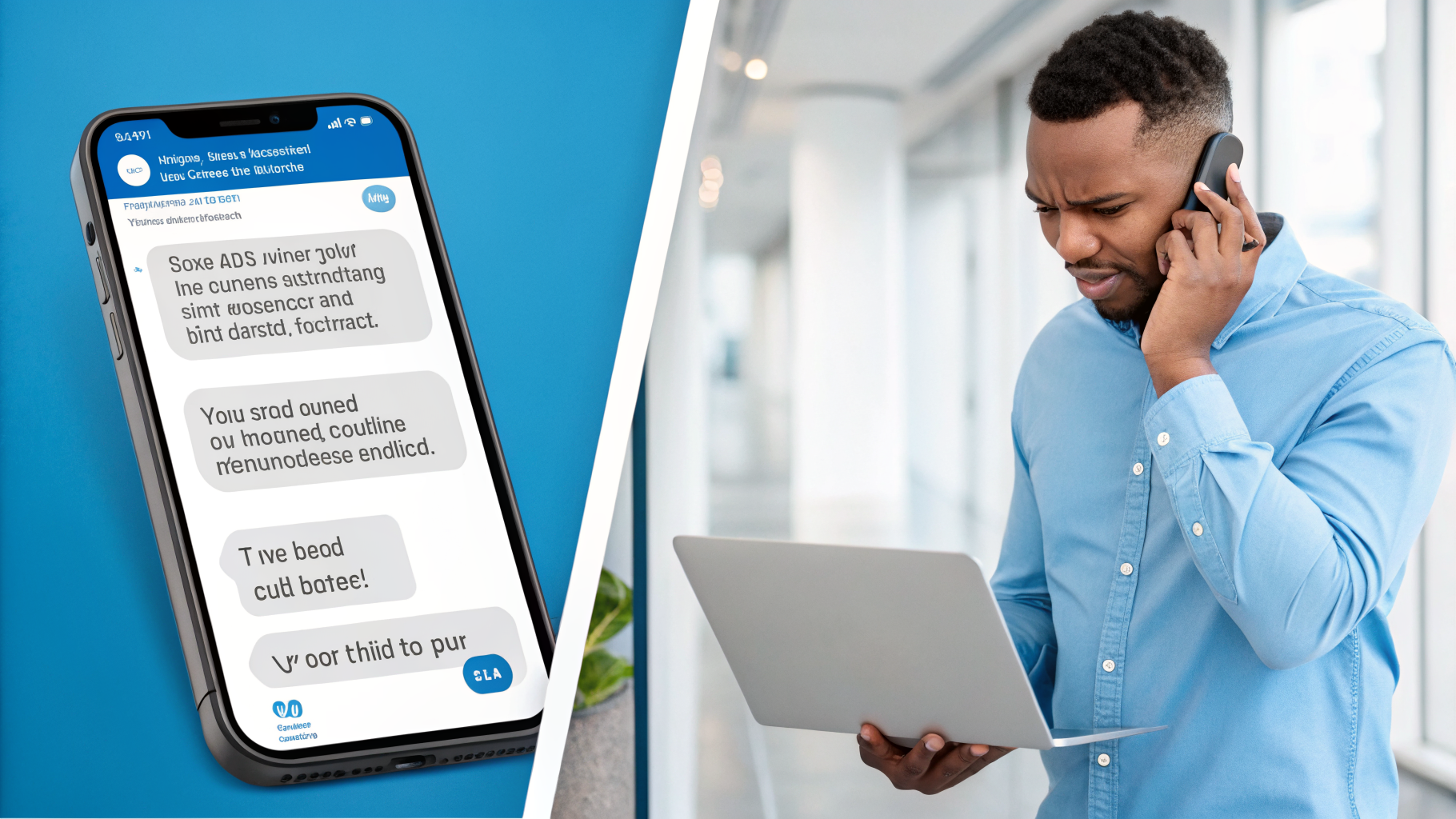
"We missed your call" — four words that cost Canadian businesses real money
Here's a scene playing out across Canada every single day. A homeowner in Calgary calls an HVAC company during a July heat wave. No answer. Thirty seconds later, their phone buzzes: "Sorry we missed your call! Text us what you need." Reasonable, right? Except by the time that message lands, they're already on the phone with the next company in the search results.
Missed call text-back tools have exploded in popularity among Canadian small businesses — and for good reason. They're cheap, easy to set up, and infinitely better than voicemail. But 2026 has brought a serious challenger: AI voice agents that simply answer the call in the first place.
So which one deserves your budget? We ran the numbers, read the fine print (including the Canadian rules that US-focused guides completely skip), and built the honest comparison Canadian business owners actually need.
What each tool actually does
Missed call text-back is a reactive safety net. When a call rings out, the system detects it and fires an automatic SMS to the caller within 15 to 60 seconds — acknowledging the call and inviting them to reply by text. The conversation, if it happens, continues in writing.
An AI voice agent takes the opposite approach: it picks up. Within about three seconds, a natural-sounding voice answers, asks what the caller needs, books the appointment, flags emergencies, and hands off to a human when the conversation requires one. The missed call never happens. It's the same shift we described in our voicemail vs AI voice agent comparison: reacting after the loss versus preventing it entirely.
One tool apologizes for the missed call. The other makes the apology unnecessary.
Round 1: what they really cost
Standalone text-back tools run $30 to $300 per month depending on message volume and integrations. The big platforms that bundle text-back with reputation management and CRM features — the ones heavily marketed to contractors and clinics — often land at $250 to $400 per month.
A managed AI voice agent like Agent IA Vocal starts at $49 per month, with pro at $99 and enterprise at $199 — setup and call-flow design handled entirely by our team, whether your business is in Mississauga, Winnipeg, or Halifax.
Notice something? The price ranges overlap almost completely. A premium text-back subscription frequently costs more than a full AI receptionist. So the deciding factor isn't the monthly fee — it's how many customers each option actually saves.
Round 2: response rates and the five-minute window
Text-back vendors love one statistic: SMS messages have a 98% open rate. True — and beside the point. Opening a text isn't the same as replying to it. The vendors' own published numbers put text-back response rates between 15% and 45%. Read that again: in the best case, more than half the callers who receive your automated text never engage with it.
A call that gets answered, by contrast, engages 100% of callers. They're on the line. They're talking. They're getting helped.
Speed compounds the gap. The InsideSales lead response study found conversion rates are eight times higher when you respond within five minutes — and research consistently shows roughly 78% of customers buy from whichever business responds first. A text in 40 seconds is good. A live conversation in 3 seconds is a different sport.
And the stakes are brutal: CallRail's benchmark data shows about 85% of callers who reach silence never call back. Text-back recovers a slice of them. An AI voice agent keeps the whole pie.
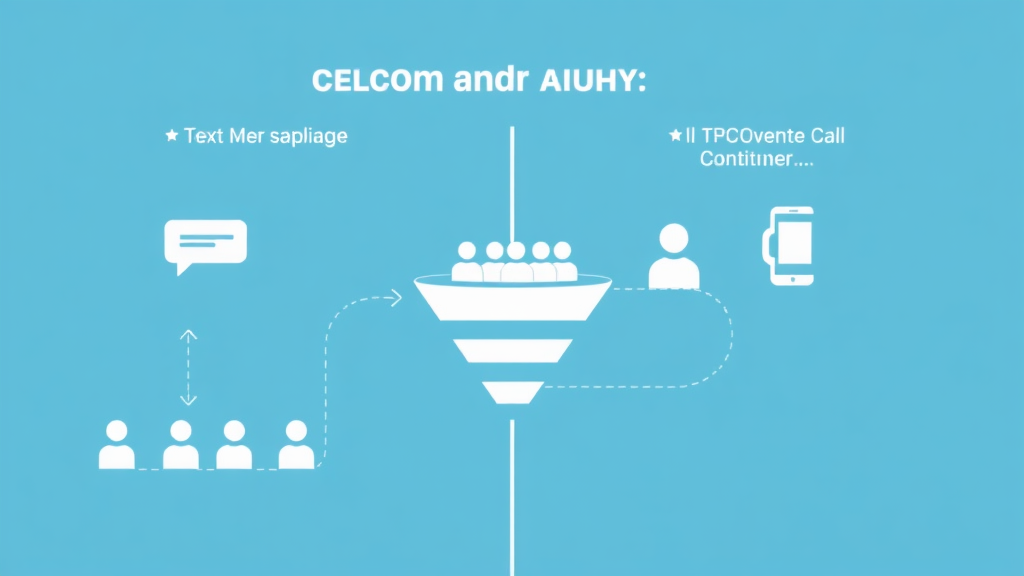
Comparaison visuelle : taux de réponse texto vs appel répondu
Round 3: customer experience when it actually matters
It's 9:30 p.m. in Halifax and a pipe just burst in someone's basement. They call a plumber and get... a text promising a callback within 30 minutes. Standing in ankle-deep water, do they wait? Of course not. They call the next number.
That's the structural ceiling of text-back: it acknowledges, but it can't act. No emergency triage, no live appointment booking, no instant transfer to your on-call tech. For dental emergencies in Ottawa, lockouts in Vancouver, or storm-damaged roofs in Saskatoon, the immediate voice conversation isn't a nice-to-have — it's the whole ballgame.
There's a demographic angle too. A large share of Canadian customers — especially the 55-plus crowd who own the homes, the cottages, and the businesses — simply prefer to talk. A text, however fast, leaves them cold. And in cities as multilingual as Toronto and Vancouver, a rigid English-only SMS template serves a shrinking slice of your market, while a multilingual voice agent meets callers in their language from the first hello.
The compliance detail US guides skip: CASL, not TCPA
Almost every article on missed call text-back is written for the American market — all TCPA rules and 10DLC registration. If your business operates in Canada, that advice is the wrong rulebook. Automated commercial texts here fall under Canada's Anti-Spam Legislation (CASL) — widely considered stricter than its US counterpart.
CASL is consent-based: a customer calling you generally creates implied consent for a transactional reply, but rolling those numbers into promotional drip sequences without express consent exposes you to penalties that can reach $10 million for businesses. Plenty of US-built text-back tools ship with default marketing follow-ups that were never designed with CASL in mind. That's a real liability hiding inside a $49/month subscription.
An answered call, on the other hand, sidesteps most of this: a live conversation isn't a commercial electronic message. One more headache the voice-first approach quietly eliminates.
The verdict: when a text is enough — and when it isn't
Let's be fair to text-back: it's a genuinely useful tool in the right context. If you're a solo operator, your customers skew young and text-friendly, nothing about your work is urgent, and every dollar counts, a well-configured auto-text beats a dead voicemail box by a mile.
But the moment any of these apply, the scale tips hard toward the voice agent: your calls are urgent by nature (plumbing, HVAC, dental, locksmith); a lost booking is worth more than $100; your customer base spans ages and languages; or you field more than 10 calls a day and each one is potential revenue.
Our rule of thumb for Canadian SMEs: if one missed call can cost you a $500-plus job, saving $30 a month with text-only recovery is a false economy.
The real answer: layer them
Here's what vendors on both sides underplay: this isn't actually a duel. The strongest setups we deploy combine the two. The AI voice agent answers 100% of calls, around the clock and across Canada's six time zones — a caller in St. John's at 9 a.m. and one in Victoria at 4:30 a.m. Eastern both get a live answer, as we detailed in our after-hours call handling guide. Then an automatic follow-up text goes out after the conversation: appointment confirmation, directions, payment link.
Text messaging shifts from safety net to reinforcement. The customer got helped live AND has it in writing. It's the same layered logic behind the 60-second automatic callback strategy we've covered before: every channel doing the job it's best at, in the right order.
Bonus: when the voice agent handles the call, your SMS volume — and your SMS bill — drops.

Agent vocal IA qui répond pendant que le technicien travaille
Real-world math: an HVAC company in Calgary
Let's make it concrete. A Calgary HVAC company misses about 15 calls a week during summer peak — techs on rooftops, phones ringing at lunch, evening emergencies. Average value of a new service customer: $600 in year one.
Text-back at $79/month: at an optimistic 40% response rate, roughly 6 of 15 callers reply. Say half of those convert — that's 3 saved customers a week. The other 12? Many already booked the competitor with the answered phone.
AI voice agent at $99/month: all 15 calls get answered. Even conservatively assuming 70% complete a booking live, that's 10 to 11 customers a week staying on your schedule instead of drifting to the competition. Over a month, the difference runs well into five figures of customer value — for $20 more per month.
We hear the objection all the time: "Won't people hang up on an AI?" Our client data says the opposite. What people hang up on is silence, voicemail, and nine-option phone menus. A voice that answers fast and solves their problem? They stay on the line.
Frequently asked questions
Is missed call text-back legal in Canada? Yes, when done right. Under CASL, a caller contacting you first generally creates implied consent for a transactional reply. Identify your business clearly, keep the message non-promotional, and include an opt-out ("Reply STOP"). Adding those numbers to marketing sequences requires express consent.
Can I keep my existing business number with an AI voice agent? Yes. Most deployments use simple call forwarding from your current carrier — no porting required. Our team handles the technical setup end to end.
What if a caller doesn't want to talk to an AI? The agent transfers to your team during business hours, or takes a detailed message with a guaranteed callback after hours. Either way, the call never disappears into the void.
Does the AI send a follow-up text after the call? On pro and enterprise plans, yes — appointment confirmations and details go out by SMS automatically after the voice conversation, CASL-compliant by design.
How long does setup take? A few business days. The TECHMA team builds your call flows, connects your calendar, and tests everything — including bilingual handling — before going live. You don't configure anything yourself.
Conclusion: your phone line deserves more than an acknowledgment
Missed call text-back is a smart bandage. An AI voice agent prevents the wound. With price ranges that overlap — $30 to $300 for one, $49 to $199 for the other — the real question isn't budget. It's how many customers you're willing to let slip through to whoever answers first.
Discover which solution fits your business best. Talk to our experts, or explore our plans starting at $49/month — and run the math with your own missed-call numbers.