
Two Hundred Milliseconds: The Rhythm Your Ear Already Knows
Try this at dinner tonight. Time the silence between one person finishing a sentence and the other person replying. You probably can't — the average gap between speaking turns is about 200 milliseconds, according to a study published in PNAS that analyzed conversations across ten languages. Your brain has been calibrated to that tempo since childhood.
That's exactly why AI voice agent response time has become THE number to watch in 2026. Not how many languages it speaks, not how pleasant the voice sounds — the silence between your customer's question and the start of the answer. In 2025, average voice platform latency hovered around 450 milliseconds. In 2026, the best systems have dropped below 300 ms. And that's not an engineering footnote — it's the difference between a caller in Mississauga booking an appointment and a caller hanging up to dial your competitor down the street.
Trend #1: AI Voice Agent Response Times Are Collapsing in 2026
On July 6, OpenAI released gpt-realtime-2.1 and its mini version with a measurable promise: cut worst-case (95th percentile) latency on its realtime voice models by at least 25%. In plain English: even the slowest responses — the ones that used to drag — just got noticeably faster.
The industry thresholds are now well established. Below 800 milliseconds, a conversation feels smooth and natural. Between 800 and 1,200 ms, it's acceptable for business calls. Past 1,500 ms, the caller senses something is off — they wonder if the line dropped, they repeat themselves, and the conversation falls apart.
Here's the catch: plenty of voice systems still in service today deliver a median of 1,400 to 1,700 milliseconds. They sit precisely in the zone where callers can feel the machine. The gap between current-generation and legacy systems has never been wider.
Where Do the Milliseconds Go? The Latency Budget, Broken Down
To shop smart, it helps to know where the time actually disappears. A call handled by an AI voice agent passes through five stages, each with its own bill in milliseconds: the network (30 to 80 ms to carry the audio), end-of-speech detection (150 to 300 ms — the system has to figure out you've finished your sentence), speech-to-text (50 to 150 ms), the AI model generating its reply (150 to 400 ms to the first word), and voice synthesis (100 to 200 ms to the first sound).
Surprise: it's neither the transcription nor the voice that sinks the total. The two heavyweights are end-of-speech detection and the model's first word. That's exactly where the July 2026 models earn their keep — and it's also where a sloppy configuration can waste everything, regardless of the technology underneath.
One more number to remember when a vendor shows you a spec sheet: ask for the 95th percentile, not the average. An agent can post a lovely 700 ms average and still leave one caller in twenty hanging for two and a half seconds. That's the call your customer will tell their friends in Edmonton or Moncton about.
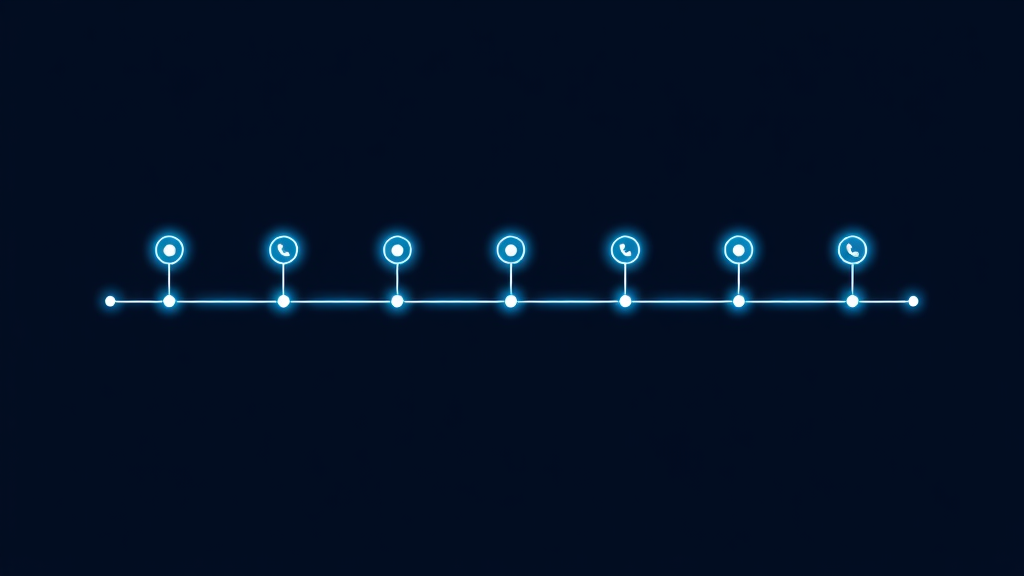
Les cinq etapes du budget de latence d un agent vocal IA
Trend #2: Reading Back a Phone Number Without Botching It
Speed grabs the headlines, but July's update carries an improvement that arguably matters more for a business: alphanumeric recognition. In practice, that's the agent's ability to hear and repeat back — without errors — a phone number, an order number, or that distinctly Canadian challenge, a postal code like M5V 2T6 that alternates letters and digits.
Think about it: what good is a lightning-fast agent that writes down 604-555-0182 as 604-555-0128? A wrong appointment confirmation costs far more than a one-second pause. The new models also handle interruptions more gracefully: when a caller cuts in to correct something, the agent stops and adjusts instead of ploughing through its monologue. We explored the first wave of this shift in our piece on full-duplex voice AI that listens while it talks — the 2026 generation takes the idea further.
It's a small thing. It's also everything: phone trust is built in exactly these micro-details.
Trend #3: No-Code Builders Have Arrived (Along With a Trap)
Also new this July: xAI launched its Grok Voice Agent Builder, a no-code tool promising a working voice agent in two minutes at $0.05 USD per minute of audio. The democratization is real, and it's good news for everyone: it pulls prices down across the board.
But here's what a two-minute demo doesn't show you. The latency your caller experiences doesn't come from the AI model alone. It comes from the whole chain: end-of-speech detection (did the caller finish, or are they just thinking?), the connection to your booking calendar, the lookup in your customer file, the voice synthesis itself. A DIY agent that has to query a poorly integrated calendar can freeze for two full seconds mid-call — exactly the kind of silence that makes people hang up.
We see it regularly with businesses from Halifax to Victoria that trialled a generic tool: the demo was smooth, production wasn't. The difference lives in the configuration, not the brochure.
What This Actually Means for Canadian Businesses
Let's put the numbers in business context. Gartner projected that conversational AI would strip $80 billion from contact centre labour costs by the end of 2026. That economy of scale, long reserved for enterprises with call centres, is now within reach of a dental clinic in Ottawa, an HVAC company in Calgary, or a law office in Winnipeg.
For a small business, response speed wears two hats. Before the call connects, it's the line that picks up on the first ring — at 10 p.m. in Vancouver or over the lunch rush in Toronto — while 80% of callers who hit voicemail hang up without leaving a message. During the call, it's the conversational rhythm that makes the caller feel they're talking to an attentive receptionist rather than a hesitant robot. And a fast agent that's badly tuned is still a bad agent — we break down why in our guide on making an AI voice agent sound human, not robotic.
As for budget? Falling inference costs flow straight through to monthly pricing. Our breakdown of AI voice agent costs in Canada covers the current ranges — spoiler: think under $200 a month, not a five-figure IT project. For businesses serving customers across six time zones, that math gets compelling fast.
There's a uniquely Canadian wrinkle, too. In Toronto, more than 150 languages are spoken; in Montreal, calls flip between French and English mid-sentence; in Richmond or Brampton, your next customer may prefer neither official language. The new generation of voice models keeps its speed while switching languages on the fly — something a single human receptionist, however talented, simply can't match at 2 a.m. For businesses serving customers coast to coast, that combination of speed and range is the quiet game-changer of 2026.

Un agent vocal IA repond instantanement pour une PME
Our Predictions for 2026-2027
Prediction one: the "premium" threshold drops below 500 milliseconds by late 2027, and the real battle shifts to consistency. An agent that averages 700 ms but freezes at 2,500 ms on one call in twenty will lose to a steady agent at 900 ms. The 95th percentile becomes the sales argument, not the average.
Prediction two: speed becomes an invisible prerequisite, the way mobile-friendly websites did. Nobody will praise your agent for being fast; everybody will notice if it's slow. Prediction three: agents will stop merely answering fast and start acting fast — checking availability, firing off a confirmation text, updating the CRM while the caller is still talking. The race for milliseconds becomes a race for action.
FAQ: Your Questions About AI Voice Agent Speed
What response time should an AI voice agent hit? Below 800 milliseconds feels natural; 800 to 1,200 ms is fine for business calls; past 1,500 ms your callers sense something's wrong. Ask vendors for numbers measured under real conditions — mobile networks, background noise, peak hours — not theoretical bests.
Is faster always better? No. Below roughly 800 ms, the human ear stops noticing — a 600 ms agent doesn't "beat" an 850 ms one. What matters more is consistency from call to call, and accuracy. An agent that answers instantly but books you for the wrong Thursday is worse than one that takes a beat and gets it right.
How do I test speed before signing up? Call the demo line several times, at different hours, from a cell phone, with background noise. Ask a question that forces a real lookup ("do you have anything Thursday afternoon?") rather than a canned one. That's where the weaknesses show.
Does speed guarantee good service? Not remotely. Speed opens the door; accuracy, smart escalation to a human at the right moment, and integration with your actual tools do the rest. The whole package is what turns a gadget into a team member.
Conclusion: Speed Matters — But Never Alone
2026 will be remembered as the year voice agents stopped sounding robotic. July's models — faster, sharper with numbers, smoother when interrupted — bury the awkward-pause excuse for good. What's left is the craftsman's work: wiring the agent into your real tools, in both official languages, with your business rules.
That's precisely what our team does for Canadian businesses: we configure, measure, and fine-tune — you don't install a thing. Curious how your phone reception stacks up against the 2026 standards? Get a personalized analysis or browse our plans starting at $49/month.