
The number that should keep every business owner up at night
Here's a figure worth sitting with: for every dollar Canadian businesses put into voice AI, industry analyses now peg the return at roughly 3.7 times that spend. Not 3.7 percent. Three-point-seven times. And yet most owners we talk to — in Toronto, Calgary, Halifax, and everywhere in between — still treat an AI voice agent as a cost to be justified rather than an asset that pays for itself.
So let's do something different. Instead of hand-waving about "efficiency," let's actually run the numbers on what an AI voice agent costs a Canadian business, what it brings back, and how fast the two lines cross. The ROI story in 2026 is more compelling than the marketing suggests — but only if you understand where the money actually comes from.
Trend 1: The cost of the technology has quietly collapsed
Rewind three years and a capable voice system meant a five-figure integration project. That world is gone. Usage-based platforms now run between $0.05 and $0.15 per minute, and managed services like ours bill a flat monthly fee — plans start at $49 a month. According to a 2026 pricing analysis by Retell AI, a mid-volume deployment handling thousands of calls a month typically lands between $350 and $1,200 — and that's before you factor in that it never sleeps, never takes a sick day, and never asks for a raise.
Compare that to the alternative. A full-time receptionist in Canada costs somewhere between $40,000 and $55,000 a year once you add benefits, payroll taxes, and the overhead of a desk and a phone. Split across twelve months, that's $3,300 to $4,600 monthly for one person who covers roughly 40 hours a week — a trade-off we broke down head-to-head in our AI-versus-receptionist comparison. Your phone rings 168 hours a week.
That gap is the whole story.
Trend 2: The revenue you're already losing dwarfs the cost
Cost savings are the boring half of ROI. The interesting half is the revenue you're leaking right now without seeing it. Canadian businesses miss a startling share of their inbound calls — we broke down the data in our analysis of why so many calls go unanswered — and every one of those is a customer who picked up the phone, wanted to buy, and got voicemail instead.
Put a dollar figure on it. Industry estimates value a single missed call at $50 to $150 in lost opportunity, depending on your average ticket. A dental clinic in Mississauga, an HVAC company in Winnipeg, a law office in Vancouver — one booked appointment can be worth hundreds. Miss ten of those a week and the math gets ugly fast.
This is why the 40-to-70-percent cost reduction that gets quoted in headlines actually understates the case. It only counts what you save. It ignores what you recover.
Trend 3: Payback windows are measured in weeks, not years
The third shift is speed. A well-scoped voice deployment now targets payback in 30 to 90 days, and some businesses recover their cost within the first two or three weeks purely from calls they would otherwise have missed. Recent 2026 ROI research tracks real deployments hitting break-even inside a single quarter.
Part of that acceleration is technical. The underlying models keep getting faster and more natural — ElevenLabs shipped agent-level voice-activity detection and background-noise handling in August 2026, which means fewer awkward interruptions and more calls that actually convert. Better conversations, higher booking rates, faster payback. It compounds.
Gartner has forecast that conversational AI will strip roughly $80 billion out of contact-centre labour costs in 2026 alone. Most of that is enterprise. But the same economics scale down to a two-van plumbing shop in Calgary.
The math on a real Canadian small business
Abstract percentages don't book appointments, so let's make this concrete. Picture an independent physiotherapy clinic in Ottawa. It fields about 600 calls a month. Between the lunch rush, after-hours, and the front desk simply being on another line, it misses roughly 30 percent of them — around 180 calls.
Now be conservative. Assume only one in ten of those missed callers would actually have booked, and that the average first visit is worth $120. That's 18 recovered bookings a month, or about $2,160 in revenue that used to vanish into voicemail.
The agent handling those calls costs $99 a month on our Pro plan. Even if you add a bit of setup and ignore every other benefit — the after-hours coverage, the consistency, the freed-up front-desk hours — you're looking at a return north of 20 to 1. The clinic pays for a full year of service with a single good week of recovered calls.
That's not a rounding error. That's a hire that costs less than lunch.
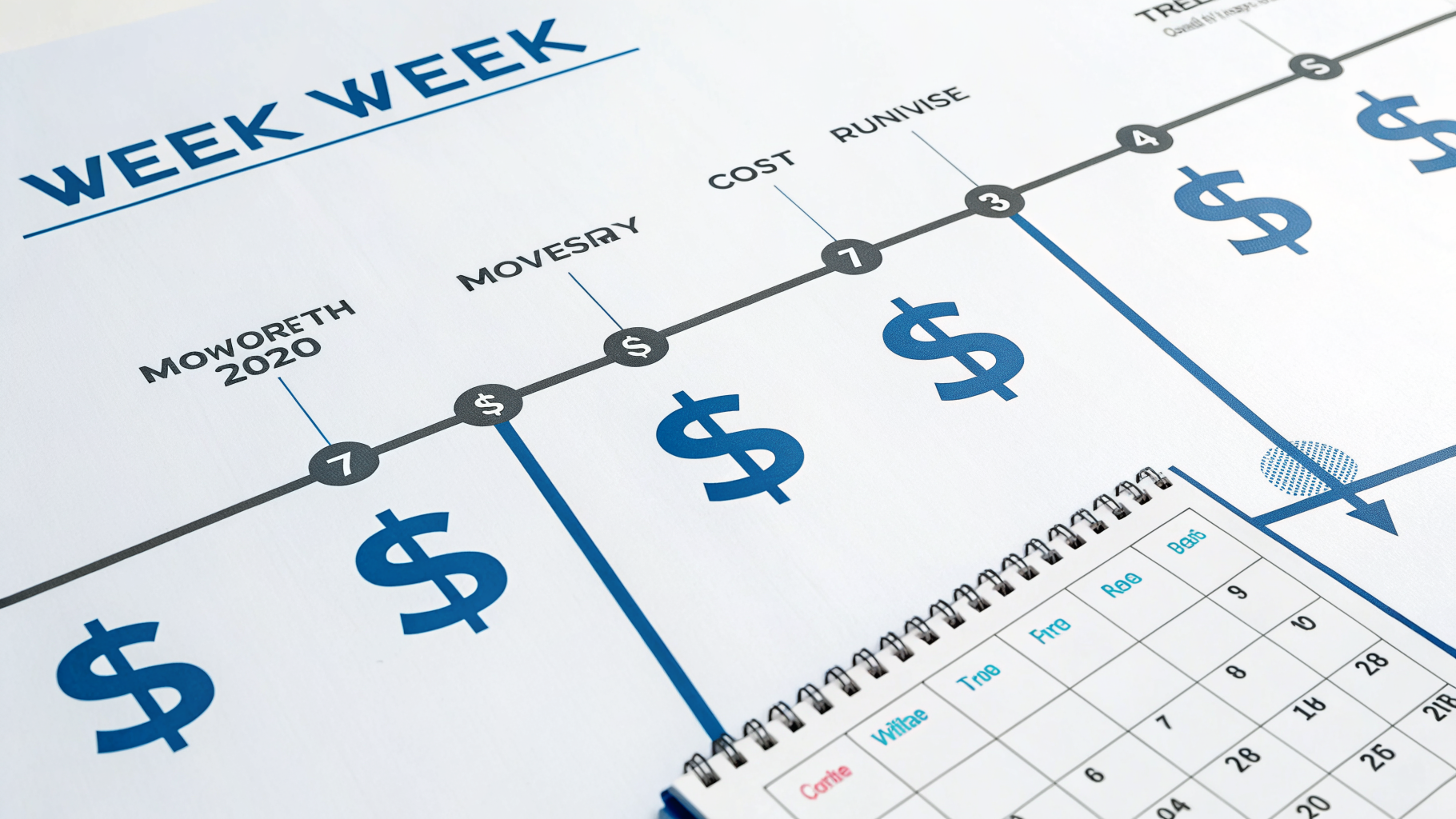
AI voice agent payback timeline where recovered revenue overtakes cost within weeks
What this means for Canadian businesses, coast to coast
Canada makes this especially interesting. We span six time zones, which means a Vancouver customer calling a Toronto business at 4 p.m. Pacific is dialing into an office that closed at 7 p.m. Eastern. An AI agent doesn't care about time zones — it answers in Halifax at midnight and in Edmonton at dawn with the same steady voice.
Then there's language. Canada is officially bilingual, and its major cities are a great deal more than that. A receptionist who can greet a caller in English, switch to French, and stay composed with a heavy accent on a bad line is expensive and rare. Software does it by default. For businesses in Ottawa, Moncton, or multilingual Toronto, that alone can move the ROI needle.
One more Canadian wrinkle: seasonality. A landscaping company in Winnipeg or a tax practice in Toronto sees demand spike hard for a few months, then go quiet. Hiring seasonal front-desk staff to match is a scheduling headache and a payroll gamble. An AI agent scales to a March flood of calls and a July lull without a single new hire, which means the ROI holds up in the busy months instead of collapsing under overtime costs.
Where the ROI headlines get it wrong
Now the honest part, because the glossy numbers deserve some friction. ROI is not automatic. Three things quietly kill it.
First, bad handoffs. If the agent can't cleanly pass a complex call to a human, frustrated callers hang up and the "saved" call becomes a lost customer. Second, sloppy setup — an agent that quotes the wrong hours or double-books your calendar destroys trust faster than voicemail ever did. Third, unrealistic expectations. Nobody should fire their whole front desk and expect software to handle every nuance; roughly 20 percent of calls still deserve a human.
This is exactly why we don't hand clients a login and wish them luck. Our team configures the escalation paths, wires up the calendar, and tunes the agent to your business before it takes a single live call. The ROI shows up when the implementation is done right — not when the box is simply switched on.
Where this goes in 2026 and 2027
Two predictions. First, flat-rate pricing wins. As the per-minute cost of the underlying models keeps falling, more providers will bundle everything into a predictable monthly fee, and finance teams — who hate variable invoices — will reward them for it.
Second, the ROI conversation shifts from "cost savings" to "revenue capture." The early pitch for voice AI was "replace expensive labour." The 2027 pitch will be "stop leaking customers." Businesses that already automate the routine — like appointment booking — will simply out-book the ones still playing phone tag.
Frequently asked questions
How quickly will I actually see a return? Most businesses see payback within 30 to 90 days, and high-call-volume operations often recover the cost inside the first few weeks from calls they'd otherwise have missed.
Is it really cheaper than hiring someone? For almost any business handling more than a trickle of calls, yes. A managed agent runs a small fraction of a receptionist's loaded salary while covering 24 hours a day instead of 40 hours a week.
What if a call is too complex for the AI? A well-configured agent recognizes its limits and transfers to a human. The goal is to handle the routine 80 percent, not to pretend the other 20 percent doesn't exist.
Do I need technical skills to set this up? No. Our team handles configuration, calendar integration, and tuning end to end. You approve how it sounds and behaves; we do the wiring.
The bottom line
Strip away the hype and the ROI case for an AI voice agent in 2026 is almost boring in its clarity: the technology costs less than ever, the revenue it recovers is larger than most owners realize, and the two lines cross in weeks. The businesses that win aren't the ones adopting AI blindly — they're the ones who did the math.
Want to see what those numbers look like for your business specifically? Get a personalized ROI analysis, or explore our plans starting at $49 a month. We'll show you where your calls are leaking — and what it's worth to plug the gap.