It's 6:40 PM on a Tuesday. A customer in Mississauga wants to book a table for Saturday. They call your restaurant. "Thank you for calling. For reservations, press 1. For our hours, press 2. To speak with a team member, please stay on the line — your call is important to us." Hold music. Thirty seconds. A minute. They hang up and call the place next door.
You just lost a booking, and you'll never know it happened.
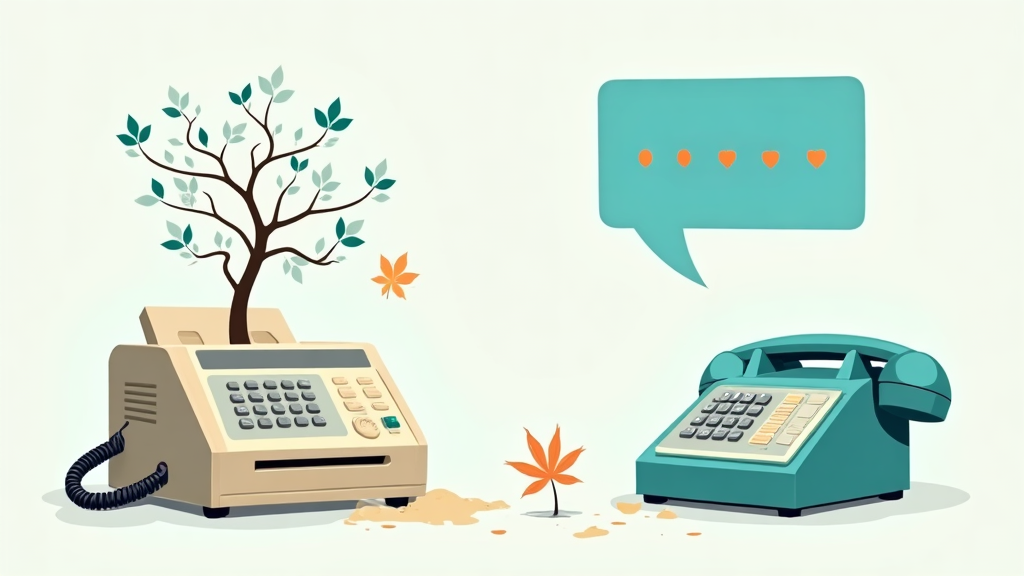
Let's say it plainly: the old phone menu — "press 1, press 2, please hold" — is becoming the fax machine of 2026. A technology people tolerated out of habit, and that nobody wants to endure now that something clearly better exists.
The Phone Didn't Change. Your Customers Did
Here's what a lot of owners haven't clocked yet. The problem isn't that phone menus suddenly got bad — they were always frustrating. The problem is that your customers' patience has evaporated.
Why? Because in 2026, the default experience everywhere else became instant. People talk to their phone and it answers. They ask an assistant a question and it understands the first time. So when a caller hits "press 1 for sales," they don't think "that's normal." They think "seriously, it's 2026." The gap between what they get everywhere else and what your line forces on them has never been more obvious.
And that gap has a price. The numbers are blunt: according to a compilation of missed-call data, roughly 62% of calls to businesses go unanswered, and every lost call quickly adds up to hundreds of dollars. The phone menu isn't neutral. It's an active participant in that waste.
First Argument: A Menu Is a Closed Door Dressed Up as Service
We were sold phone trees as an efficiency tool. "It routes the customer to the right place." In theory. In practice, it mostly does one thing: it puts distance between the caller and an answer.
Think about the last time YOU called a big company. The sigh when the recorded voice starts. The mental gymnastics to guess which option matches your actual need. The trip back to the main menu because none of the options fit. Now ask yourself why you'd put your own customers through that.
And voicemail — the classic dead end at the bottom of the menu — doesn't help. The vast majority of people who reach a recording simply don't leave a message; the data on voicemail habits confirms it year after year. They hang up. A menu that ends in voicemail is two frustrations stacked on top of each other.
Second Argument: In 2026, the Technology Finally Caught Up to the Customer
This is the real turning point, and it's recent. Until not long ago, the only alternative to a menu was… a human picking up. Great, but expensive and impossible to keep on the line around the clock. Voice bots, meanwhile, sounded mechanical and understood nothing outside a rigid script. We were stuck.
That's over. The voice models of 2026 reason in real time, mid-conversation. The latest advances in real-time voice let an agent understand a request phrased naturally, ask a clarifying question, check your calendar, and confirm an appointment — without ever asking anyone to "press 1."
The caller just says, "I'd like a table for four, Saturday around 7." And the agent answers, "Great — Saturday at 7 for four, got it. What name should I put it under?" No menu. No hold music. A conversation. It's exactly what your customer already does with their phone all day long — except now it's with your business.
Third Argument: First Impressions Happen in the First Eight Seconds
A first-time caller knows nothing about your expertise, your friendliness, the quality of your work. All they have is those first few seconds on the phone. And that's what they judge you on.
Put two businesses side by side. The first scrolls through a recorded menu, then voicemail. The second picks up on the first ring, understands the request, and handles it in forty seconds. Knowing nothing else, which one seems more professional, more reliable, more "open for business"? The answer is obvious — and your customer feels it instantly.
That's exactly where trust is won. A small business in Calgary that answers like a polished operation gains an edge that paid ads can't buy. A never-ending menu sends the opposite message: "we're swamped, or we don't care." If you want to dig into what those missed calls actually cost, we documented the real ROI of an AI voice agent and the 27% of calls that go unanswered.
"Sure, But My Customers Will Hate Talking to a Machine"
That's the number-one objection, and it's a fair one. Nobody wants to force a cold, robotic experience on their customers. But look at it closely, because it rests on an outdated picture.
First, your customers have been "talking to a machine" for years — except that machine was the phone menu. "Press 1" is an interaction with a machine. It's just a terrible one. So the real question isn't "human or machine," it's "frustrating machine or fluid conversation."
Second, the recent data is pretty clear: when the agent answers fast, understands, and solves the problem, customers genuinely don't care that it's an AI. We looked at what the numbers actually say about the familiar fear that "customers will hate talking to an AI", and the reality is more nuanced than instinct suggests. What people hate isn't AI. It's waiting, repeating themselves, and not getting served.
Why Canadian SMEs Are Especially Well Positioned
Across Canada, local, personal service still counts. Customers like feeling they're dealing with a real, accessible business that treats them like a person, not a case number. The phone menu does the exact opposite: it depersonalizes the very first contact.
That's a golden opening. While the big national chains trap callers in sprawling phone trees, a small business in Halifax or Winnipeg can offer something rare: you call, it answers, naturally, on the first try, at any hour. That contrast is what sticks. And to be clear: this isn't about replacing your people. It's about taking the routine 8 PM calls off their plate so they can focus on what actually matters when they're on the clock. The chain down the street can't move that fast, precisely because its phone system was built for a head office two provinces away, not for the person calling you tonight.
Before you assume an agent costs a fortune, it's worth comparing the options coldly. We ran the honest math on hiring a receptionist versus adopting an AI voice agent — and the verdict surprises a lot of owners.
The Morning After: What You Actually See
Here's the detail that changes the day-to-day. With a menu and voicemail, your Monday morning starts with a chore: listening to fourteen messages, half of them from people who already booked elsewhere. With an agent that holds a conversation, you open a clean summary instead: who called, what they wanted, what got handled overnight.
Coffee in hand, in five minutes, you know where your day stands. The appointments are already booked. The common questions already got answered. And the rare, genuinely complex calls were routed to you cleanly, with context attached.
It's not magic — it's just the opposite of a phone menu. Instead of building a wall between you and your customers, the agent opens a door — and hands you a report of who came through it.
FAQ
Isn't an AI voice agent just a fancier phone menu? No, and that's the whole point. A menu forces you to choose from rigid options. An agent listens to a freely phrased request, understands it, and responds. The caller presses no buttons; they just talk, like they would to a real person.
What if the agent doesn't understand a request? A good 2026 agent asks a clarifying question, then transfers cleanly to a human if needed — with the call's context. No infinite loop, no "returning you to the main menu."
Do I need to be tech-savvy to run this? Not at all. The TECHMA team builds, connects, and trains the agent on your vocabulary and services. You don't touch any technology; you just get the call summaries.
How long does it take to get started? For a simple case, a few days. We connect your number, train the agent, and test it with you before going live.
The Next Step
The fax machine didn't die because it became illegal. It died because a better option showed up, and customers stopped accepting the old one. The phone menu is living that exact moment. The only question is which side of the shift you want to be on.
What do you think? Send us your take, or book a 15-minute demo and we'll let you hear an agent handle a real call in natural English — without a single "press 1." You can also see our plans starting at $49/month. Your customers are already calling. The real question is what they hear when the line picks up.