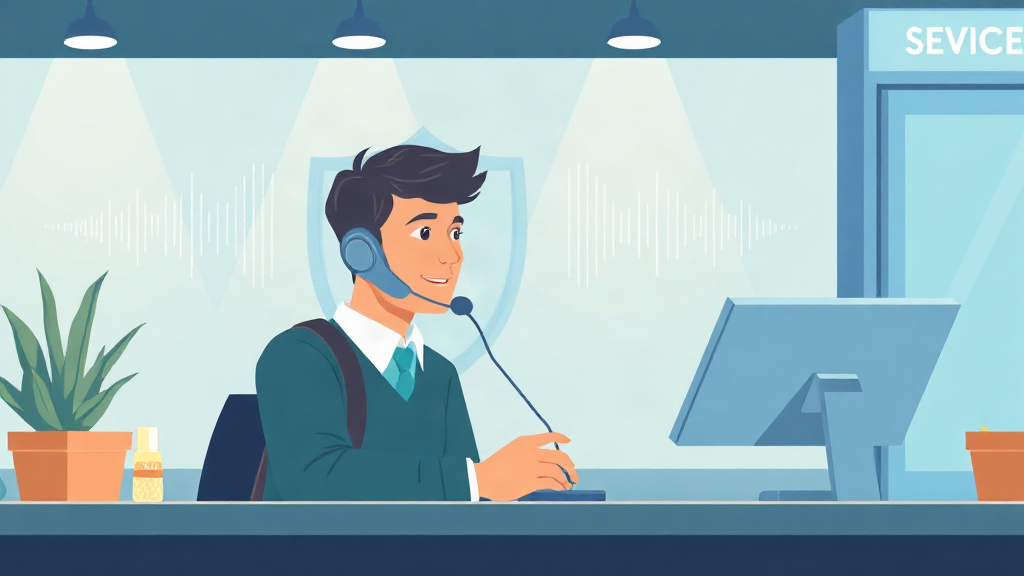
Picture a Tuesday afternoon at a busy shop in Calgary. The phone rings, your AI voice agent picks up before the second ring, and a caller asks whether you offer a lifetime warranty. You don't. But the agent, trained to be helpful, answers: "Yes, all of our work is covered for life." The caller books on the spot, hangs up happy, and three months later comes back holding you to a promise nobody at your company ever made.
That scenario is the real reason a lot of owners hesitate before handing their phone line to software. It isn't the robotic voice. Voices got good a while ago. It's the fear that the thing will say something. Something wrong, something binding, something that ends up as a screenshot in a one-star review.
The fear is legitimate. It is also solvable. The tool that solves it has a name, AI voice agent guardrails, and in 2026 guardrails quietly stopped being a nice-to-have and turned into something you can see, test, and audit. Below is what actually keeps an AI agent honest, why a Canadian tribunal has already ruled on who pays when it isn't, and the exact questions to ask any provider before you trust one with your customers.
The real risk isn't the robot voice, it's what it promises
Most demos sell you on how natural an agent sounds. Naturalness is table stakes now. The thing that decides whether an AI receptionist is an asset or a liability is narrower and far less glamorous: what happens at the edge of its knowledge.
A human receptionist who doesn't know the answer to a question usually says so. They put you on hold, ask a colleague, or take a message. A language model does not have that instinct by default. Ask it something it wasn't told, and it will often produce a confident, fluent, completely invented answer. In the industry this is called a hallucination, and on a phone call it is especially dangerous because there is no delete button. The caller hears it in real time, believes it, and acts on it.
This is different from a chatbot on your website, where a user can re-read a message and sense hesitation. Voice removes those cues. Every hallucination sounds calm and certain, which is exactly why guardrails in a voice system are not a safety add-on bolted to the side. They are part of the conversation itself. NeuralTrust, which studies this failure mode, frames it bluntly: an AI that invents policy doesn't just annoy a customer, it creates a brand and legal risk that compounds every time it happens.
Two well-known cautionary tales make the point. In 2025, the AI support assistant for the coding tool Cursor invented a subscription rule that didn't exist; the fabricated policy spread across developer forums and users cancelled in protest. Around the same period, Klarna publicly reversed a plan to replace its human support staff with AI after customers complained that the automated answers were wrong or unhelpful. In both cases the technology worked exactly as designed. What was missing was the guardrail that would have made it say "I'm not sure, let me get that confirmed" instead of guessing.
A Canadian tribunal already answered "who is liable"
If you're wondering whether your business is really on the hook for what a piece of software says, Canada has a precedent, and it is not comforting for the "the AI did it, not us" defence.
In February 2024, the British Columbia Civil Resolution Tribunal decided Moffatt v. Air Canada. A grieving passenger had asked Air Canada's website chatbot about bereavement fares. The chatbot told him he could book now and apply for a discounted rate within 90 days, retroactively. That policy did not exist. When the customer tried to claim it, the airline refused, and argued, remarkably, that the chatbot was a "separate legal entity" responsible for its own statements.
The tribunal rejected that outright. It ruled that Air Canada is responsible for all of the information on its website, whether it comes from a static page or an automated agent, and ordered the airline to compensate the customer, roughly 812 CAD all in. The American Bar Association's write-up of the decision put the takeaway plainly: companies remain liable for the information their AI provides.
Read that as an operating rule for any Canadian business, from a Halifax dental office to a Vancouver contractor. If your AI voice agent quotes a price, promises a refund, or confirms an appointment you can't honour, the customer's recourse is with you, not the vendor and not the model. That is not a reason to avoid the technology. It is the reason to insist on guardrails and to keep a record of every call. It also sits right next to the question of whether callers even trust an AI on the line in the first place, which we dug into in our piece on whether customers think an AI voice agent is a scam.
What a guardrail actually is, in plain English
"Guardrail" sounds technical. It really just means the set of rules that decide what your agent is allowed to say, when it should stop talking, and when it should hand a caller to a human. Strip away the jargon and there are six that matter for a small business:
- Grounded answers. The agent draws its responses from your own approved information, your hours, prices, policies, service area, not from the open internet it was trained on. If a fact isn't in your material, the agent doesn't have it to give.
- A forced "I don't know." When a question falls outside that approved material, the agent is required to say so and offer to take a message or transfer the call, rather than improvise. This single rule prevents most of the damage.
- Scope limits. You define the topics the agent may discuss and the ones it must refuse, medical advice, legal opinions, discounts it can't authorize. Off-limits stays off-limits.
- Escalation and alerting. When a caller is upset, asks for a manager, or raises something sensitive, the agent routes to a person and can flag the call so you know it happened.
- Confirmation read-backs. The agent repeats names, phone numbers, and appointment times out loud so a mishearing becomes a two-second correction instead of a missed job.
- Full transcripts. Every call is logged and searchable, so if there is ever a dispute about what was said, you have the record, not a guess.
Notice that none of these are about making the voice sound better. They are about control. The useful mental model, borrowed from teams who build these systems for a living, is to treat the agent like a brand-new employee: your knowledge base is its handbook, and your guardrails are its code of conduct. Give it one without the other and you get an eager hire who confidently makes things up. That control question is closely tied to how the agent handles data it collects on those calls, which we cover in our guide to what an AI voice agent does with customer data.
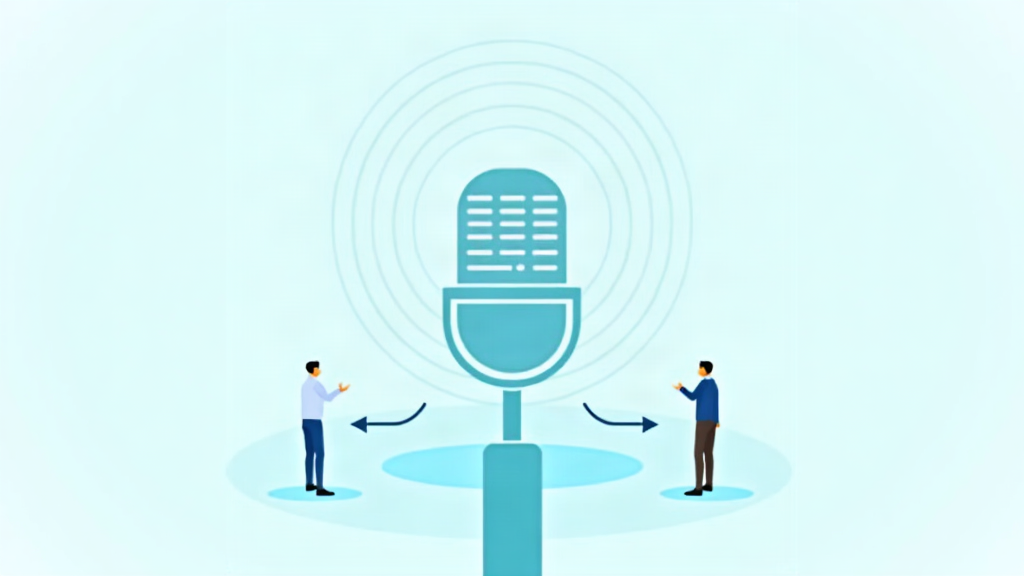
How guardrails keep an AI voice agent grounded and honest
Why 2026 changed the game
For a long time, guardrails were something a vendor described but you couldn't really inspect. You had to take their word that the agent would behave. That changed this year.
In its August 10, 2026 platform update, ElevenLabs, one of the most widely used voice-AI providers, shipped conversation guardrail filters, triggered-guardrail metadata, and agent alerting. In plain terms: operators can now define custom guardrails, see exactly which guardrail fired on which call, and get notified when one does. Guardrails became first-class, auditable, and reportable, not a paragraph in a sales deck.
Why does that matter to a business owner who will never touch the API? Because it shifts the conversation from "trust us" to "show us." When guardrails leave a trail, you can ask a provider to prove the agent refused to answer something it shouldn't have, review the calls where it escalated, and measure how often it chose honesty over improvisation. A vendor who can't show you that record in 2026 is a vendor selling you the old, unaccountable version. The same accountability applies when your agent switches between English, French, and other languages mid-call, a scenario with its own failure points that we broke down in our article on handling multilingual callers.
Five questions to ask before you trust any AI voice agent
You don't need to become an engineer to buy this responsibly. Bring these five questions to any demo and watch how the provider answers. Confident, specific answers are a good sign. Vague ones are the tell.
- "What does the agent do when it doesn't know?" The right answer describes a scripted fallback, take a message or transfer, not "it figures it out."
- "Where do its answers come from?" You want it grounded in your documents and policies, with a way for you to update them the day a price changes.
- "Can I see a transcript of every call, and search it?" If logging is partial or an upsell, treat that as a red flag given what Canadian liability looks like.
- "When and how does it hand off to a human, and will it alert me?" Escalation should be configurable, and you should be told when something went sideways.
- "Can you show me a call where a guardrail was triggered?" In 2026, the honest providers can. It is the fastest way to separate a real system from a good demo.
A Canadian tribunal ruled businesses are liable for what their AI says
The bottom line
An AI voice agent that answers every call and never sleeps is a genuine advantage for a Canadian business, right up until it says something it shouldn't. The difference between those two outcomes is not the model or the voice. It is whether the system is bounded by guardrails you can inspect: grounded answers, an honest "I don't know," clear scope, human handoff, read-backs, and a full record of every conversation.
Canada's own tribunals have made the stakes concrete. You are responsible for what your agent says, so the smart move is not to avoid the technology, it is to deploy the version that can prove it behaves. Ask the five questions, insist on the transcript, and you turn a nervous experiment into infrastructure you can actually stand behind.
Want to hear what a properly guardrailed agent sounds like on a real call? Book a live demo and put it to the test with your own trickiest questions.