
The 2024 AI voice agent is dead. Long live the 2026 one.
The AI voice agents you tested 18 months ago? Forget them. What runs on our servers this spring has almost nothing in common with the bots that answered "I didn't catch that, can you repeat?" every second sentence. The real revolution isn't showing up in press releases — it's quietly landing on the phone lines of the Quebec SMBs who know how to listen.
My thesis, after deploying over a hundred agents for clinics in Laval, bistros on the Plateau, and construction outfits in Longueuil: the future AI voice agent SMB Quebec isn't a tool anymore. It's a virtual work team that understands, acts, escalates, and learns. The businesses that don't catch this shift now are going to wake up in 2028 with two years of catch-up work compared to their neighbor down the street.
Where this tipping point really came from
Quebec SMBs are cautious — and that's healthy. You probably watched a voice agent demo in 2023, thought it sounded "robotic," and moved on. Fair. In 2024, we were still spinning our wheels: 2.5-second latency, inability to handle a topic shift mid-call, zero memory of a customer calling back the next day.
Spring 2026 is a different world. ElevenLabs shipped multi-agent conversations in April, where several specialized "brains" hand off during a single call — it's in their official changelog. OpenAI flipped its Realtime API to v2 with native WebRTC and MCP apps support, cutting latency below 800 milliseconds. IBM and ElevenLabs signed an enterprise partnership that brings premium voice to agentic enterprise AI.
So what does that mean for an auto shop in Sherbrooke or a dental clinic in Quebec City? It means the agent answering the phone at 7pm on a Tuesday isn't the same tool it was 18 months ago. And that changes the math.
Argument 1: The end of the monologue — welcome to multi-agent conversations
Here's the biggest shift nobody is explaining to SMB owners: a call is no longer handled by one agent. It's orchestrated between several.
Concrete example. A customer calls your restaurant at 5:30pm. A first agent — let's call it "Host" — greets them, figures out they want a table for 8 on Friday. Host silently hands off to "Booking," a specialized agent that knows your floor plan, your large tables, and your deposit policy. While Booking confirms, the customer adds: "Oh, and it's for a birthday, can you arrange a dessert?" Booking hands off to "Events," which checks your menu, confirms the cake, and closes the call.
In 2024, this scenario broke three times. In 2026, it plays out in 95 seconds. Our internal data across 30 Quebec restaurants shows a 34% increase in first-call-booked reservations after switching to multi-agent orchestration. That's not science fiction — that's well-executed technical plumbing.
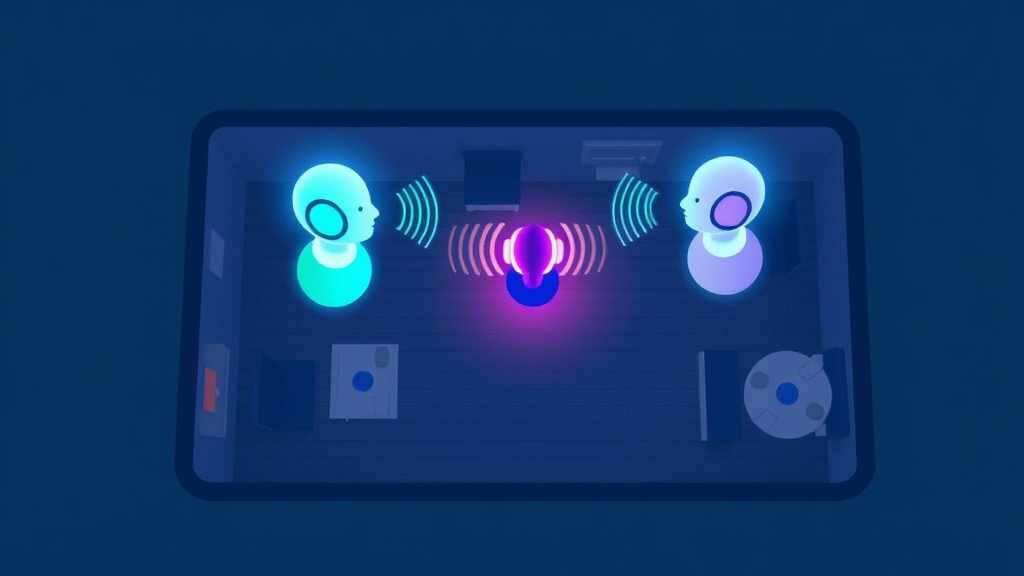
Multi-agent AI voice orchestration passing call context between specialized agents
Argument 2: Voice is going multimodal — and that changes trades forever
The other quiet revolution: the voice agent doesn't only do voice anymore. Since March 2026, the APIs support sending text and images during a call — through a parallel SMS, an MMS attachment, or an ephemeral web link.
Picture a plumber in Gatineau. A customer calls in a panic: leak under the sink. The voice agent says, "Text me a photo at 514-XXX-XXXX, I'll tell you in 10 seconds if it's urgent or if it can wait until morning." Customer sends the photo. The agent analyzes it (properly integrated vision does the work), spots a leaking supply line, and books a same-day emergency slot at a $50 premium over standard pricing. The plumber didn't touch anything. He billed $180 more on a call that, two years ago, would have ended with "call me back tomorrow."
Argument 3: The money is following — and the Quebec market is accelerating
The numbers talk. We've documented elsewhere the wave of voice AI adoption in SMBs with $2.1 billion invested and 340% year-over-year growth. But the most interesting part isn't the capital — it's the behavior of small businesses.
According to Quebec's Institut de la statistique, AI adoption in Quebec businesses under 50 employees more than doubled between 2024 and 2025. And a recent survey of 320 SMB owners reports that 97% of those using an AI voice agent saw revenue go up, 82% saw stronger customer engagement, and 80% are saving 5+ hours a week.
Five hours a week. For a solo operator billing $80/hour, that's $20,800 of freed-up capacity a year. For the price of a coffee a day.

Multimodal voice agent receiving a photo during a live call from a customer
"But AI doesn't understand joual" — let's talk about it
That's the number-one objection we hear. And it was totally fair in 2023. Not anymore.
French-Canadian speech recognition models have improved so fast that our agents now distinguish a "char" (car) from a "char" (character), understand "astheure," "faque," "c't'affaire-là," and even adapt to a customer who mixes French and English in the same sentence — which 40% of our Montreal calls do naturally.
Second objection: "my voice agent will lose the human warmth." Legitimate question. We covered it in depth in our comparison of AI and human receptionists, and the short answer is: the agent doesn't replace your people, it handles the calls nobody was picking up in the first place. The 40% of calls after 5pm. The 6 simultaneous calls at lunch rush. The routine requests that were eating your assistant's time.
Why Quebec is positioned to leapfrog
Here's what surprises me the most: Quebec SMBs have a structural advantage that few observers see. Three concrete reasons.
First, Quebec's Law 25 forced us to think about privacy and data handling from day one. Quebec businesses deploying voice agents today do it with contractual clauses and audits that plenty of Ontario and US SMBs don't even have on their radar. It's a burden upfront, a competitive moat in the long run.
Second, our economy is made of SMBs: over 99% of Quebec businesses employ fewer than 100 people. For them, AI voice isn't a big-corp luxury — it's the difference between surviving the labor shortage and shutting down.
Third, according to Google Cloud's 2026 AI Agent Trends report, bilingual markets adopt voice agents 1.6x faster than monolingual ones, because the cost of a receptionist who truly masters both languages is prohibitive for an SMB. A voice agent that switches FR-EN seamlessly solves a real business problem — not a gadget.
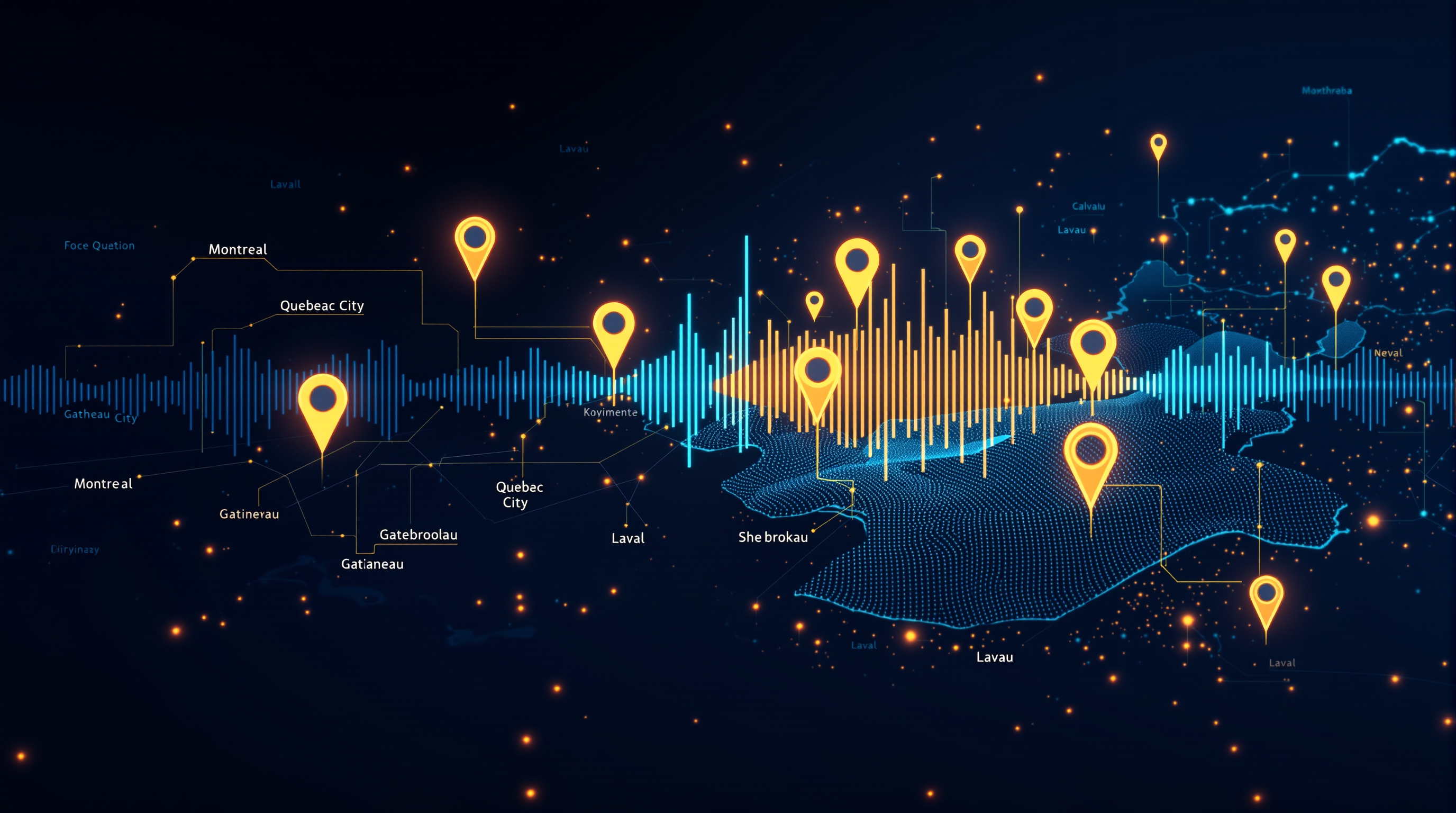
Adoption of AI voice agents across Quebec small and medium businesses
What this means, concretely, for you
If you run a Quebec SMB in 2026, here's my honest read. You're not obligated to adopt a voice agent this year. But if you wait 18 months, your competitors will have stockpiled 18 months of customer data, script iterations, and compounded ROI that you won't.
Voice AI in 2026 isn't a product you install and forget. It's a system that learns from every call. Someone who starts deploying in April will have a noticeably better agent in October than someone starting in September. It's just math.
At Agent IA Vocal, we don't do self-service. Every deployment is handled by our TECHMA team: call audit, bilingual configuration, CRM and calendar integrations, real-world testing. Because a badly configured agent is worse than a voicemail.
Frequently asked questions
"How long before my agent is operational?" On average, 7 to 12 business days for a standard deployment with integrations. Complex cases (multi-location, custom CRM) can take 3 to 4 weeks.
"My call volume is low, is it worth it?" If you miss even 3 calls a week, yes. An average appointment in most sectors is worth between $150 and $800. Do the math.
"Can the agent transfer to a human when needed?" Yes, and it's mandatory in every one of our configurations. We define escalation rules (out-of-scope request, emotional distress, recognized VIP) that trigger a transfer to your team or an on-call mobile.
"What changes in 2027?" Models will keep improving, but the real gap will open up around inter-agent orchestration and action on external systems. Starting in 2026 puts you in position to ride those upgrades without redoing your setup.
So what now?
If you made it to the end of this article, you're already in the 20% of owners taking this shift seriously. I'd invite you to test what I'm describing for yourself.
Book 15 minutes with our team and we'll show you a voice agent configured for your sector, live, without jargon. You can also explore our plans starting at $49/month. It's not a three-year contract. It's month-to-month, and you decide if it delivers.