Here's a prediction that's going to annoy part of the industry: the AI voice agent that just answers the phone is already yesterday's product. Not in five years. Now.
For two years, SMEs were sold the idea of a smart answering machine. A polite voice that takes messages, gives the business hours, and transfers to a human the moment things get tricky. It was useful. But let's be honest: it was a band-aid on the real problem. The real problem was never that a customer calls and a voice answers. It's that nobody does what the customer is asking for.
In 2026, that distinction is becoming the dividing line between businesses that win and businesses that watch the train leave the station.
What I've watched change in six months
Early in 2025, when we deployed a voice agent for a client, the conversation revolved around one question: "Will it understand my customers?" The answer was mostly yes. But understanding isn't acting.
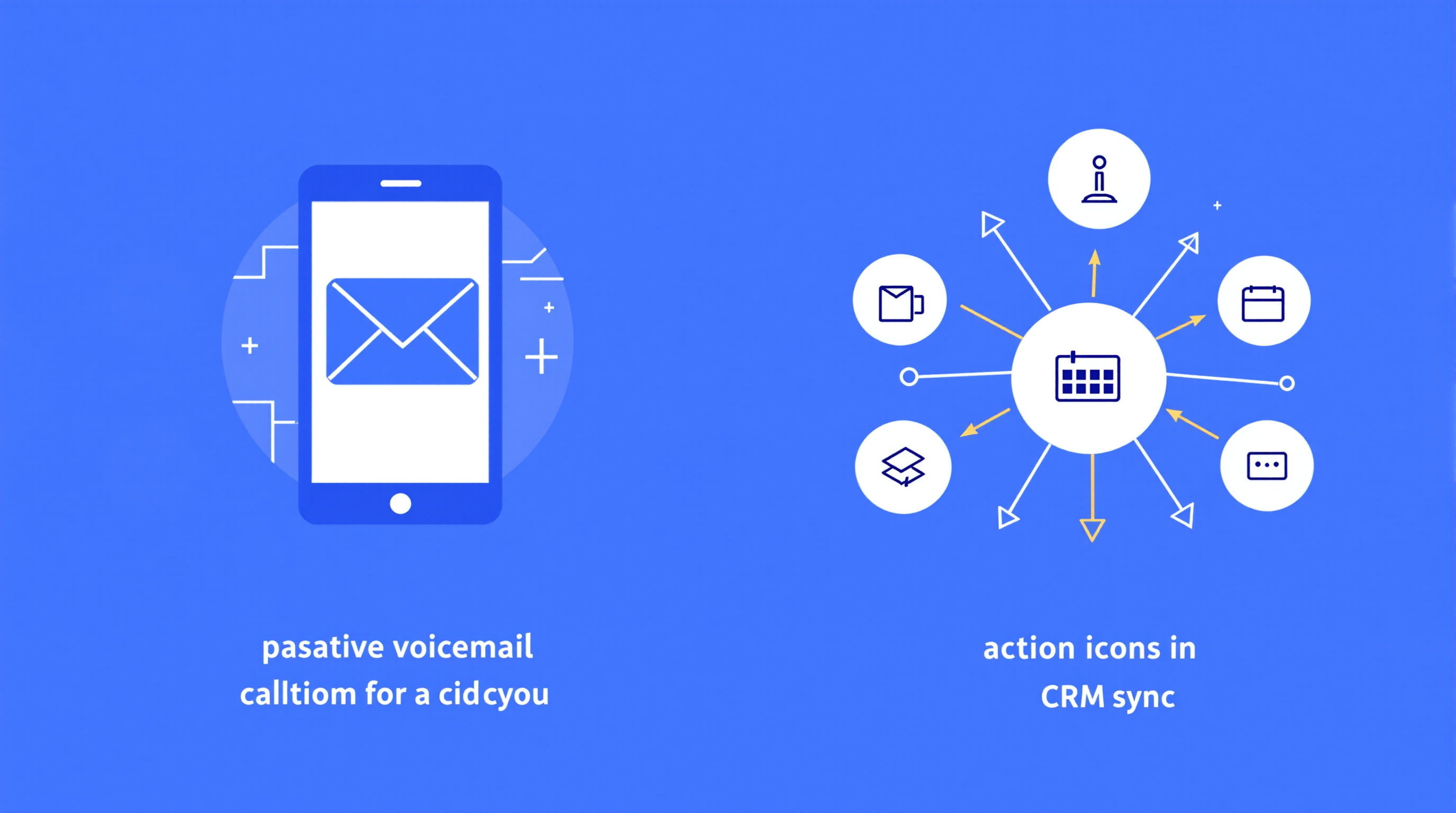
Today, the question has changed. SME owners ask us: "Can it book the appointment, put it in my calendar, send the confirmation by text, and flag me if it's an emergency?" And the answer, now, is yes — for real.
This shift isn't a marketing detail. It's a change in kind. We've gone from a tool that listens to a tool that executes. And the technology that makes it possible has only just reached maturity.
Argument 1: The technology crossed a line
In May 2026, OpenAI shipped a new generation of realtime voice models. The big one, GPT-Realtime-2, doesn't just deliver a more natural voice. It brings GPT-5-class reasoning, parallel tool calling, and a context window four times larger. In plain terms: the agent can hold a complex conversation while querying your booking system, checking availability, and confirming a transaction — without losing the thread.
On the ElevenLabs side, the pivot is just as clear. Their agents are no longer simple "talking bots": they trigger real actions mid-call through direct integrations, and the announced collaboration with IBM watsonx Orchestrate shows where the market is heading: agents that orchestrate work, not comment on it.
We already broke down one of these updates in our analysis of the single voice-SMS-chat agent. The through-line is always the same: AI stops being a glorified voicemail box and becomes a colleague that gets things done.
Argument 2: The numbers don't lie
If you think this is all a Silicon Valley gadget, look at the market. The AI voice agent sector was worth USD 2.4 billion in 2024. According to market.us, it's growing at 34.8% per year, heading to 47.5 billion by 2034. This isn't a fad. It's a structural reshaping of the customer relationship.
And adoption is following. Per Grand View Research and 2026 sector data, roughly 34% of businesses with 10 to 500 employees have already deployed or are piloting an AI voice agent — up from 8% two years earlier. The curve looks exactly like the one we saw with websites in the 2000s: first a luxury, then an expectation, then a disadvantage if you don't have one.
The crux is cost. A call handled by an AI voice agent runs about USD 0.40. The same call handled by a human costs 7 to 12 dollars. Gartner estimates conversational AI will cut contact center labor costs by 80 billion dollars in 2026. For a Quebec SME already wrestling with a labor shortage, that's not an abstract statistic — it's a lifeline.
Argument 3: Concretely, what does "acting" look like for an SME?
Take a dental clinic in Laval. Friday at 5 PM, the phone rings. Before, the best case was: "You've reached Clinic X, please leave a message." The caller hung up and dialed someone else.
With an agent that acts, here's the new reality: it answers, spots an emergency, checks the schedule in real time, offers the 8 AM Monday slot, books it, sends the text confirmation, and leaves a note for the manager. Zero humans involved. Zero customers lost.
The healthcare numbers are telling: automated scheduling systems show 2.5x more booked appointments and 30% fewer no-shows. For well-scoped calls — booking, FAQ, routing — resolution rates hit 92 to 96%. These aren't lab figures; they're field results.
We documented an extreme but instructive case in our piece on Amazon Ring, which handed 100% of its calls to an AI voice agent after testing it. The lesson isn't "replace everyone." The lesson is that the quality bar has risen high enough for a major company to bet big on it.
"I don't want a robot making decisions" — let's talk about that
It's the objection I hear most, and it's a fair one. Nobody wants an AI deciding to cancel a good client's appointment by mistake, or promising something the business can't deliver.
But here's the misunderstanding: an agent that acts isn't an agent running wild. We define exactly what it's allowed to do. Book within an approved time window: yes. Edit a medical record: no. Confirm a posted price: yes. Negotiate a discount: no, that transfers to a human. Autonomy isn't anarchy — it's a clear perimeter, chosen by you.
And that's precisely why implementation matters as much as the technology. A poorly configured agent that acts can do damage. A well-configured one becomes the most reliable member of your team. The difference isn't in the AI model. It's in the setup work.
Why Quebec is better positioned than people think
People tend to assume Quebec lags on these technologies. I think the opposite is true, for three reasons.
First, bilingualism. A Quebec SME has to serve a French-speaking and English-speaking clientele, often allophone on top of that. The new models handle 70+ languages with a fluency that was unthinkable two years ago. Where a traditional call center struggles, an AI voice agent switches languages without blinking.
Second, Quebec's Law 25 on personal-data protection already forces our businesses to be rigorous about data. An SME that has done its Law 25 homework is already halfway to deploying a voice agent responsibly.
Third, economic reality. With the labor shortage, Quebec's local businesses can't afford to let the phone ring into the void. We showed, in our analysis of the market that multiplied 40-fold, just how wide the gap is growing between SMEs that adopt and those that wait.
What's coming in 2026-2027
My prediction for the next eighteen months? The phrase "AI voice agent" will drop the word "voice." We'll just say agents. They'll handle the call, the text, the email, and the chat as one brain, with continuous memory across channels.
And the question SMEs ask will change again. We'll stop asking "does it understand?" or even "does it act?". We'll ask "what did my agent accomplish this week?" — the way you'd ask about an employee.
Businesses that jump now won't just be "current." They'll have a year's head start on competitors who wake up in 2027 wondering how the shop down the street doubled its bookings without hiring.
The real cost is the cost of waiting
People talk a lot about the price of an AI voice agent. They rarely talk about the price of doing nothing. Yet that's the one that hurts.
Every call missed in the evening, every customer who hangs up because it rings into the void, every appointment that never gets booked because nobody was available: it adds up. For a service business, a single lost appointment a day adds up to tens of thousands of dollars over a year. Multiply that by the competitor who answers and acts around the clock, and the gap turns into a chasm. The question isn't "how much does it cost to adopt?" anymore — it's "how much does it cost to wait another six months?"
My take, in one sentence
Answering the phone was the minimum bar in 2024. In 2026, the bar is doing the work. And the good news is you don't have to become an AI expert to clear it: at Agent IA Vocal, our team handles the configuration, the integrations, and the action perimeters end to end. You just collect the appointments.
Don't agree with my prediction? Good — I love debating it. Write us your point of view, or see in 15 minutes what an agent that acts looks like for your business.