
"Our agent answers fast. But it makes things up." That's the sentence I hear most often when a Quebec SME owner listens to a test call from their AI voice agent. The voice is smooth, latency is under 800 ms, customers don't wait two minutes for a simple question anymore. And yet, the moment a real substance question comes up — a price, a return policy, the Easter holiday hours, the brand of tires you actually install — the agent improvises.
For two years we treated this behavior as a detail to fix later. That was a mistake. The real problem was never the voice. It was that the agent never actually searched your information.
On April 13, 2026, ElevenLabs shipped an update that mostly flew under the radar in mainstream coverage but genuinely changes the math for SMEs: knowledge base content search is now exposed as a first-class capability in the agents API, alongside conversation topics and improved multi-agent tracking. Source: the official ElevenLabs changelog.
Here's why this small addition fixes the most expensive blind spot in the AI voice agents you were sold in 2024 and 2025 — and what a Quebec SME should actually do with it, starting now.
My take: fluency hid the real problem
I'll be straight. When we started wiring up voice agents for clinics, restaurants and service businesses in 2024, we were dazzled by voice quality just like everyone else. ElevenLabs, GPT-Realtime, the synthetic voices finally sounded human. Latency dropped every quarter. Demos were impressive.
The problem became obvious in production. An agent that answers in 700 ms when a customer asks "do you take Visa Debit on quotes over $5,000?" and confidently says "sure, we accept all payment methods" when that's false — that agent creates more problems than it solves.
We all tried to work around this with longer and longer system prompts. We pasted the entire FAQ into the instructions. We added rules. We tested, adjusted, added more cases. Within a few weeks the prompt was 8,000 words, the agent forgot half of it anyway, and every change broke two other behaviors.
What we were really doing, badly, by hand, in the wrong tool, was content retrieval. ElevenLabs just industrialized it inside their agents API — and that changes everything.
Argument 1: an agent that searches answers better than an agent that memorizes
The new capability exposes a dedicated endpoint to query the knowledge base attached to an agent. In practice: instead of stuffing all your content into the prompt, the agent searches your documents at the exact moment it needs them. It's the difference between someone trying to recite the union contract from memory and someone opening to the right page at the right moment.
For an SME, this isn't a technical detail. It's the gap between an agent that sounds great but invents details, and an agent that can quote your exact policy, your exact price, your exact procedure. And yes, that includes citing the source mid-call: "per your return policy dated February 12, returns without a receipt are accepted within 14 days..."
If you want to dig into the underlying RAG mechanism and the guardrails it requires, I already covered that in our article on hallucinations, RAG and guardrails for Quebec SMEs. What's new in April 2026 is that SMEs no longer have to assemble that stack themselves — it's built into the product.
Argument 2: the bloated system prompt is dead, and good riddance
We've all seen those 12,000-word prompts. Payment terms, exceptions, emergency scenarios, technical FAQ, tone of voice, escalation rules, transfer scripts. Stacked. Crammed. With "IMPORTANT: never say X" repeated 14 times.
Three direct consequences. One, cost per call goes up because every conversation turn ships the entire prompt to the model. Two, the model loses information toward the middle (the well-known "lost in the middle" problem). Three, every business update — a new price, a schedule change, a new service — becomes a risky operation because you're editing critical text.
With real content search on the agent side, your prompts go back to defining personality, tone, and escalation rules. Factual content — policies, prices, FAQ, procedures — lives in a base you update like a shared document, not like code. A receptionist in Sherbrooke can correct a policy without touching the agent's "logic." The next call uses the new version.
It's the same evolution we saw on the text chatbot side two years ago. Except for voice, the stakes are higher: you don't get to tell the customer "please check our website for details" in the middle of a call.
Argument 3: "conversation topics" finally gives you a useful dashboard
The other April 2026 announcement worth pairing with this is the arrival of conversation topics in the API response. Each call now gets categorized automatically: appointment booking, complaint, price inquiry, emergency, follow-up, general info, and so on.
For an SME owner, it's the first time you get, with zero configuration effort, a real breakdown of calls by intent. You discover that 38% of your after-5pm calls aren't emergencies but price inquiries. You discover that Thursdays generate 2.3x more booking requests than Mondays. You discover that a specific keyword shows up in 12% of calls — and that's exactly the question your knowledge base was thin on.
Pair that with content search, and you get a virtuous loop: uncovered topics show up in conversation topics, you add the answers to the base, and next week the agent answers better. It's measurable, fast, and not reserved for big enterprises. If you want a concrete way to track ROI over 14 days, I also wrote a guide on measuring deflection rate over 14 days that pairs really well with these new tools.

Un agent vocal IA qui consulte une base de connaissances structurée en temps réel.
The honest counterargument: "I already had RAG, what's new?"
This is the most common pushback I get when I bring it up with technical teams or consulting shops. And it's a fair question. RAG existed before April 13, 2026. People wired it up via middleware, an external vector store, a custom function, sometimes three layers of orchestration.
What the ElevenLabs update changes isn't the idea. It's the integration cost and the operational coherence. Before, an SME either paid an engineering team to wire it up, or accepted a generic solution with no fine-grained search. Now, the search is natively available in the platform, with the same latency as the rest of the agent, and with management tools (audit, updates, versioning) that integrate with the rest of the ecosystem.
For an integration partner like us, that means we spend less time patching middleware and more time structuring the knowledge base with the client. For the SME, the same capability costs less to deploy and stays consistent when ElevenLabs ships the next big update. It's exactly the kind of consolidation MIT Technology Review flagged in April 2026 as one of the year's ten major trends in agent orchestration.
Why Quebec SMEs are particularly well-positioned
There's an underrated Quebec advantage in this update. Three things specific to our market actually work in local SMEs' favor here.
First, most of our SMEs have internal knowledge bases that are more structured than they realize. Employee handbooks, policies, procedures, FAQs, intake scripts: these documents exist, often in clean French, sometimes bilingual. That's exactly the raw material a searching voice agent needs instead of an inventing one.
Second, Loi 25 compliance has forced businesses since 2023 to document how they handle information. Many companies experienced this as administrative drag. In reality, those documents are now turning into assets: an agent that answers accurately about data collection, retention, and access because it actually searches your real policy is both a competitive advantage and a trust signal with the customer.
Third, opportunity cost. With the Canadian dollar around 0.71 USD and margin pressure across services, every mishandled call costs proportionally more than it did two years ago. An agent that cites the right information instead of misinforming the customer means fewer back-and-forths, fewer unnecessary human escalations, and fewer customers hanging up frustrated.
What you should actually do, starting this week
An honest audit of your current knowledge base. Not a six-month project. One day. List: pricing policies, service conditions, hours, seasonal exceptions, escalation scripts, FAQs. Identify what's current, what isn't, and what doesn't exist in writing anywhere.
A rewrite of your agent's system prompt. Cut. Anything factual and likely to change must come out of the prompt. The prompt should handle personality, tone, escalation rules, and posture under uncertainty ("if you're not sure, transfer"). Everything else moves into the knowledge base.
A simple measurement loop. Turn on conversation topics. Each week, look at the topics that aren't covered. Add the answers to the base. Track the drop in human escalation rate and the drop in repeat calls (the customer calling back because the first answer wasn't clear).
A partner who bridges the gap. The SMEs I see succeed at this transition don't do it alone. They have someone structuring the knowledge base, tuning the prompt, watching topics every week, and shipping changes. That's exactly what TECHMA does for Agent IA Vocal clients — setup, integration and ongoing optimization are handled for you, not in "good luck, here's the docs" mode.
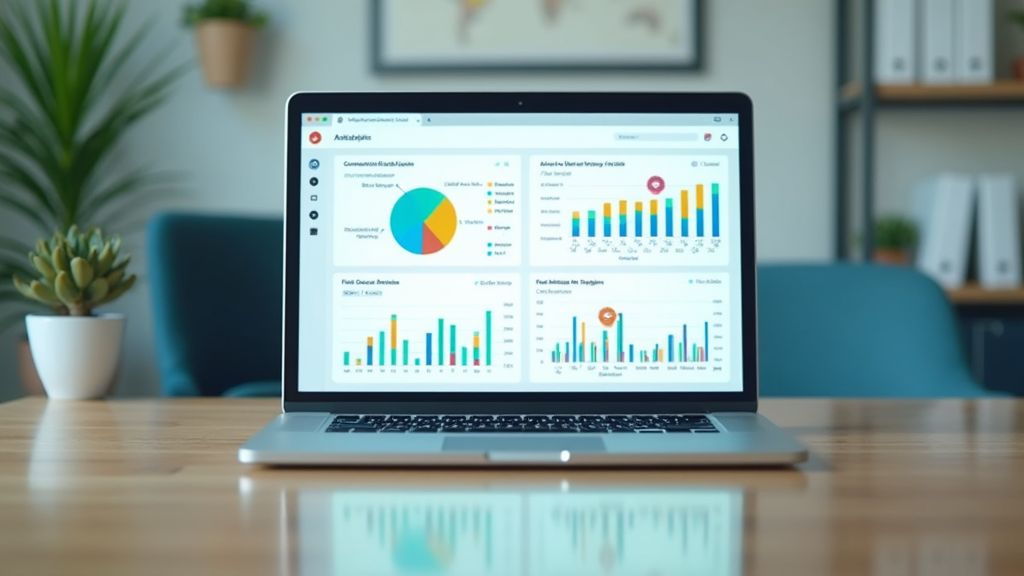
Tableau de bord conversation topics : visualisation des sujets que les clients abordent.
Going further
If you want to see how this logic plays out specifically for appointment booking, also read our guide on appointment booking via MCP with ElevenLabs. Content search and MCP work particularly well together: one finds the right information, the other executes a concrete action in your calendar or CRM.
For a broader take on the myths still slowing Quebec SMEs down on voice AI, I also compiled the five most persistent myths and the truth behind each one.
FAQ
How many documents do you need for this to be worth it? Very few. I've seen SMEs get real value with around ten well-structured documents: pricing policy, terms, FAQ, escalation procedure, detailed hours. It's not volume that matters, it's writing quality and the absence of internal contradictions.
Does this replace my CRM or my booking tool? No. The knowledge base is for the agent to answer substance questions correctly. The CRM, calendar and booking system remain operational sources of truth, connected via MCP or dedicated integrations.
Is it Loi 25 compliant? It can be, as long as the base doesn't contain customer personal information and access is properly managed. For the details, see our seven-step Loi 25 compliance guide.
Does a change in the base take effect immediately? In most setups, yes: the next search the agent runs picks up the updated version. For very large content bases, a short indexing delay applies, usually a few minutes.
Let's talk about it
If you have a voice agent in production that "answers well but off-target," it's not inevitable, and it's no longer a model problem. It's an information structure problem. And since April 13, 2026, we finally have the right tools to fix it properly.
If this resonates and you want to talk through your specific case, we can look at it together: talk to our team, or request a personalized demo with your real call context.