
It's 11:47 PM on a Tuesday in February. An electrical panel is arcing inside a home in Winnipeg. The smell of burning plastic drifts up to the second floor. The homeowner calls their usual electrician — and gets a generic voicemail greeting promising a callback "as soon as possible."
They hang up. They search "emergency electrician near me." The next name on Google picks up on the second ring, has someone there within the hour, and books the job.
You just lost an emergency callout worth at least $450, and probably the client for the next ten years.
This plays out every night, every weekend, in every province this country spans. Electricians aren't receptionists — they're up a ladder, elbow-deep in a 200-amp panel, or crawling under a slab. Answering the phone while your hands are on a live circuit isn't just inconvenient. It's dangerous, and often flat-out impossible. That's exactly the gap an AI voice agent is built to close.
The Blind Spot Every Electrical Contractor Shares
Unlike a dental office or a veterinary clinic, most electrical contracting businesses across Canada run lean. Often it's the master electrician answering the phone — between jobs, from the truck, or literally inside someone's wall.
Add to that the licensing reality of the trade: electricians need provincial certification to legally work, whether that's through Ontario's Electrical Safety Authority, a provincial Master Electrician license, or the equivalent body in every other province and territory. That professional rigor produces excellent electricians. It rarely produces full-time receptionists, and even less often a team that can pick up at 3 AM.
The result? The phone rings into nothing while the real work happens on-site.
And the calls that matter most — the emergencies — almost never land during business hours. A total outage on a Sunday night, an arc flash during dinner, a burning smell noticed right before bed: that's exactly when your office is closed, and exactly when the caller is willing to pay a premium for someone who actually answers. It's the same pattern we've seen with plumbers and HVAC contractors dealing with a frozen pipe at 11 PM — nobody picks up while the emergency is happening, and a competitor answers instead.
How an AI Voice Agent Actually Handles an Electrical Call
Under the hood, a voice AI agent works in three steps. First, the caller's voice is converted to text — the ear. Then a language model interprets the request and decides what to do — the brain. Finally, the response is spoken back naturally — the voice.
This isn't experimental. It's the same technology that's cut speech-to-text error rates from nearly 10% three years ago to under 5% today — a jump that makes the agent reliable even with a stressed caller talking fast, with an accent, or on a spotty cell connection.
For an electrician, what actually matters isn't the technology stack — it's the first question the agent asks. A well-configured agent doesn't open with "How can I help you today?" It asks whether there's smoke, a burning smell, or sparking, before it ever mentions scheduling. That's safety-first triage, not just message-taking.
As we cover in our piece on AI voice agent response time, the first 800 milliseconds of a call decide whether the caller stays on the line or hangs up. For an electrical emergency, that window matters even more — someone smelling smoke in their home has zero patience for hold music, let alone a voicemail greeting.
Four Moments Where the Agent Changes the Outcome
Here's what that looks like in the day-to-day of an electrical contracting business anywhere from Halifax to Victoria.
Electrical emergencies. Arcing, burning smell, total outage: the agent asks 3-4 safety questions, confirms the address, then texts the on-call electrician the full description of the problem — all in under 60 seconds, without waking up anyone except the right person.
Routine residential quotes. EV charger installs, panel upgrades from 100A to 200A, exterior outlet additions: the agent books directly into the calendar, no human needed, confirming address and availability along the way.
Storm-driven surges. In March 2026, a windstorm knocked out power to more than 53,000 BC Hydro customers on Vancouver Island, while a separate system that same month left nearly 255,000 Quebec households in the dark, according to Global News. Weeks earlier, a blizzard cut power to over 600,000 customers across Atlantic Canada. On every one of those nights, every electrician in the affected region got flooded with calls at the same time — worried homeowners checking on furnaces, sump pumps, and basic safety. An AI voice agent answers all of them at once, not one at a time while the rest ring out.
Commercial and property management clients. A property manager calling about a lighting failure in an underground parkade expects professional, documented follow-up. The agent confirms building details, follows the SLA you've set, and sends a written summary — useful if a dispute comes up later.
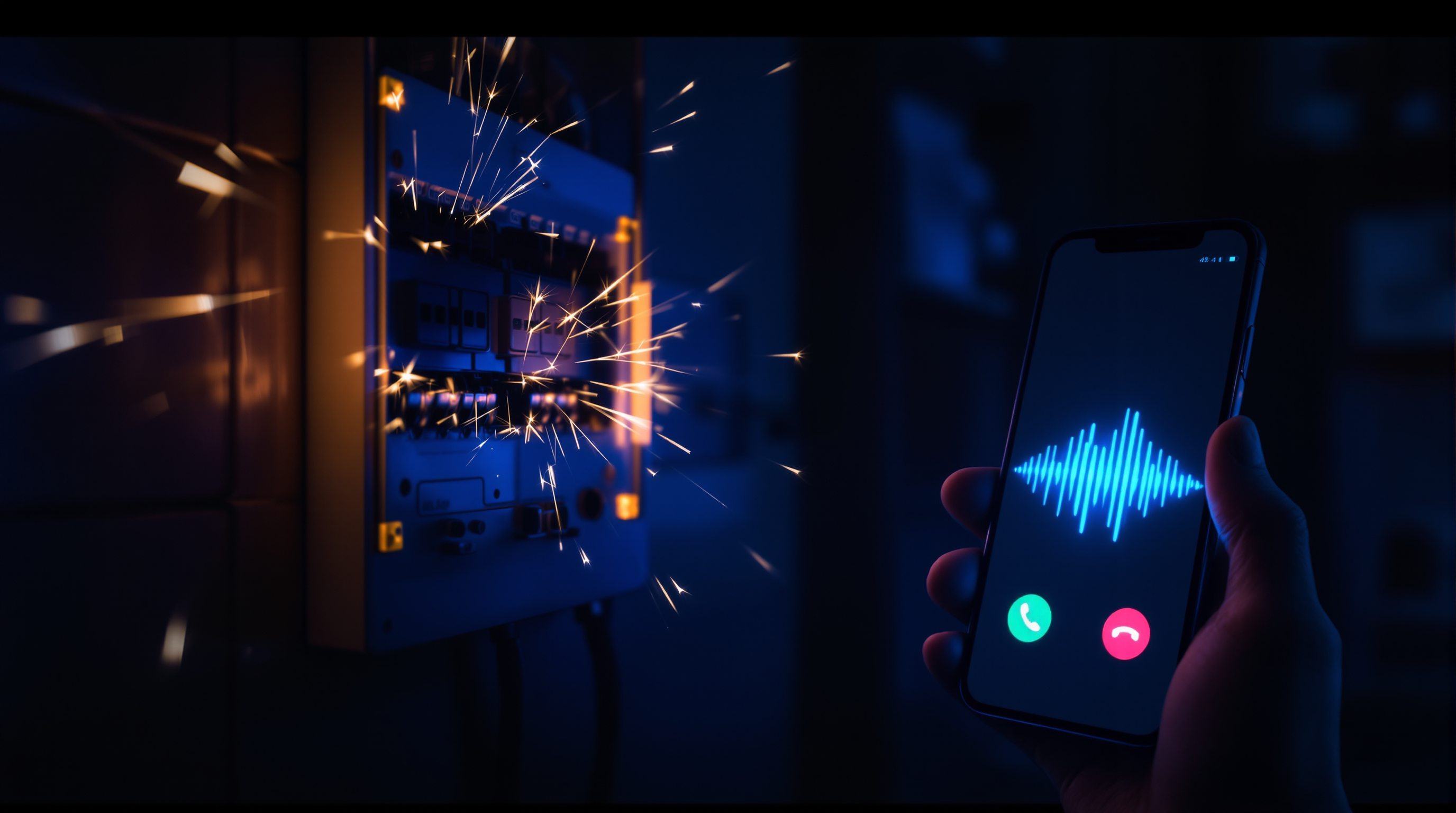
An AI voice agent triaging an electrical emergency call while a panel arcs at night
How This Fits Into Your Existing Workflow
The agent doesn't operate in isolation. Every confirmed call — emergency or routine — syncs directly with your calendar and billing system, whether that's Jobber, a shared Google Calendar between three trucks, or an in-house dispatch tool.
The next morning, your team isn't sorting through a stack of voicemails to transcribe by hand. They open the calendar and the confirmed jobs are already there, with the address and the issue described in the customer's own words.
That's the difference between a tool that takes messages and a tool that keeps the job moving while you sleep.
Why This Matters From Coast to Coast
Electrical problems are never just an inconvenience — they're a fire risk, and customers treat them that way. Ontario's Electrical Safety Authority recorded 35,132 structure-loss fires between 2018 and 2022, 74% of them residential. A homeowner smelling something burning isn't shopping around for three quotes. They're calling whoever picks up first — and remembering who didn't.
Do the math: miss just three emergency calls a week at $350 each, and that's over $54,600 in lost jobs a year — before counting the one-star Google review from the customer who couldn't reach anyone, or the follow-up inspection and upgrade work that customer might have sent your way later.
There's also the multilingual reality of Canadian cities. An electrician serving Brampton, Surrey, or Montreal fields calls in English, French, Punjabi, Mandarin, or Tagalog depending on the neighborhood. And across six time zones, "after hours" means something different in St. John's than it does in Vancouver — an agent that never sleeps doesn't need to know which one applies.
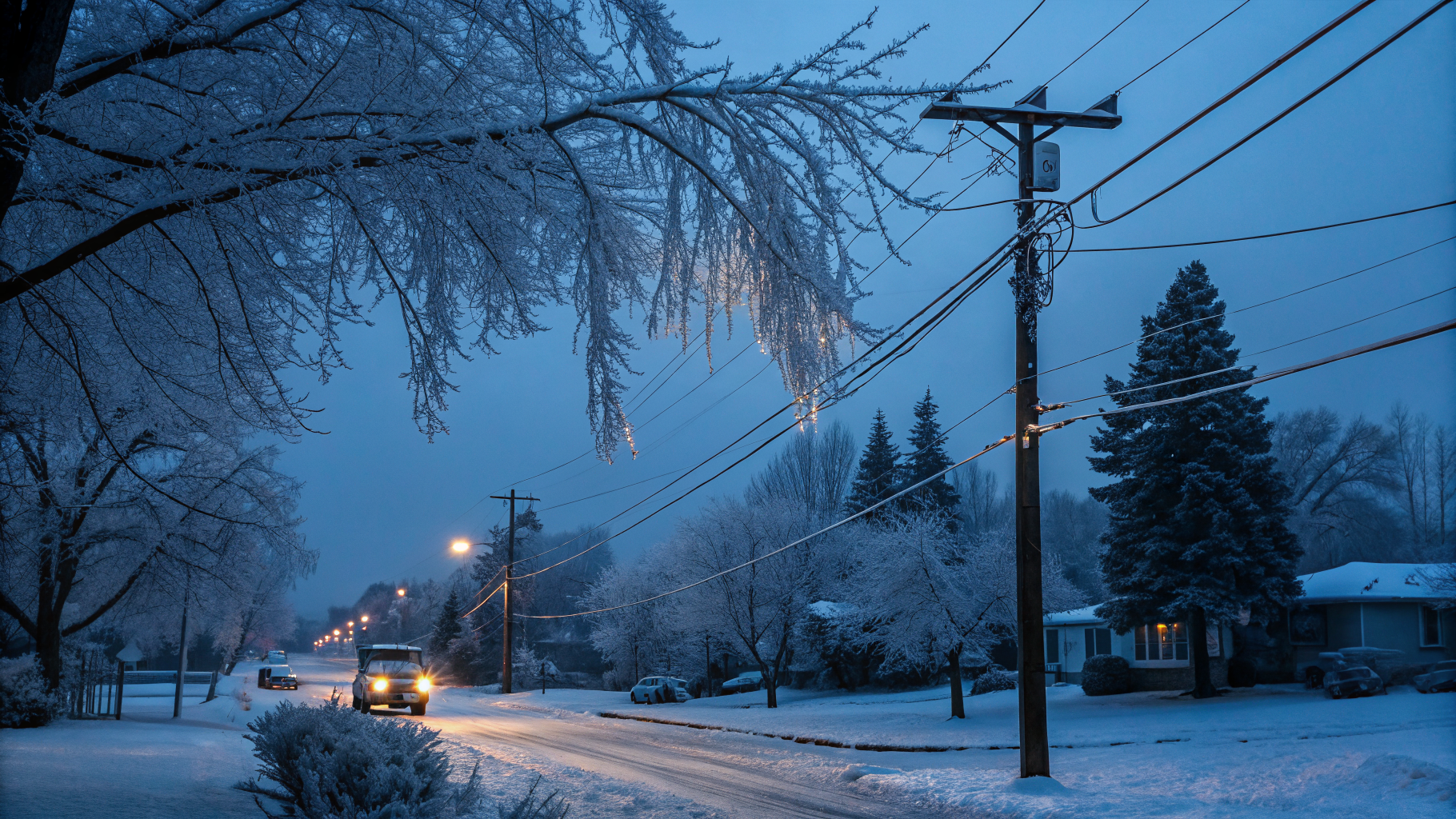
A 2026 ice storm knocked out power to over 200,000 Quebec households, flooding electricians with simultaneous emergency calls
Common Objections From Electrical Contractors (and Honest Answers)
"My customers will find it impersonal." The opposite tends to be true when it's set up properly. The agent introduces itself with your company name, in the tone you choose, saying "Welcome to Bergeron Electric, this is Sarah taking your call" instead of a generic "Customer service, how can I help."
"I don't have the budget for this." Plans start at $49 CAD a month and scale up to $199 depending on your needs — a fraction of the salary, benefits, and payroll costs of a full-time receptionist, and the agent never takes a sick day or a vacation.
"What if it doesn't understand my technical terms?" The agent is configured with the trade's real vocabulary — breaker, 200-amp panel, grounding, GFCI, service entrance — not a generic script written for any small business. Every scenario gets tested before it goes live, including the weird edge cases.
"I want to control who gets contacted first." Escalation rules are fully configurable. You decide who gets the emergency text, in what order, and at what hour of the day or night — the agent follows your rules, not the other way around.
Frequently Asked Questions
Can the agent really tell an emergency from a routine call? Yes. Triage happens through a set of targeted questions — smoke, sparking, total or partial outage — before scheduling ever comes up. If there's any doubt, the call escalates to a human.
Does this replace my dispatcher or receptionist? No. Think of it as a filter that absorbs routine volume and off-hours calls, freeing your team to focus on high-value work and confirmed emergencies in the field.
Is this compliant with Canadian privacy law? Data hosting, consent, and retention periods are configured to meet applicable Canadian privacy requirements, including provincial rules where they apply.
How long does it take to deploy this for my business? Usually 5 to 14 days, depending on the complexity of your emergency scenarios and your existing calendar or dispatch integrations.
Conclusion
A panel arcing at 11 PM doesn't wait for your next business day. Neither does the customer.
At Agent IA Vocal, we set up and manage all of it for you — the safety triage, the calendar integration, the trade vocabulary, the escalation to your on-call electrician. Book a 15-minute demo to see how it works for your business, or check out our plans starting at $49/month.